
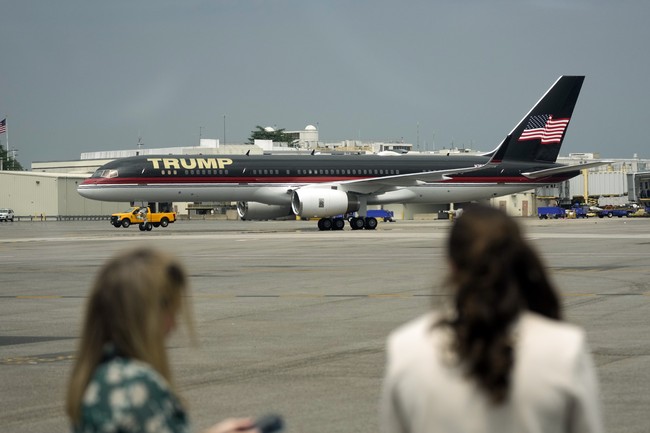
Checklist: summarize the political thaw between Donald Trump and Ron DeSantis; report DeSantis signing legislation to rename Palm Beach International Airport; note FAA approval timeline and proposed initials; include reactions from Democrats and Trump Organization statements; mention similar naming controversies and personal reaction to renamings.
Ron DeSantis and Donald Trump had a bruising GOP primary battle, but politics shifted afterward and alliances changed. Recently DeSantis signed a bill that would rename Palm Beach International Airport to Donald J. Trump Palm Beach International Airport, a move that surprised many who remember their fierce rivalry. The development is simple on paper but loaded with political symbolism and predictable outrage from the left. What follows are the facts, the timeline, and the reactions that have already started to bubble up.
The bill DeSantis signed specifies the airport’s new official name as “Donald J. Trump Palm Beach International Airport.” The change still hinges on Federal Aviation Administration approval, which proponents expect to receive in time for the new name to take effect on July 1. Travelers who know the hub as PBI would see it rebranded as DJT, an intentional shorthand that supporters find satisfying and critics find provocative. The move reads like a public nod to Trump’s prominence in the Republican Party and in Florida politics.
The process laid out in the legislation aims to make the transition administrative rather than commercial, and state lawmakers say the rebranding would not carry licensing fees for the Trump family. Still, critics immediately raised questions about motive and propriety, and some local leaders complained they were left out of the loop. Those complaints highlight the partisan divide over naming public infrastructure after living political figures. For Republicans, it is a way to honor a victorious leader; for Democrats, it feels like a partisan stunt that disregards local input.
Democratic officials went on record criticizing the move. “It’s misguided and unfair that the Republican-controlled Florida Legislature ignored the voices of Palm Beach County by pushing forward a bill to rename Palm Beach International Airport without giving County residents a real opportunity for input,” said Rep. Lois Frankel, a Democrat who represents West Palm Beach. That quote captures the central objection from opponents: process and local voice, not just the name itself. Local officials framed their response around democratic procedure and community consultation.
Other Democrats raised concerns about potential commercial benefit, citing the fact that President Trump has registered trademarks on his name. Those concerns were publicly addressed by spokespeople for the Trump Organization. A spokesperson for the Trump Organization said in February that Trump and his family would not receive royalties or licensing fees from the renaming of the Palm Beach airport, and the House bill’s text specifies that the branding would come at no cost.
“To be clear, the President and his family will not receive any royalty, licensing fee, or financial consideration whatsoever from the proposed airport renaming,” said Kimberly Benza, Trump Organization director of executive operations.
Beyond the legal and financial questions, the renaming is symbolic and part of a broader pattern. Conservatives point to other instances where public spaces and institutions have been renamed to honor Republican leaders, while liberals decry those choices as partisan. The phenomenon has become a culture war fixture: roadways, public buildings, and now airports are arenas for political messaging. That escalation makes these decisions feel less like local administrative acts and more like national political signals.
Critics compared this airport renaming to other controversial namings across the country and noted how such actions inflame partisanship. On the other side, supporters say naming a major regional facility after a former president is a recognition of leadership and influence. For many conservatives, honoring a sitting or recent president with public commemorations is a natural expression of political pride and a way to cement legacy. The debate exposes how differently each side views the role of public memorials in civic life.
There’s also precedent for living presidents receiving name recognition on infrastructure, and reactions often reflect local culture and sentiment. For example, some long-standing renamings still attract personal grumbles and mixed feelings from drivers and travelers. One writer recalled the renaming of a portion of a California freeway to honor President Barack Obama and admitted to cringing every time they drove on it. That anecdote shows how symbolic names can provoke personal reactions beyond formal political complaints.
At the end of the day, the FAA decision will determine whether the new name becomes official on July 1, and the timeline keeps the story in the headlines. The controversy around naming practices will continue to be a flashpoint for partisan argument and local debate. Expect opponents to press their concerns about process and proponents to emphasize legacy and recognition as the matter proceeds. Whatever the outcome, the renaming marks another moment where national politics and local governance collide in a highly visible way.

My income reached $17,620 last month, thanks to a flexible online job. It’s astonishing how easy it is to get started and see real results. I spend my mornings working and still have the whole day to relax. The extra money has made a big difference in my financial situation. It’s a fantastic way to boost your income without overworking yourself..
Visit This…… PayAtHome1.Com