
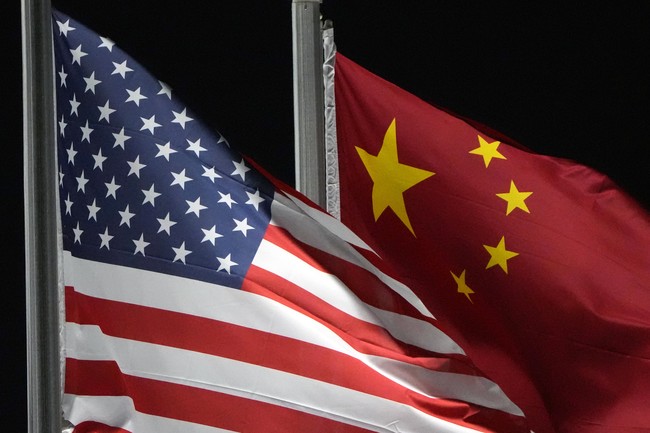
The U.S. is confronting a growing national security problem: foreign adversaries, especially Chinese state-linked entities, buying American farmland and land near critical sites, and lawmakers are pushing legislation to block those purchases by expanding CFIUS authority and presuming certain transactions are threats unless proven otherwise.
Congressional Republicans have spotlighted the issue, arguing that land purchases near bases, ports, data centers, and power plants can be used for intelligence collection or other malign activity. A bipartisan bill, led by Representative John Moolenaar, would change how the government evaluates these deals and add agricultural assets to the list of sensitive real estate. The debate centers on whether Washington should act preemptively to protect food security and critical infrastructure or continue relying on case-by-case reviews.
The House Select Committee on China has pushed the topic into the public eye, pairing striking imagery with a direct message about the national security risks of foreign land ownership. Committee members argue the current system forces the government to build a case after the fact, leaving openings for hostile actors to gain footholds near vital sites. Their push frames farmland as more than private property; it’s part of the nation’s strategic landscape.
https://x.com/ChinaSelect/status/2079599784055197729
Several members have made the argument bluntly: purchases of agricultural property close to military installations or critical infrastructure should be treated as elevated risk from the outset. The proposed law would do that by creating a category called “elevated risk real estate transactions” and shifting the burden of proof onto the buyer. Under this approach, a buyer tied to an adversary would need to demonstrate their purchase poses no threat rather than the government proving it does.
The committee also released a short video to make the case quickly:
“For years, foreign adversaries have purchased land in the U.S. Collecting intelligence. Legislation is needed to stop the CCP from buying more American farmland.”
The bill, introduced in early May, has bipartisan co-sponsors and aims to expand the Committee on Foreign Investment in the United States’ scope to cover agricultural land, related technologies, and sensitive real estate transactions. It would also require the Secretary of Agriculture to take part in reviews that touch on farmland and agricultural biotechnology. Those provisions reflect the view that food security and agricultural innovation are integral to national security.
China is the principal focus of the legislation, but the measure names other adversaries as well, including Russia, Iran, North Korea, Cuba, and Venezuela. Lawmakers point to documented purchases of thousands of acres by state-linked or affiliated entities, some reportedly near active military facilities. Those examples are used to justify a broader presumption that certain acquisitions by foreign adversaries present national security risks.
Supporters say the bill fills dangerous loopholes by making it easier to block or unwind purchases before sensitive sites are compromised. Critics warn about overreach and potential consequences for legitimate foreign investment in agriculture, but proponents emphasize that state laws already limit some purchases and the federal measure would operate alongside those restrictions. The legislation also adds food security and agricultural biotechnology to the factors CFIUS must weigh in its reviews.
So far, the bill has been referred to multiple House committees and has not yet reached the floor for a vote. Backers argue that Washington must move faster because hostile actors are not pausing while lawmakers deliberate. The push to tighten rules is part of a wider effort by some Republicans to curb Chinese influence across sectors, including finance and emerging technologies.
In related activity, lawmakers have raised alarms about other China-linked risks inside the U.S., from industrial-scale fraud rings operating overseas but targeting Americans, to the sale of robotics and other technologies with potential military ties. Those broader concerns feed into the farmland argument: if China-linked entities can gain footholds in American agriculture, the same pattern could play out in technology, logistics, and data infrastructure.
Representative Moolenaar has framed the matter in stark terms: “Food security is national security, and we cannot allow foreign adversaries like China to buy up American farmland near our most sensitive military and critical infrastructure sites. This bipartisan legislation closes dangerous loopholes, presumptively bars foreign adversaries from purchasing land, and ensures the United States has the tools to stop these farmland deals before they threaten our security.”
That quote underscores the political thrust driving the bill: a push to treat certain foreign land purchases as security issues rather than routine property sales. The measure would also preserve existing state-level limits on foreign purchases and add federal coordination to the review process. For proponents, these steps are necessary to prevent adversaries from gaining access to sites that could be used for surveillance, staging, or disruption.
The battle over land ownership is only one element of a larger policy fight over how the U.S. counters strategic competition from adversaries abroad. As the legislation moves through committees, advocates will press for a floor vote while opponents caution about unintended consequences for trade and investment. The question facing Congress is whether to adopt a presumption-based approach to protect critical assets or maintain the current investigatory framework.



Add comment