
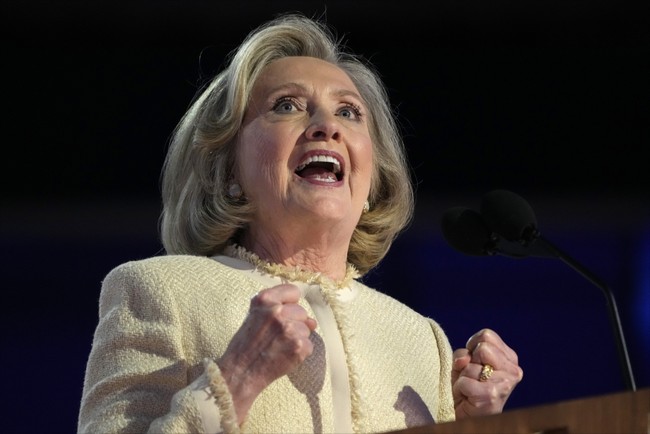
El Salvador President Nayib Bukele fired back at Hillary Clinton after she promoted a PBS documentary critical of CECOT, the high-security prison housing thousands of alleged gang members. Bukele challenged critics to take those prisoners if they truly believe the facility represents systemic torture, framing his stance around public safety gains from tough deportation and prison policies.
Hillary Clinton encouraged people to watch the PBS piece titled “Surviving CECOT,” which follows three Venezuelan men the U.S. described as Tren de Aragua members and who were deported to the facility. The film presents their claims of brutality and paints the deportations by the prior U.S. administration as responsible for sending them into harsh conditions. Clinton asked followers to “Hear Juan, Andry, and Wilmer share firsthand how the Trump administration branded them as gang members without evidence and deported them to the brutal El Salvadoran prison.”
From a Republican perspective, the story demands a clear-eyed take: nations have the right and duty to remove violent foreign criminals and secure their borders. Bukele has made a point of cooperating with U.S. efforts to deport dangerous individuals, arguing that such steps have materially improved safety for Salvadoran citizens. That pragmatic approach to law enforcement contrasts sharply with media narratives that center isolated testimonies while sidelining broader public safety results.
Bukele did not let the criticism slide without a challenge, offering a stark rebuttal to those alleging systemic abuse at CECOT. “If you are convinced that torture is taking place at CECOT, El Salvador is ready to cooperate fully,” he said, adding the provocative offer to release the entire prison population to any country willing to receive them. The proposal forces a choice: critics can either accept the realities of law enforcement and deportation, or take direct responsibility for the people they claim are being persecuted.
The president framed his response as both moral and practical, arguing that governments who believe the allegations should step forward and provide refuge for those former inmates. He also insisted El Salvador would continue prioritizing the safety of its citizens, pointing to dramatic reductions in gang control where hardline policies have been enforced. For many Republicans, that result—freedom from gang rule for millions—outweighs one-sided documentaries aimed at scoring political points.
Critics in the U.S. media often spotlight dramatic personal stories, and outlets frequently present such narratives without the full context of local security gains. The PBS documentary emphasizes three men’s denials of gang membership and the trauma they claim to have endured, while sympathetic commentators cast the deportations as an extension of questionable U.S. policy. But the broader picture includes a successful Salvadoran campaign to reduce rampant violence that previously made daily life untenable for many residents.
Republicans argue that eliminating violent networks and shutting down criminal havens protects both Salvadorans and Americans by disrupting transnational crime. Bukele’s partnership with U.S. authorities targeted deported gang operatives and career criminals, and the administration credits those actions with making streets safer. When commentators act as though deportation itself is the core injustice, they risk ignoring the victims of gang terror whose lives were transformed by strict enforcement.
The back-and-forth also exposes a media pattern where high-profile figures and pundits amplify narrow human-interest pieces without engaging in the give-and-take of political accountability. Clinton turned off comments on her post, suggesting an expectation of limited pushback, but Bukele’s public reply forced the conversation onto his terms. By daring other countries and leaders to accept these prisoners, he reframed the debate from complaining to choosing a course of action.
That reframing is telling: it moves discourse from moralizing from afar to tangible policy choices. If critics truly believe the institutional claims in these documentaries, they have options beyond spotlighting suffering—they can act. For conservatives focused on national security and public order, Bukele’s offer underscores the principle that law enforcement decisions have real beneficiaries, namely ordinary citizens who were once trapped under gang dominance.
The exchanges highlight a larger political divide about priorities: whether to spotlight individual accounts and contest past U.S. policies, or to celebrate the restoration of public safety through decisive action. Bukele’s message is straightforward and confrontational, aimed at those who condemn his methods while ignoring the outcomes. He insists his government will keep safeguarding Salvadorans and Americans by continuing tough measures against criminal networks, regardless of media pressure.


When is that EVIL HAG going to end up behind bars until she rots!!!