
I’ll explain how U.S. control of Venezuelan oil sales could be used to restore production, hold local power to account, incentivize American firms to rebuild infrastructure, and protect Venezuelan citizens from reprisals while keeping the country economically viable.
Venezuela sits at a turning point after Maduro’s removal, with Delcy Rodríguez installed as a claimed interim leader. That claim raises real concerns because she is tied to the old regime and could entrench bad governance rather than end it. The practical opportunity is straightforward: Venezuela’s vast oil reserves could be put back to work for the country and for American energy security if handled with firm policy levers. The question becomes how to convert leverage into durable change without letting corrupt actors reclaim control.
Energy Secretary Chris Wright has said the United States wants Venezuelan oil flowing and under U.S. oversight, which is a clear exercise of leverage. The approach he outlines centers on marketing crude to U.S. refineries and managing proceeds through U.S.-controlled accounts. That model gives Washington direct influence over how revenues are used and lets American companies offer technology and investment with contractual safeguards. For Republicans, that combines energy independence goals with a foreign policy tool to push for political reform.
Energy Secretary Chris Wright said on Wednesday the United States government wants to get Venezuelan oil flowing again, directly control Venezuelan oil sales and revenue via U.S.-controlled accounts, and create conditions for U.S. oil companies to enter the country.
Such moves will benefit Venezuela’s people as well, Wright said Wednesday.
Oil sales will be “done by the U.S. government and deposited into accounts controlled by the U.S. government,” he said.
“Then from there, those funds can flow back into Venezuela to benefit the Venezuelan people, but we need to have that leverage and that control of those oil sales to drive the changes that simply must happen in Venezuela.”
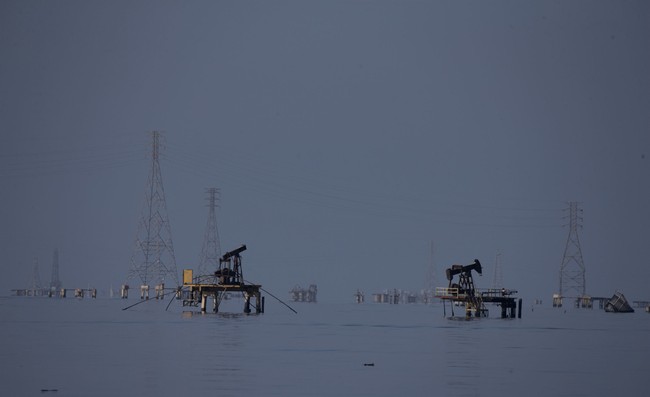
Venezuela nationalized oil decades ago and still ranks among the nations with the largest proven reserves. Production peaked in 2008, then collapsed under mismanagement, sanctions, and neglect, so restarting output means rebuilding wells, pipelines, and the institutions that oversee them. American firms bring both capital and recovery technology that can restore output more quickly than local efforts alone. That work will be costly, and it needs the assurance that revenues won’t vanish into corrupt hands.
Getting oil flowing to U.S. refineries first creates strategic benefits beyond the Venezuelan border. It boosts domestic energy supplies, reduces pressure on global markets, and hits geopolitical rivals that profited from Caracas’s previous deals. Controlling sales and deposits gives the U.S. bargaining chips to demand electoral reforms, transparency, and protections for political rights. Those are the kind of conditional incentives Republicans prefer: use economic engagement to secure political outcomes.
Wright said he was speaking to U.S. oil companies to learn what conditions would enable them to enter the South American country and added that he wanted to sell Venezuelan oil to U.S. refineries.
“We’re going to market the crude coming out of Venezuela, first this backed-up, stored oil, and then indefinitely, going forward, we will sell the production that comes out of Venezuela into the marketplace,” Wright said.
Any American involvement must insist on removing the final structures of the Maduro apparatus before investors commit to large-scale reconstruction. That means vetting officials, excluding those implicated in drug trafficking or human rights abuses, and demanding credible electoral timelines. Assistance should be phased, tied to measurable reforms and independent monitors, and designed to prevent a return to kleptocracy. The goal is a stable, market-friendly Venezuela that respects property, rule of law, and voter choice.
A practical political tool is conditional aid and investment: allow U.S. companies to operate only if funds from oil sales are held in accounts with clear oversight and distributions tied to reconstruction, humanitarian needs, and democratic processes. That protects the Venezuelan people from seizure of assets by hostile actors and gives Washington leverage to enforce commitments. It also reduces the incentive for Russia, China, or Cuba to reassert control via backroom deals and military or economic influence.
Forgiving certain officials or offering amnesty can be a pragmatic step toward reconciliation, but it must exclude grave crimes like drug trafficking and human trafficking. A narrowly tailored amnesty can help stabilize a fragile transition and encourage officials to step aside without chaos. At the same time, future candidacies for national office should be vetted to prevent known abusers from turning political privilege into impunity. That preserves space for genuine political renewal.
Rebuilding Venezuela’s oil sector with U.S. companies offers economic relief and a geopolitical advantage, provided it’s conditioned on democratic reforms and strict oversight of funds. This approach aligns energy policy with national security and human rights, and it uses America’s market power in a disciplined way. If implemented carefully, it can amplify pressure on bad actors while delivering tangible benefits to Venezuelans who have suffered under corrupted governance.


Add comment