
This article examines the Minnesota welfare fraud scandal, Governor Tim Walz’s public remarks, federal and congressional probes, and the political fallout unfolding among Republicans and Democrats, including sharp criticisms from GOP figures and candidates.
The scandal in Minnesota centers on more than $1 billion in allegedly siphoned federal funds from welfare programs, and it has finally grabbed national attention. Federal and congressional inquiries have launched investigations to uncover how oversight failed and who is responsible. The focus now includes both the mechanics of the fraud and the political accountability people demand.
The House Oversight Committee and the Treasury Department have both stepped in to investigate the situation, and Republican leadership has pushed for documents and testimony. Oversight leaders signaled they would not hesitate to use subpoenas to get answers if cooperation fell short. Those are the kind of demands that put pressure on state officials to show they acted responsibly.
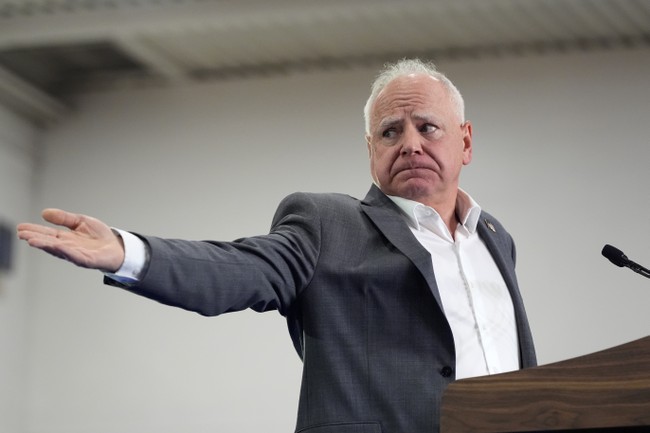
At a recent press conference, Governor Tim Walz chose to talk about general social responsibility and education rather than squarely address who enabled or overlooked the fraud. He referenced cultural lessons about crime prevention and framed the issue as broader societal education. That rhetorical move drew immediate criticism from opponents who want direct answers about oversight and enforcement lapses.
Critics argue Walz avoided the core questions: why did the fraud happen on such a large scale, who facilitated it, and what did state leaders do to stop it? They say his comments deflected from the specific allegations and the list of those charged so far. The debate now includes whether political considerations and identity politics shaped the governor’s public posture more than a straightforward commitment to accountability.
Walz said in part, “I think we continue to educate folks about why they shouldn’t commit crimes. You would hope that it’s being taught both at home and at schools and in our society. But no, I think this idea that the Somali community is to blame for this because they didn’t do more — I think that’s how we got into this.”
That passage has been seized on by opponents who see it as a confusing attempt to shift blame away from concrete failures in governance. Some conservatives view the remark as emblematic of a broader problem: leaders talking around accountability instead of delivering firm, concrete steps to prevent fraud. The public reaction is one of frustration, especially among those demanding more transparency now.
Republican figures have not held back in criticizing Walz. One gubernatorial contender called the state’s fraud prevention program a failure so severe that it should prompt the governor to step aside. Other Republicans emphasize that recovery of stolen funds, prosecution of wrongdoers, and improved safeguards must be immediate priorities. For them, the issue is less about rhetoric and more about restoring trust in government systems.
The politics here are raw: Democrats try to contain reputational damage while Republicans press for consequences and reforms. Federal investigators will weigh criminal referrals and audit findings, while congressional committees will push for documents and testimony. The legal process and oversight work side by side, and both will shape how voters perceive leadership in Minnesota.
Meanwhile, the affected communities and taxpayers want answers beyond speeches and press releases. Lawmakers on both sides will likely propose changes to program controls, eligibility verification, and auditing procedures to reduce the risk of repetition. Those policy debates will be closely watched as candidates and officials jockey for position in the coming months.
Observers note that political fallout can be swift when large sums are lost and oversight is questioned, and campaigns often hinge on who is seen as competent. Republicans are using the scandal as an example of Democratic mismanagement, while Democrats will need to show concrete, rapid reforms to blunt the criticism. The next steps will be whether state and federal authorities can produce timely evidence, indictments where appropriate, and meaningful system fixes.
The governor’s comments and the responses from opponents underscore how quickly administrative failures become political liabilities. Voters will expect investigations to be thorough and transparent, not clouded in evasive statements. Accountability, enforcement, and clear policy fixes will determine whether institutions regain credibility after this scandal.
As probes continue and more details emerge, political leaders will be judged not only by what they say but by what they do. The next chapters are likely to involve subpoenas, audits, and potential prosecutions, all of which will be central to how this story plays out in the public eye. For now, the core demand from critics remains simple: locate the failures, hold people accountable, and fix the system so it cannot be exploited again.


Add comment