
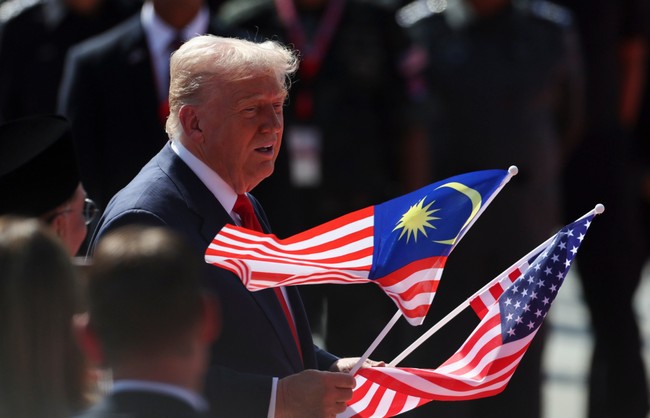
This article outlines how border tensions between Cambodia and Thailand escalated into deadly clashes, how President Trump intervened during his Malaysia trip to restart a peace process, and how a recent announcement claims the two countries have agreed to return to the original ceasefire backed by leaders including Malaysia’s prime minister.
The long-running friction along the Cambodia-Thailand border has deep historical roots tied to disputed lines and competing claims to territory. Those old grievances periodically flare up, sometimes producing localized skirmishes and at other times spilling into more serious military confrontations. Last summer those tensions turned deadly after the death of a Cambodian soldier, triggering a series of violent exchanges between the Royal Cambodian Army and the Royal Thai Army.
The clash took more than 38 lives, displaced hundreds of thousands of civilians, suspended over 500 schools, and inflicted infrastructural damage to countless homes, hospitals, and historical and religious sites. These included irreplaceable heritage monuments such as Ta Muen Thom, Ta Muen Toch, Ta Krabei, and the Preah Vihear Temple, which is a UNESCO World Heritage site.
When fighting surged in July, observers called it one of the deadliest episodes in recent memory for the two nations. Both sides suffered casualties and damage, and civilians bore the worst of it as schools closed and communities emptied out to escape the shelling. The episode left a fragile diplomatic environment where any misstep could reignite larger clashes.
President Trump, who traveled to Malaysia in October, stepped into that diplomatic vacuum and helped broker a peace arrangement intended to halt hostilities. That intervention brought a temporary calm, with the leaders of Thailand and Cambodia reportedly agreeing to a truce tied to the terms laid out with U.S. and Malaysian facilitation. Unfortunately, the ceasefire frayed quickly and violence resumed when Thailand launched airstrikes, with each government accusing the other of violating the accord.
Tensions rose again this week as fresh exchanges of fire forced tens of thousands of people to flee their homes, underscoring the fragility of any agreement made under pressure. World leaders moved to urge restraint, and regional actors pressed for a return to dialogue before the situation could spiral. Against that backdrop, an announcement from President Trump claimed the sides had recommitted to a previous deal and agreed to stop shooting.
President Trump revealed on social media: “They have agreed to CEASE all shooting effective this evening, and go back to the original Peace Accord made with me, and them, with the help of the Great Prime Minister of Malaysia, Anwar Ibrahim.”
I had a very good conversation this morning with the Prime Minister of Thailand, Anutin Charnvirakul, and the Prime Minister of Cambodia, Hun Manet, concerning the very unfortunate reawakening of their long-running War. They have agreed to CEASE all shooting effective this evening, and go back to the original Peace Accord made with me, and them, with the help of the Great Prime Minister of Malaysia, Anwar Ibrahim. The roadside bomb that originally killed and wounded numerous Thai Soldiers was an accident, but Thailand nevertheless retaliated very strongly. Both Countries are ready for PEACE and continued Trade with the United States of America. It is my Honor to work with Anutin and Hun in resolving what could have evolved into a major War between two otherwise wonderful and prosperous Countries! I would also like to thank the Prime Minister of Malaysia, Anwar Ibrahim, for his assistance in this very important matter.
Outside appeals added pressure for calm, including high-profile calls encouraging immediate cessation of hostilities and renewed negotiation. Those international voices helped create political cover for leaders on both sides to step back from military options and focus on talks. The hope now is that a return to the previously negotiated framework will hold long enough to let diplomats and military commanders stabilize the situation along the border.
For Republicans and conservatives who favor a strong, pragmatic foreign policy, this episode highlights a style of engagement that mixes presidential influence with regional partners. The claim of a successful intervention fits into President Trump’s frequent characterization of himself as a force for peace on the world stage, while underscoring the messy realities of local conflicts where incidents can quickly escalate. If the ceasefire endures, it will be credited to high-level diplomacy; if it collapses, the blame will fall on the fragile trust between long-suspicious neighbors.
The humanitarian toll remains the clearest urgency: displaced families, damaged schools, and cultural sites at risk demand that leaders keep negotiating. Stabilizing the border will require verified steps on the ground, clear agreements on patrols and de-escalation, and sustained pressure from both regional powers and the international community. Until that happens, every reconciliation announcement will be only as durable as the trust it can build among soldiers and civilians living along that frontier.

Add comment