
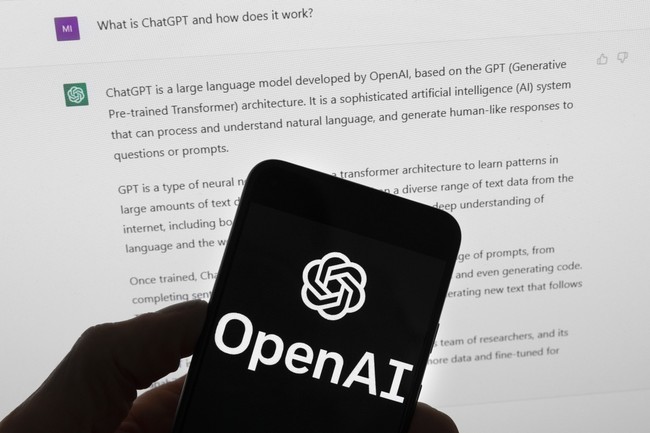
President Trump has announced a planned executive order on artificial intelligence that aims to create a single, nationwide framework instead of a patchwork of state rules, and this piece examines key issues that order should address: preemption of state laws, bias and censorship risks, hallucinations and liability, training-data transparency, and protections for creators and the public.
The administration’s push for “one rulebook” is rooted in a belief that a uniform approach will keep the United States competitive in AI and avoid the bureaucratic chokehold of 50 different approval regimes. That argument resonates with many on the right who see state-level fragmentation as a threat to innovation and national leadership. Still, centralizing regulation cannot mean ignoring real harms that unregulated AI already causes.
One priority for the executive order should be clear liability rules so victims of AI-driven harms have practical recourse. When models invent quotes or fabricate legal citations, as courts and attorneys have discovered, people and businesses suffer real damage. A sensible Republican approach demands both protection for creators and limited, predictable liability for developers so companies can innovate without being constantly sued into silence.
Bias and algorithmic “wokeness” are political and cultural flashpoints that the order must confront head on. A recent study comparing several frontier models found surprising alignment across systems, undermining the claim that any single model is reliably “anti-woke.” That study stated:
Quantitative results and qualitative inspection show a striking convergence across all five systems. Grok’s responses align closely with those of the other models. Contrary to its marketing as an “anti-woke” model, Grok does not display any systematic pattern of ideological divergence. The findings suggest that contemporary alignment and reinforcement-learning procedures have led to a shared epistemic framework among frontier models – a form of emerging consensus intelligence that transcends corporate branding and ideological rhetoric.
If federal policy allows automated fact-checking or content moderation that relies on these models, conservatives worry the result will be political censorship dressed up as safety. The executive order should ban the automated use of such models for censorship and fact-checking in government contexts, and require human oversight whenever speech or reputation is at stake. That preserves both free expression and accountability.
Closely related is the phenomenon of “hallucinations,” where models confidently assert false facts that can ruin lives and reputations. MIT researchers captured that problem plainly: “These inaccuracies are so common that they’ve earned their own moniker; we refer to them as ‘hallucinations.'” When a model wrongly accuses someone of a crime, who answers for that destruction? Policy must make that answer clear.
A recent, alarming example involves a podcaster known as “The Misfit Patriot” and claims allegedly spread by an AI system. His full post reads:
@Grok and .@xai have accused me of being arrested for possession of child pornography and this is VERIFIABLY false, as shown in this video.
I will be pursuing legal action regardless to clear my name in a court of law, but the purpose of this video is to debunk these disgusting claims in the mean time [sic] for the court of public opinion.
The negligence and irresponsibility of whoever programmed the AI to not verify something like this can lead to me being either harmed or even murdered over a lie.
I demand an apology, and a statement from .@elonmusk, X, and/or xAi immediately retracting this and verifying the falsehood of claims to hopefully deter people from making even more claims on my life, which over the past two weeks where this has not been corrected as just yesterday grok was still spreading this lie, there have been several death threats.
The damage is done, but do the right thing and at least help me not die because of your negligence. Several large creators have already repeated this lie and used it to smear my name and destroy my reputation. Legal action will be taken against them as well if done maliciously, which I suspect.
Do the right thing, and put out a statement before someone tries to harm me by coming to my address, which has already been doxxed dozens of times on THIS platform.
Cases like this make it obvious why the federal standard must include obligations for transparency and redress. Developers should be required to disclose major training sources and datasets so authors and rights holders can determine whether their works were used. That kind of transparency gives courts and creators a fighting chance to enforce intellectual property rights without impossible discovery battles.
Copyright and training-data issues are more than theory; they already drive litigation against major firms accused of scraping copyrighted material. An executive order can require model builders to list training data and provenance, striking a balance between trade-secret protection and the public interest in accountability. A conservative framework supports property rights and fair competition while keeping the door open for innovation.
Finally, a practical federal approach should separate safety rules from political content rules so technology policy doesn’t become a backdoor for cultural gatekeeping. Preemption of contradictory state rules can simplify compliance, but the order should pair that preemption with enforceable standards on accuracy, transparency, and liability. That combination protects citizens and creators while giving American companies a stable legal environment to lead the next tech wave.

Add comment