
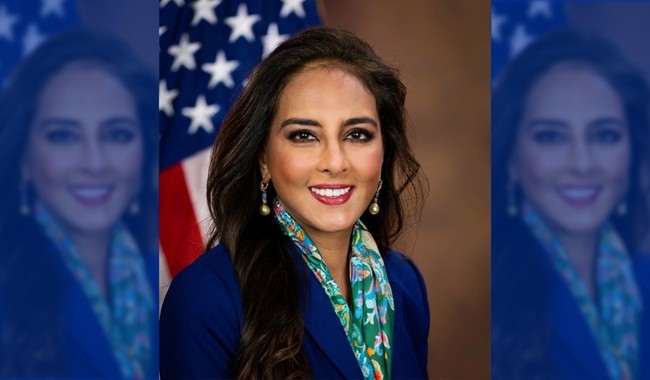
This piece lays out how Assistant Attorney General Harmeet Dhillon says the Justice Department under Jack Smith and previous leadership targeted conservative lawyers and representatives, reportedly piercing attorney-client privilege during Arctic Frost and other probes, and why that matters for civil liberties and accountability.
Harmeet Dhillon is a high-profile conservative lawyer who recently moved into the Department of Justice as Assistant Attorney General for the Civil Rights Division. She built her career founding the Dhillon Law Group and the Center for American Liberty, and she previously led the California Republican National Committee. Her new role has put her in a position to confront the very institutions that once targeted her and her clients.
The allegation is stark: during the investigations led by former Special Counsel Jack Smith, the DOJ and FBI allegedly reached into private communications tied to Republican figures and their legal teams. Those sweeps reportedly included nearly 200 subpoenas and access to hundreds of GOP-linked individuals and entities. The scale alone suggests more than routine investigative reach; it raises questions about judgment and restraint.
Dhillon says her own law firm was named repeatedly in disclosures tied to the Arctic Frost probe, which focused on 2020 election matters. For a lawyer who defends conservative causes, being placed under investigative scrutiny by the same agency she now serves brings both irony and alarm. The core worry she expresses is simple: attorney-client privilege is a bedrock of the legal system, and puncturing it without ironclad necessity is dangerous.
In an interview with podcast host and Post columnist Miranda Devine, Dhillon discussed how as a veteran conservative lawyer she had been involved in many cases brought by Biden’s Department of Justice — but she was outraged to learn the FBI “spied” on her as part of a 2020 election interference case.
“There’s almost never an excuse to pierce a lawyer’s privilege,” the assistant attorney general for the Civil Rights Division said of her work defending Project Veritas for obtaining the diary of Ashley Biden.
“And yet, we’ve seen this Department of Justice and the prior ones, go after many lawyers, go after their communications with their clients, and my law firm represented the former president and his campaign and my law firm’s name, The Dhillon Law Group, is repeatedly mentioned in the Arctic Frost disclosures as a target of these communications.”
That quote cuts to the heart of the constitutional concern: when investigators treat lawyers as targets, client confidence collapses and the right to a defense is compromised. From a Republican perspective, the worry is twofold — partisan targeting and the erosion of legal norms. If the DOJ becomes a tool for political retribution, it damages legitimacy across the board.
Senator disclosures and reporting have painted a picture of wide-reaching subpoenas and device seizures tied to January 6 and related probes. Names of senators, campaign operatives, and attorneys surfaced in records and reporting that left Republican lawmakers furious. The backlash from GOP leaders framed these actions as overreach and a breakdown of the normal checks on investigative power.
Dhillon’s move into the Civil Rights Division gives her a unique platform to address those excesses from the inside. She has vowed to scrutinize past practices and restore protections for legal counsel and private communications where abuses occurred. That promise resonates with conservatives who saw the earlier waves of investigations as weaponized against political opponents.
Critics of the prior DOJ argue that accountability must follow abuse, and that investigations into investigators are necessary to rebuild trust. Those critics point to cases where subpoenas and warrants seemed broadly scoped or poorly justified. The Republican view emphasizes restoring limits on investigative reach so civil liberties are not collateral damage in political warfare.
Supporters of a more muscular DOJ counter that national security and electoral integrity sometimes require aggressive steps, but that argument offers cold comfort when routine legal protections are set aside. The tension between vigorous enforcement and constitutional safeguards is real, and managing it requires clear rules and impartial application. Without that, every enforcement action risks being perceived as partisan.
Dhillon’s account also spotlights a cultural rot inside the justice system, according to conservative critics, where attitudes toward political opponents became permissive of intrusive methods. They point to leaked lists, disclosed subpoenas, and internal memos as evidence that decisions were driven by politics rather than neutral law enforcement judgment. Restoring professional standards, they say, is an urgent priority.
The broader implication reaches beyond any single case: public confidence in justice institutions depends on consistent, principled application of the law. Republicans will press for investigations that not only examine past overreach but also institute reforms to prevent recurrence. Those reforms, they argue, must include robust protections for attorney-client privilege and clearer limits on the seizure of communications tied to political actors.
For now, Dhillon’s testimony and the disclosures connected to Arctic Frost have set a new battleground within the Justice Department itself. The fight will be about more than partisan scorekeeping; it will determine whether civil liberties survive encounters with state power when politics are involved. And as events unfold, many on the right will be watching closely for concrete steps that ensure law and fairness, not vendetta, guide the DOJ.
Watch:
YOU DONT KNOW JACK: Jim Jordan Demands Answers on Arctic Frost, Subpoenas Former Special Counsel Jack Smith
“Yes,” Dhillon responded. “We were part of the investigative targets, and that’s because we represented the Republican National Committee, and we represented the Trump campaign, and we represented some of the other MAGA entities. And so, I mean, we’re all over the place there. As are several other law firms of current DOJ officials.”


Add comment