
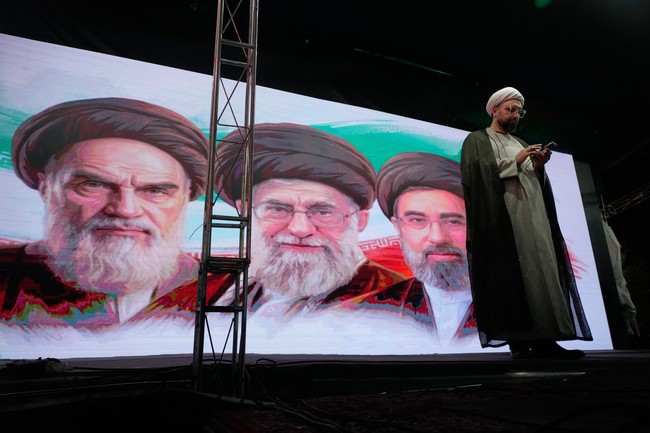
President Trump unexpectedly called off planned Thursday night strikes on Iran after announcing that Iran’s top leadership had approved talks, while keeping a naval blockade in place and saying the time and place for a signing would be announced soon.
In a short, blunt message posted on his platform, the president said he had cancelled the scheduled strikes because negotiations had been elevated to the highest level of Iran’s leadership and received approval. He framed the pause as conditional, stressing that the blockade of Iranian shipping would stay active until the agreement is finalized.
The public turn comes after an earlier, tougher warning from the president that the U.S. would be “hitting Iran … VERY HARD TONIGHT.” Those sharper words came as U.S. forces carried out a series of strikes the previous days, which were described by military spokespeople as self-defense operations following an incident over the Strait of Hormuz.
Officials say the recent U.S. military actions followed the downing of a U.S. Army Apache helicopter; the crew survived but the incident prompted a rapid escalation in orders from Washington. That escalation included authorization for additional strikes that were then put on hold once higher-level diplomacy reportedly moved forward with Iranian authorization.
Trump pointed to a broad diplomatic and security coalition involved in the discussions, naming a list of regional partners and allies as parties to the deal. He emphasized coordination with Israel, Saudi Arabia, the United Arab Emirates, and several other nations, framing the effort as multilateral and tightly managed.
Even as negotiations advanced, the president made clear operational pressure would remain. “The Naval Blockade will remain in full force and effect until this Transaction is finalized,” he wrote, signaling that the administration intends to keep tangible leverage on Iran while talks continue.
https://x.com/WhiteHouse/status/2065125847921500545
Sources close to planning described the decision as deliberate: dial up military pressure, force Iran to the table, then convert that pressure into a negotiated settlement with guarantees. That sequence aims to resolve hostilities while keeping U.S. forces and partners ready to respond if talks break down.
Observers note the move carries risks and rewards: it reduces immediate kinetic confrontation while locking in a posture designed to enforce compliance. Keeping the blockade and other pressure points active gives negotiators room to verify commitments and maintain a bargaining advantage without launching further large-scale strikes.
The president’s public statements included a formal declaration in which he noted the involvement and approval of foreign leaders and ruled out the planned bombardments. That declaration reiterated the transactional nature of the arrangement and reserved the right to resume military options if the diplomatic process fails.
Based on the fact that discussions with the Islamic Republic of Iran have been brought to the highest level of Iranian leadership and approved, I have, as President of the United States of America, cancelled the scheduled strikes and bombings against Iran this evening. Discussions and final points have been, in both concept and great detail, approved by all parties involved, including the United States, Israel, Saudi Arabia, UAE, Qatar, Turkey, Pakistan, Bahrain, Kuwait, Jordan, Egypt, and others. The Naval Blockade will remain in full force and effect until this Transaction is finalized — Time and place of the signing to be announced shortly.
DONALD J. TRUMP
PRESIDENT OF THE UNITED STATES OF AMERICA
Military officials and some regional leaders will now be watching for concrete steps: a signed agreement, verification terms, and any phased rollback of operational measures like the blockade. The timeline the president promised has not been publicly disclosed, leaving room for follow-up announcements and potential face-to-face signings.
For now, the president’s message mixes restraint and pressure: pause in exchange for a formalized, high-level commitment from Tehran, backed by continued maritime containment. Whether that approach produces durable compliance or only a temporary pause will depend on the substance of the deal and the mechanisms for enforcement.


Add comment