
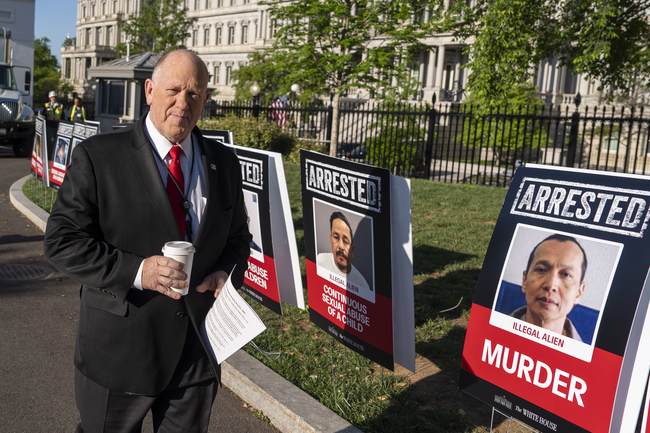
Tom Homan, the former Trump border official, says ICE will ramp up enforcement in New York City in response to Gov. Kathy Hochul’s new restrictions on federal immigration actions, promising a surge of agents and more street operations; he framed the move as a direct consequence of the state’s “Local Cops, Local Crimes” measure and argued cooperation with jails is safer than neighborhood arrests. Homan’s comments include specific quotes about a planned operational surge and his pledge to keep his promise to Hochul, and the piece reports protests at a nearby detention facility and political backlash over the law.
If you follow immigration enforcement debates, this is the kind of confrontation that gets headlines. Tom Homan told audiences he reviewed an operational plan and signaled ICE will increase its presence in New York City soon. He cast the surge as a response to recent state legislation that limits how local law enforcement may work with federal agents.
Protests around detention centers added fuel to the argument that the federal response would be visible and forceful. Demonstrations at Delaney Hall in Newark were cited as part of the backdrop for Homan’s remarks and helped frame the situation as contentious and public. The environment, he suggested, reinforces the need for a firm federal posture on enforcement in sanctuary jurisdictions.
Trump border czar Tom Homan revealed Monday that the administration has already drawn up an operational plan and warned Hochul before she signed legislation late last month restricting ICE activities and banning masked immigration agents in New York.
“You’re going to see more ICE than you’ve ever seen in New York City, and it’s coming,” Homan said, according to Bloomberg. “I just reviewed an operational plan. I’m not going to tell you exactly when it’s going to happen, but it’s coming.”
Homan made his pledge in public interviews, emphasizing the timeline only as imminent, not specific. He said his team has developed operational plans that would increase field activity in urban neighborhoods. That emphasis on timing without details is a familiar tactic for officials wanting to signal resolve while keeping tactics flexible.
When asked whether he would avoid New York, Homan was blunt that he would not. He framed the decision as keeping promises and leveraging previous approaches used in other states. His point was that limiting collaboration with jails forces agents to go into neighborhoods, raising the stakes and the resources required.
https://x.com/Newsforce/status/2064018331942752354?ref_src=twsrc%5Etfw
No, I’m going to keep my promise to Governor Hochul.
I met with Governor Hochul a couple months ago. I explained to her how we dealt with Minnesota. Right?
If we can work with the sheriffs and arrest a bad guy in the safety and security of the jail, that means less teams into the neighborhoods, which causes a lot of panic, a lot of problems, right?
I said, well, if you sign the legislation that I think you’re getting about ready to sign, that means I’m going to send more agents to New York, because now, rather than one guy wrestling one bad guy in the jail, now we’ve got to send a whole team into the neighborhood to find this person — and they don’t want to be found.
Homan argued that arresting individuals at jails is safer for officers, the community, and detainees. He cast the state’s new law as increasing dangers by forcing federal teams into neighborhoods where suspects might have access to weapons. That logic is central to his rationale for escalating field operations in New York City.
He pushed this point again, saying cooperation with local jails reduces the need for street-level raids. In Homan’s telling, the law’s limits on local-federal cooperation remove safer options and make neighborhood operations more likely. He suggested that signing the measure left ICE with fewer practical choices.
Now we got to arrest this guy on his turf [where he might have access] to weapons. I told her, it’s safer for the community. It’s safer for the officers. It’s safer for the aliens to have these cooperations with the jails.
She signed the legislation anyways.
The law Homan referenced, often called “Local Cops, Local Crimes,” was signed in late May and limits certain collaborations between state and federal authorities. Supporters argue it protects immigrant communities and clarifies local priorities, while critics warn it hampers enforcement of federal immigration law. Homan and others believe the measure will draw a stronger federal enforcement response as a result.
He also reiterated his stance in other media appearances, signaling a sustained push rather than a one-off warning. Those interviews repeat the theme: restrictions at the state level lead to a federal decision to increase presence and operations. The dynamics suggest more intense public debate and visible ICE activity in areas where local cooperation tightens.
New York officials who supported the law now face a choice about how to respond to an expanded federal footprint. Homan framed his actions as predictable consequences of policy shifts in Albany, arguing the state made enforcement harder and federal agents will fill that gap. The coming weeks will show whether ICE’s promised surge changes day-to-day enforcement patterns in the city and surrounding communities.
Homan has maintained that he will not back down on enforcement efforts and that his team will proceed with plans irrespective of state-level resistance. That position sets the stage for continued jurisdictional friction and high-profile operations that could test both legal and political boundaries. Observers should expect more public debate as those operations unfold.



Add comment