
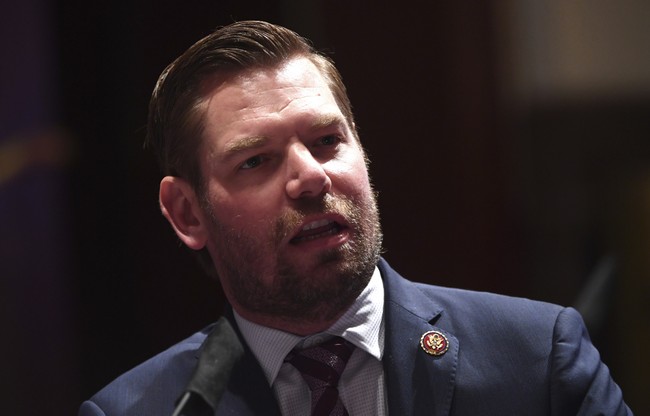
I’ll walk through why Eric Swalwell’s recent comments about ICE are unrealistic, how federal law blocks state interference, what he actually said on MSNOW, and why his proposals would be largely symbolic rather than enforceable.
Eric Swalwell keeps making headlines for dramatic gestures that sound tough but clash with constitutional reality. He staged another theatrical moment on MSNOW where he promised to target ICE agents if elected governor, claiming he would force agents to unmask and even strip them of their ability to drive in California. Those comments land as political theater more than practical policy.
Swalwell’s rhetoric fits a familiar pattern: grandstanding that appeals to a media audience while ignoring legal constraints. He portrays himself as a protector of vulnerable communities, but his plan to criminally charge federal officers and withhold driver’s licenses from masked agents conflicts with long-established constitutional limits. The result is a flashy promise with little chance of surviving legal scrutiny.
On MSNOW, Swalwell framed his authority in muscular terms, insisting governors have “immense powers” to protect people in their states and proposing concrete punishments for federal agents who, in his view, overstep. He suggested making ICE agents “take off their masks and show their faces, that they show their identification.” He also argued that eligibility for a California driver’s license should require agents to identify themselves if they operate in the state.
The problems with those proposals are straightforward and legal, not just political. State efforts to control or penalize federal agents bump into the Supremacy Clause, which prevents states from obstructing federal operations. Courts have repeatedly rejected state actions that attempt to regulate or penalize federal law enforcement for carrying out federal duties.
Swalwell doubled down on consequences, saying agents who commit crimes should be prosecuted for offenses like false imprisonment, kidnapping, assault, and battery. He also insisted “if the governor has the ability to issue driver’s licenses to people in California, if you’re going to wear a mask and not identify yourself, you’re not going to be eligible to drive a vehicle in California.” Those lines read tough on TV, but they ignore the immunity and preemption doctrines that protect federal officers acting within the scope of their duties.
What would you do if you are able to be elected as governor of California? Yes, we’ve seen over just not just one year of this new regime, that it’s the states that tend to be the strongest pushback. It’s the governors of Illinois, it’s the governor of Michigan, governor of Virginia, Maryland, everything else like that. What will you bring to the table? Because California, just by size and GDP alone, is sort of the tip of the spear. What would you bring to the table as a governor of California?
The constitutional barrier here isn’t academic. Supreme Court precedent, and cases like United States v. Washington, make clear states cannot interfere with federal enforcement. Immunity principles going back to McCulloch v. Maryland and cases such as In re Neagle shield federal agents from state criminal prosecution when they are performing federal duties lawfully. That legal backbone undercuts the enforceability of Swalwell’s promises.
The first tiny barrier to Swalwell’s antebellum policies is the Supremacy Clause, which prevents states from “interfering with or controlling the operations of the Federal Government.” United States v. Washington (2022). Since McCulloch v. Maryland in 1819, the Supreme Court has consistently struck down state laws that impede federal enforcement.
Moreover, immunity under the Supremacy Clause (Article VI, Clause 2) bars criminally charging officials who are properly carrying out their lawful federal duties. For example, in 1890, the Supreme Court ruled In re Neagle that a U.S. Marshal had immunity when a state tried to charge him with murder after he shot and killed an individual attacking a justice.
Beyond legal obstacles, there are practical safety reasons agents often obscure their identities in sensitive operations. Masks and protective gear are used because of threats faced off duty, and forcing identification could endanger officers and witnesses. Swalwell’s critique ignores why gear and anonymity sometimes protect lives and investigative integrity.
Politically, Swalwell’s gambit plays well to an audience angry about immigration enforcement, but it risks appearing performative to voters who prefer results over rhetoric. California already faces real challenges — crime, homelessness, and a strained border situation — and voters may judge whether theatrical punishments for federal agents address those core problems.
The larger point is this: promising to criminalize or block federal agents sounds bold, but legal precedent and operational realities make it unlikely to produce the outcomes Swalwell touts. His plan reads as a show of defiance that courts and constitutional law will likely stifle, leaving him with headlines rather than enforceable policy.
Swalwell might be auditioning for dramatic effect, but governing requires navigating legal boundaries and delivering workable solutions. Threats against federal officers and symbolic policy stunts won’t fix the problems Californians actually face, and they invite litigation that the state would likely lose.
Add comment