
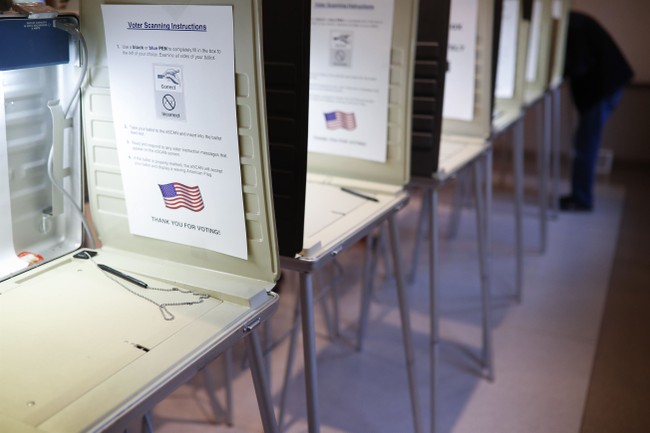
The Republican Party closed 2025 with a court ruling in Michigan that tightened ballot-security rules and spotlighted national fights over voter rolls, DOJ demands, and election integrity work by the RNC, while Democrats ramp up election-related messaging for 2026.
Democrats are already shaping narratives for the coming election cycle, focusing on January 6 and claims about intimidation tied to law-and-order initiatives in Democratic-run cities. That messaging will argue federal and state actions are aimed at suppressing turnout rather than securing elections, and expect it to be a central theme in 2026 discourse. Republicans push back that these claims are predictable and designed to distract from real vulnerabilities in the system.
The Justice Department’s aggressive requests for voter-registration data have become a flashpoint between Washington and the states, with the DOJ suing numerous states over alleged failures to provide full voter lists. “The law is clear: states need to give us this information, so we can do our duty to protect American citizens from vote dilution,” said Assistant Attorney General Harmeet K. Dhillon of the Justice Department’s Civil Rights Division. That position reinforces the federal view that complete rolls are essential to detecting fraud and preserving one-person-one-vote.
At the same time, voting-rights advocates and former federal attorneys are sounding alarms about sensitive personal data being handed to Washington. David Becker, a former Justice Department voting rights attorney, warned, “They’re trying to use the power of the executive to bully states into turning over highly sensitive data — date of birth, Social Security numbers, driver’s license, the Holy Trinity of identity theft — hand it over to the DOJ for who knows what use.” These concerns feed both privacy debates and partisan distrust about federal oversight.
Meanwhile, a recent court order in Michigan has been hailed as a concrete ballot-security win by Republican operatives, directing Secretary of State Jocelyn Benson “to stop counting absentee ballots with missing or mismatched ballot numbers unless voters properly cure them.” That decision emphasizes basic chain-of-custody and verification rules that conservatives argue are necessary to maintain voter confidence. It also undercuts efforts to count ballots that lack clear identifying information without a transparent cure process.
RNC leaders pointed to the Michigan outcome as part of a broader legal campaign to hold election procedures to clear, consistent standards. RNC Chairman Joe Gruters said, “This is a clear victory for election integrity. The court reaffirmed that ballots with missing or mismatched numbers cannot be counted under Michigan law and ordered Secretary Benson to follow a lawful, commonsense process to protect the vote. Democrats don’t get to bend the rules to make it easier to cheat.” That wording captures the GOP argument that uniform enforcement of rules prevents abuse.
The RNC reports a large legal footprint going into 2026, with the organization listing 134 active election-related cases, including 115 focused on election integrity and extensive investigatory and regulatory actions across the country. Party officials describe that as a year of building systems, filing suits, and pursuing compliance to ensure state-level processes adhere to law. Those efforts aim to make the mechanics of voting more transparent and accountable in contested jurisdictions.
Chairman Gruters added a broader note on the work’s impact: “Because of the hard work of our legal and grassroots teams, voters can have greater confidence in the integrity of our elections. I’m proud of what we accomplished in 2025, and we’re ready to build on that momentum in the year ahead.” His comment frames the RNC’s year as groundwork for a contested midterm season and a defensive posture against alleged rule-bending. The statement underscores a Republican focus on legal remedies and voter roll accuracy as central campaign issues.
As political operatives and the federal government continue to clash over data access and ballot handling, the dispute will shape public debates about privacy, federalism, and election administration. With cases moving through courts and states weighing compliance against civil liberties concerns, the practical consequences will be felt at the ballot box in 2026. Expect legal fights and messaging wars to dominate headlines through the next election cycle.



Add comment