
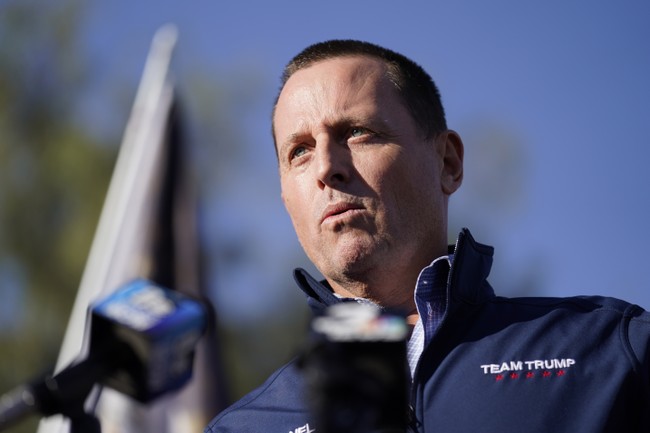
Concerning: Suspect Arrested for Death Threat Against Ric Grenell
This article explains the arrest of a Virginia man accused of threatening to kill a federal employee identified as Ric Grenell, outlines the alleged use of Google Voice and false identification, and places the event in the wider context of heated political disputes surrounding the Trump-Kennedy Center name change.
Ric Grenell has been a visible figure amid the Kennedy Center name-change controversy, and his public support for President Trump attracted sharp reactions from opponents. The controversy led to several performers canceling appearances and to public debate about who supported the renovation and fundraising that followed the name change. Grenell’s role as the Trump-Kennedy Center president has kept him in the headlines, and that visibility now coincides with a criminal case alleging a death threat against him.
According to court documents, on Dec. 23, Scott Allen Bolger, 33, allegedly used Google Voice, which allows a user to text message others using a phone number other than the user’s primary phone number, to send a message to a federal employee. In the message, Bolger allegedly threatened to kill the employee. [….]
When federal task force officers arrived at Bolger’s residence to question him about the threat to kill, they identified themselves as federal law enforcement officers. Bolger allegedly falsely identified himself as Brian Black and told them he did not know a Scott Bolger.
Federal authorities arrested a man from McLean, Virginia, in connection with the December 23 messages, and he has been charged with transmitting threats in interstate commerce and making false statements. Those charges reflect the seriousness with which law enforcement treats threats to federal employees, and they carry potential penalties if the government secures a conviction. The arrest shows investigators tracing digital communications and following leads that implicated the suspect in the alleged threats.
U.S. Magistrate Judge William Fitzpatrick ordered that the suspect be held without bond pending trial, a decision reflecting the gravity of the allegations and public safety concerns. The Department of Justice publicly described the charges and noted the use of a service that masks a sender’s primary number, a tactic sometimes used to conceal identity. If convicted, the accused could face up to five years under the statutes cited by prosecutors.
Grenell commented on the arrest and credited those involved in finding the individual, saying he was “grateful to Pam Bondi, Kash Patel and Lindsey Halligan” for their role. That quote was released in the immediate aftermath and underscores the network of private and public figures who have been engaged in high-profile legal and political battles. The involvement of notable conservative figures in this matter highlights how political disputes can draw in legal attention and personal risk for public servants.
The court filing paints a picture of a suspect who allegedly tried to hide his identity and used technology to reach a federal employee, then misled authorities when confronted. Those alleged actions — using a spoofed number and giving a false name — are central to the second charge, which is making false statements to federal officers. Investigators often rely on digital traces and cooperation between agencies to untangle such claims and establish whether the messages rose to a prosecutable threat.
Given Grenell’s role at the Kennedy Center and his public defense of Trump’s involvement in restoring and fundraising for the facility, the case comes at a politically charged moment. Performers and media coverage that reacted to the name change added fuel to emotional responses from many quarters, and that same heat can sometimes spill over into criminal conduct by isolated individuals. It is important that law enforcement treat these incidents firmly while courts determine the facts.
At this stage, investigators will present evidence and prosecutors will have to prove the elements of the federal offenses beyond a reasonable doubt. The judiciary’s handling of bond and the next procedural steps will shape how quickly the case moves toward resolution. For now, the accused remains detained and the public is watching how the legal process unfolds around a case that intersects with national political debates.
Beyond the legal specifics, the arrest serves as a reminder of how public life and political conflict can expose officials to threats and personal danger. Conservatives who supported the renovation and renaming argue that the work to restore the Center deserved credit and should not have become the target of coordinated cancellations or pressure campaigns. Meanwhile, the criminal case itself will proceed on its own facts, and the courts will decide whether the allegations as charged meet the standards for conviction.
As the situation develops, the focus should remain on the evidence presented in court and on protecting public servants from credible threats. Investigations into online and telecommunication-based threats are increasingly common, and this case illustrates the intersection of modern technology, public disagreement, and criminal law. The legal process will now determine the appropriate outcome based on the record and the rules of federal prosecution.


Add comment