
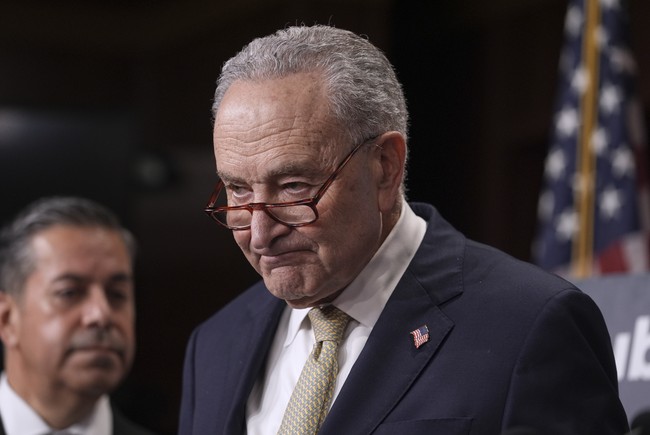
I’ll lay out why Chuck Schumer’s fundraising slowdown matters, how it ties to his stance on the shutdown, the political pressure from the left, and what the fundraising numbers reveal about his standing heading into 2026.
Senate Minority Leader Chuck Schumer voted to keep the government open back in March, which surprised many and drew heat from the party’s left flank. Now, with the shutdown in its 25th day, his stance looks different and he’s facing new scrutiny from both progressives and voters in the center. The contrast between March and October raises questions about what political pressures are driving his decisions. Those pressures are political reality, not principle.
Part of the pressure comes from the left, where figures like Alexandria Ocasio-Cortez loom as potential challengers and critics. Schumer risks alienating centrist and independent voters by leaning too heavily into appeasing the far left. That balancing act can erode broader support and make fundraising harder when donors look for stability. Donors don’t like betting on leaders who seem vulnerable to primaries or internal party fights.
Campaign finance filings show a stark slowdown in recent months, and that drop in receipts raises real questions about his political durability. He brought in just $133,000 during the three months ending Sept. 30, a fraction of past quarters when he raised far more as election season approached. Historically, senators ramp up fundraising as their elections near, and Schumer’s weaker haul stands out compared to his previous cycles. That shortfall matters because campaigns need momentum as much as money.
Federal Election Commission filings show the five-term senator’s receipts slowed to a relative trickle for the last three months — raising questions about the 74-year-old’s future in a party in the throes of a far left youth movement.
The Brooklyn Democrat brought in just $133,000 during the three months ending Sept. 30 – while facing a potential primary challenge from “Squad” Rep. Alexandria Ocasio-Cortez (D-Bronx and Queens), 36, who raised $4.5 million during the last quarterfor her House reelection campaign. […]
Schumer’s haul was less than half of the $337,000 he brought in during the equivalent period of his 2022 election — his October 2019 report. Senators serve six-year terms and typically ramp up fundraising as their race nears.
He actually spent more on his political operation than he raised from July through September, shelling out $322,000, his latest campaign filing reveals.
That fundraising shortfall looks especially notable when you compare his current cash on hand to rival figures within his own party. In October before the 2022 election he pulled in $5.9 million, and while he still has money in the bank, his coffers are not as imposing this cycle. As of Oct. 2025 he reportedly has $8.6 million available, which is less than some of the rising stars in the party. Money in politics signals viability, and a weaker balance sheet can invite more challengers.
Political survival instincts can push politicians into postures that don’t match their earlier behavior, and Schumer’s pivot is a good example. After voting to keep the government open earlier in the year he now appears more aligned with hardline factions that prefer confrontation. That shift risks alienating moderate voters who preferred the earlier compromise. When leaders change course to court a faction, it often costs them support elsewhere.
From a Republican viewpoint, Schumer’s predicament underscores a broader point about Democratic leadership and priorities. Putting ideological purity ahead of governing results can strain relationships with donors and swing voters who expect pragmatic solutions. The shutdown and the accompanying rhetoric make for poor optics, especially when essential services and military pay come into play. Voters remember who holds leverage when the lights go out.
Fundraising numbers and political momentum feed off one another: weak receipts can discourage influential donors, while high-profile primary threats can scare off moderate supporters. Schumer’s lower quarterly haul and the public tensions with the left suggest both forces are at work. For any incumbent, the combination of internal party attacks and declining fundraising creates a precarious equation. Political capital is finite, and he appears to be spending more than he’s replenishing.
The evidence on hand — slowed donations, internal party friction, and a high-stakes shutdown — paints a picture of a leader juggling competing pressures instead of advancing a clear, unifying message. That dynamic fuels narratives about desperation and signals vulnerability to primary challengers or reputational damage. In a charged political environment, perceived weakness invites scrutiny and opportunism from both friends and foes. The stakes are not just ideological; they’re practical, and they’re unfolding in real time.



Add comment