
This piece explains how the Department of Homeland Security, under President Trump, purchased two major California immigration detention facilities for roughly $1.5 billion, placing critical detention capacity under federal ownership and countering California’s sanctuary-state tactics.
Last week DHS completed a $1.5 billion acquisition of two of the largest migrant detention centers in California, securing more than 4,500 beds in a state where political leaders have tried for years to limit federal immigration enforcement. The properties are the California City Detention Facility and the Otay Mesa Detention Center in San Diego. These purchases move the conversation from litigation and local politics into clear federal control of real estate tied to immigration operations.
CoreCivic, the private operator that previously owned the buildings, confirmed the transactions and disclosed the sale prices: the California City facility for $732.6 million and Otay Mesa for $739.2 million. Together those totals amount to about $1.47 billion, and CoreCivic expects roughly $1.1 billion in net proceeds after taxes and transaction costs. The company says it will use the funds mainly to pay down debt, a practical business move that also reshapes how ICE detention is anchored on the west coast.
Operational agreements will continue for now, but ownership alters the dynamic between federal immigration agencies and state efforts to squeeze detention capacity. The California City facility’s existing contract runs through August 2027, while Otay Mesa’s contract runs to December 2029 and includes a five-year extension option. Those timelines mean the federal government now controls the buildings even as contract terms with private operators remain in place, giving DHS leverage states previously lacked.
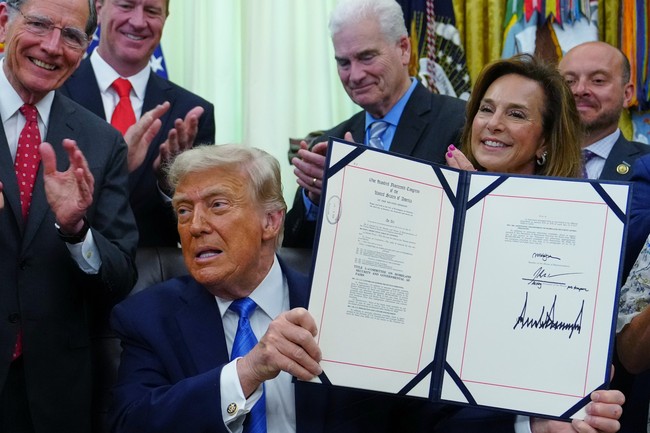
The purchase relied on funding made available by the administration’s One Big Beautiful Bill Act, which legislators and officials tied directly to the ability to expand detention space as deportation efforts scale up. A DHS spokesperson framed the move as a reaction to state-level resistance, arguing that sanctuary policies and legislation make it hard for ICE to secure detention through local partners. This is a deliberate step to protect federal enforcement capacity from hostile state interference.
California officials have for years pursued legal and political strategies to limit private detention and pressure operators out of the state. A 2020 state law aimed at private detention operators was blocked by the Ninth Circuit when applied to federal immigration facilities, and lawmakers later explored oversight and monitoring using state justice and health authorities. Those efforts created legal friction, but federal ownership sidesteps many of the leverage points California leaders tried to use.
“Unlike in states like Florida and Oklahoma, ICE can not rely on local state and county partners for detention space in California. The state’s sanctuary politicians continue to push legislation to outlaw or make private prisons financially infeasible.”
That statement captures the administration’s view that ownership neutralizes state-level tactics meant to make detention more difficult and costly. By taking title to the properties, DHS has limited a range of tools state officials were using to complicate federal operations, and it reduces opportunities for litigation aimed at property owners rather than the federal government itself. Federal title creates a clearer legal and practical pathway for ICE to retain access to capacity it deems necessary.
CoreCivic’s CEO framed the sales as supporting the government partnership: “We are pleased with the sales of these two mission-critical facilities for the Company’s government partner, which demonstrates the value of the Company’s underlying real estate portfolio, while reflecting our role as a long-term, flexible solutions provider to government.” The line underscores how private operators and federal agencies coordinate to meet detention needs, even when state politics push in another direction.
Industry leaders also argue federal ownership reduces risks tied to state interference. GEO Group’s CEO made the point in public comments that federal ownership provides “more protections from unwarranted litigation” and limits how much states can interfere, especially as certain blue states consider more aggressive oversight of facilities. From the administration’s perspective, moving facilities onto federal balance sheets is a straightforward way to protect operational continuity and shield sites from local political pressure.
Already, state Democrats and immigration advocates warn that federal ownership could reduce state and local oversight of conditions inside the facilities. Senator Alex Padilla criticized conditions he observed during visits, saying immigrants were held in “unacceptable conditions” and pledged to press for transparency and accountability. Those concerns will now play out against a backdrop where the federal government owns the real estate, complicating the leverage state officials once thought they had.
The purchase also shifts political optics. Governor Newsom and other California leaders have long championed sanctuary measures intended to slow down or limit federal immigration actions. Those strategies depended on making enforcement more difficult through state law, local refusal to cooperate, and pressure on private operators. By buying the buildings, the federal government has moved the dispute from state capitols to federal property records, and that change matters in both law and practice.
California still hosts several ICE detention sites with combined capacity near 9,000 beds, and these two facilities are the largest among them. CoreCivic says discussions with ICE about other potential sales are ongoing, though not guaranteed to conclude. For now, federal ownership of these two centers is a clear signal that the administration intends to secure and preserve detention capacity in the face of sustained state opposition.


Add comment