
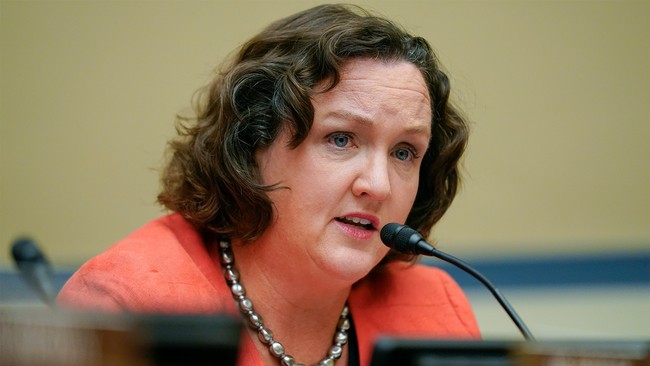
Katie Porter’s ex-husband went public with detailed, sometimes shocking claims about their marriage and behavior that feed into growing concerns among Democrats and independents about her temperament and fitness to lead California, and those revelations could shape how voters and party insiders view her gubernatorial bid.
Katie Porter’s Husband Breaks His Silence, and It’s As Bad As You’d Expect. Will It Matter in Election?
Matthew Hoffman, who was married to Katie Porter for a decade, has given interviews and court-record-based accounts that paint a messy, volatile portrait of their relationship. Those accounts include vivid incidents that supporters and opponents alike are now re-examining as Porter runs for governor. The claims have reopened debates over character, leadership, and how personal conduct should factor into a high-profile statewide race.
Hoffman went on record saying Porter is a “master manipulator” and suggested those character traits explain why she has strained relationships with prominent figures in her party. “It’s about time” certain videos and complaints surfaced, he said, implying that the public deserved to see the full picture. For voters deciding whether temperament matters more than policy, these allegations are hard to ignore.
Katie Porter is a “master manipulator” who embodies everything wrong with politics today, according to her husband of 10 years.
Matthew Hoffman, 50, told The Post the hotheaded liberal contender for California governor is a bad choice to run the deep blue state.
Referring to video clips that exposed Porter’s volatile temper and hostile treatment of staffers and journalists, he said, “It’s about time” they came out.
“The amount of staff she goes through. The horrible things that she says [about others] … those aren’t fabrications,” he warned The Post outside his home in Portland, Oregon.
Beyond the headline-grabbing quotes, Hoffman’s statements highlight a broader pattern he alleges: difficulty in building consensus and a quickness to cut ties with allies who disagree. He specifically said Porter “can’t even get along with Nancy Pelosi,” a claim that, if true, helps explain why some party leaders have stayed distant. For a governor, the ability to work across factions and calm conflicts matters more than rhetorical flair.
“She can’t even get along with Nancy Pelosi,” Hoffman observed.
He also said it was preposterous for Porter to claim her California Senate primary loss to Schiff last March was because he wanted to “rig” the election.
The marriage and divorce left public records that include heated accusations from both sides, and Hoffman’s version includes details that are hard to dismiss as partisan spin. He described episodes where Porter allegedly used profanity, destroyed property, and exerted control over domestic items like a cell phone. Those incidents are now being reintroduced to voters who may have only seen Porter’s public persona.
Hoffman pointed out that leadership is all about finding consensus, but said Porter’s personality means she isn’t the type to listen to differing ideas and find an acceptable political middle ground.
One claim that attracted national attention involves an episode Hoffman says happened in 2006, when Porter allegedly dumped a bowl of boiling potatoes on him during an argument. That dramatic detail is central to how voters judge the severity of the accusations and whether they reflect a pattern of abusive behavior or a single regrettable incident. It has become a focal point for those arguing Porter lacks the temperament needed for executive office.
Hoffman also claimed in divorce papers that in 2006, Porter exploded over the way he was making mashed potatoes, snapping, “Can’t you read the f—ing instructions!” before raising a “ceramic bowl of steaming hot potatoes and dumped it on my head, burning my scalp,” according to Hoffman’s account in court papers.
Porter’s past explanations for the end of their marriage and claims of victimhood during her 2018 run for Congress are part of the public record, and critics say the latest revelations are inconsistent with how she framed her own narrative. Supporters will argue that personal history is private and already litigated, while opponents will point to pattern and credibility. That split highlights how personal matters become political when a candidate seeks higher office.
Hoffman relocated to Oregon and says he has limited contact with his children due to distance, though he maintains he loves them and wants to be involved. He described the divorce as “awful” and recounted a back-and-forth of protective orders and legal filings that left both sides claiming abuse or misconduct. Those legal entanglements add another layer to how voters evaluate both the candidate and the people closest to her.
Within California politics, the story is resonating because Porter’s rise was fast and often framed as a straightforward progressive success story. Now that leadership questions and interpersonal scandals are circulating, party insiders and voters will weigh whether those issues are disqualifying or salvageable. For some Democrats, the lack of a full-throated defense from major figures suggests real concern.
As the campaign progresses, these personal revelations will be one factor among many — policy, electability, and the broader political climate will still matter. But character and temperament have always been part of the calculus in executive races, and Porter’s past, as detailed by Hoffman, has now reentered the conversation in a way that could be consequential for undecided voters and party decision-makers.



Add comment