
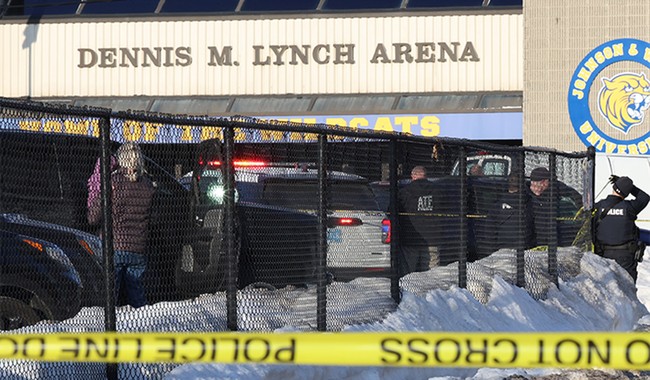
This article examines the family ties and criminal history tied to the Rhode Island ice rink shooter, including the revelation that one of his adult sons is serving federal time for setting fire to a Black church, the influence of the shooter on his children, and the broader concerns raised about violent radicalization linked to gender identity struggles and ideological extremism.
The Providence Journal reported that the Rhode Island man who attacked an ice rink, killing his ex-wife and one of his children before taking his own life, fathered another son in a prior relationship who is now incarcerated. That 37-year-old son is serving six and a half years in federal prison in Fort Worth, Texas, for torching a Black church in 2024 and for assaulting correctional officers with bodily fluids. These are hard facts that raise questions about family influence and radicalization over time.
Investigators discovered the biological link between the shooter and Kevin Colantonio while probing the arena massacre, and accounts from family members tied the son’s racist views back to the father. The son reportedly scrawled white nationalist messages in notebooks seized by federal agents after the church fire, including the chilling line: “Hunt them down gun everyone down that isn’t white, if one is white spread the gospel. Always gibe our bloodline a chance.” That specific quote appears in the seized materials and was presented by prosecutors.
The son of the transgender shooter who opened fire at a high school hockey game is serving time in federal prison for setting fire to a black church.
While investigating the shooting, authorities discovered that Dorgan was the biological father of Kevin Colantonio, 37, who tried to burn down the Shiloh Gospel Temple Ministries in North Providence two years ago.
North Providence Police Chief Alfredo Ruggiero Jr. told the Boston Globe that investigators made the connection on Wednesday and reviewed an interview they conducted with Colantonio’s mother, Marlyse Dunbar, following his arrest.
She told officers at the time that Dorgan – who has a Nazi-inspired tattoo on his bicep and voiced his support for ‘white power’ – was Colantonio’s father.
Federal court filings detailed how Colantonio bought a lighter and gasoline before walking to the Shiloh Gospel Temple Ministries, a Pentecostal congregation of about 100 mostly Black members. He poured gas around the church’s base and ignited five separate fires, which were quickly extinguished but not before significant damage was done. Prosecutors emphasized that the arson prevented congregants from freely practicing their religion while repairs were made.
The son even scrawled white nationalist messages in notebooks seized by federal investigators following the fire on February 11, 2024.
One disturbing message read: ‘Hunt them down gun everyone down that isn’t white, if one is white spread the gospel. Always gibe our bloodline a chance.’
Colantonio’s notes also showed contempt for organized religion and for what he called “global Elite Pastors.” Another line attributed to him read: “‘Eliminate Rich Snob global Elite Pastors, burn churches down to the ground, when congregants move to [the] next church, do the same.'” Those words were pulled directly from seized writings and were used in court to show motive and intent.
‘Eliminate Rich Snob global Elite Pastors, burn churches down to the ground, when congregants move to [the] next church, do the same,’ read another of Colantonio’s messages.
During sentencing, Colantonio’s lawyer pointed to a long history of mental illness dating back to early childhood, which the defense argued helped explain his actions. The prosecution acknowledged mental health issues but maintained they did not excuse choosing to target people based on race or religion or to commit arson against a house of worship. The record shows both threads were part of the sentencing discussion.
Family accounts and law enforcement records point to a pattern of tension in that family going back years, including disputes tied to the father’s gender transition. A sister described feeling targeted, saying, “We were targeted,” and called the assault on the family very specific rather than random. Those statements appear in investigatory materials and were cited as part of the motive analysis in the arena shooting probe.
“We were targeted,” she said. “This was very specific. It wasn’t random.” […] Authorities […] described the incident as a “family dispute,” and court records show a history of family tensions, including over Dorgan’s gender identity. Officials believe Dorgan had an apartment in Maine and worked at a major shipbuilding company there.
In 2020, after three decades of marriage, the shooter began identifying as transgender and underwent gender reassignment surgery, a change that preceded his wife seeking divorce. Divorce filings referenced “gender reassignment surgery, narcissistic and personality disorder traits” before the reason was later listed as “irreconcilable differences.” Those filings are part of the public court record and are relevant to the timeline of escalating family conflict.
After the arena attack, investigators found a cache of firearms and weaponry in the shooter’s residence, while witnesses described a chaotic scene where a bystander tackled the attacker before the shooter grabbed a second gun and killed himself. The massacre left families grieving and communities asking how a chain of violence, radicalization, and mental illness produced such deadly outcomes.
These events force hard discussions about ideological influence, family dynamics, and accountability. The facts on the ground—the arson conviction, the violent writings, the court records, and the tragic deaths—are all part of the public file and deserve sober examination as authorities continue to piece together motive and cause.
WATCH:


Add comment