
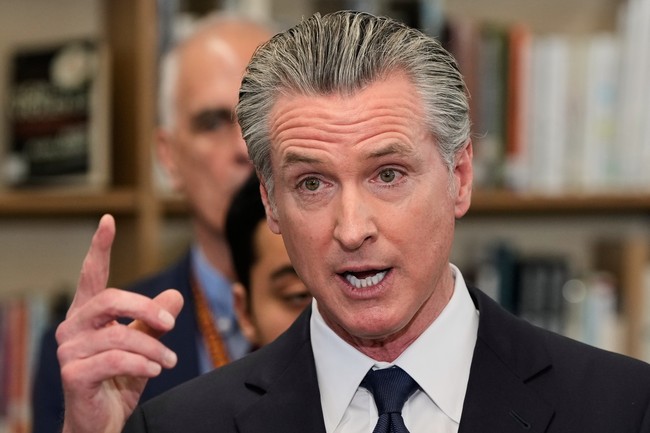
Gavin Newsom lashed out on social media after Vice President JD Vance appeared on Joe Rogan’s podcast, attacking the conversation instead of engaging with the concerns raised about California’s decline; this piece examines the exchange, the arguments made on the show, Newsom’s response, and what it reveals about how political leaders handle criticism about governance and state conditions.
Joe Rogan and JD Vance spent a long stretch discussing California, reflecting both affection for the state and frustration with its current condition. Rogan observed plainly that “Politics ruined it,” while Vance warned, “If you just abandon California, you’ve, like, lost something very core to American culture.” Their chat threaded admiration with blunt critiques of public policy and lived reality.
The podcast emphasized familiar complaints: homelessness, high taxes, corruption, and a rising cost of living that pushes people out. Rogan noted migration away from the state and described how long-term residents are fed up with steady decline. Vance echoed that sentiment, urging people not to give up on California even as he cataloged its problems.
Rather than respond with specifics about reforms or a willingness to defend his record in a long-format interview, Governor Newsom posted a short, mocking rebuttal. He wrote, “Joe Rogan is too chicken to have me on,” then added that Rogan and Vance had gathered in a “California Derangement Syndrome safe space.” That language framed legitimate policy criticism as irrational attack, sidestepping the substance of the podcast.
Newsom’s message read like political theater: dismiss the messenger, deny the facts, and cast dissent as derangement. For many voters who see streets crowded with tents and services overwhelmed, dismissive labels don’t address their concerns. Calling critique a syndrome avoids grappling with whether governance choices contributed to the decline he claims to oppose.
Long-form interviews, like Rogan’s three-hour format, tend to expose nuance and force follow-up on details, which may be uncomfortable for any politician. Newsom would face direct questions about budget priorities, homelessness strategies, public safety, and economic stewardship in such a setting. That reality helps explain why some officeholders prefer short, controlled responses rather than extended, unscripted conversations.
Critics argue Newsom’s approach looks defensive and petty, especially when contrasted with clear, concrete examples of what people experience day to day. Labeling problems as theatrical or partisan removes accountability from leadership. If the stated issues are real, voters expect names, plans, and results, not dismissal or ad hominem replies.
https://x.com/ZachJones1994/status/2079295280571126224
The podcast exchange also feeds into larger political theater surrounding the 2028 campaign cycle, where candidates test messages and personalities in public media. Vance used the platform to connect with listeners on lived experience and policy critique, while Rogan amplified themes that resonate with many who have left or lost faith in California’s direction. That dynamic can shift public perception faster than traditional campaign appearances.
Newsom’s tactic of framing critique as a mental affliction for opponents risks alienating swing voters who want accountability and results. Even supporters may find constant defensiveness exhausting when visible problems persist. Political leaders who answer hard questions with specifics tend to build more durable credibility than those who attack the critic.
When serious complaints about homelessness, public safety, and economic strain are treated as rhetorical fodder instead of governance failures, the policy conversation stalls. Citizens want tangible fixes: measurable reductions in street homelessness, transparent use of tax dollars, and concrete steps to lower the cost of living. Refusing to engage in a fact-based exchange only deepens frustration.
Newsom’s social media jab made for a headline, but it didn’t add solutions to the debate. The episode shows how modern politics often prizes optics over sustained policy discussion, even on topics that affect everyday life. Voters will keep watching to see who offers clear plans rather than headlines, and whether any leader will accept a serious conversation about restoring one of America’s most important states.
Public reaction was swift and vocal after the exchange, with many commentators and citizens weighing in on each side. A range of responses followed, from defense of the governor to calls for real accountability and reform. That mix reflects a broader national conversation about leadership, responsibility, and how we address visible civic failures.

I live in California and NEWSCUM IS A SHITTY GOVENOR And he F””K up Cali. That POS wants to Run for Pres. so he can F””K UP THE OTHER 49 STATES. ONE WORTHLESS POS AND HIS WIFE IS AS F””K UP AS HE IS.
I’m not there but was decades ago and I know you’re right!
To me such a person must be truly Evil!
Hey America, WISE UP! Newsom is far to stupid to run for president. Just look at how his policies have ruined California. Is that really what you want, total devastation of the entire country???
I pity any person who doesn’t see that, and how what you’ve stated is absolutely True!
Please wake up all you people that have been sleeping at the wheel for years or just too brainwashed! There is hope but you have to wake up before it’s too late!
Pray a lot and mean it too!
This clown act GN did RUIN California and was even burning it up with Mayor Bass! He has some evil nerve deep in his horrid soul to be finding fault with the Vice President when he already actually deserves to be locked away in Prison for LIFE! I hope his graft and secret deals along with all of his other crimes are all brought to the surface soon so he can be charged, prosecuted and receive his just deserts!