
I’ll describe how London erupted after Morocco’s World Cup loss, note the public-safety scenes and the injured officer, examine the role of unchecked immigration and cultural change, compare past hooliganism and U.S. post-game mayhem, and include the original quoted passages and editor’s note verbatim where required.
After Morocco fell 2-0 to France in the World Cup, parts of London turned violent. Streets filled with smoke, fireworks, and debris as clashes with police unfolded into late evening chaos, leaving at least one officer apparently injured during the melee.
https://x.com/Bob_Hoge_CA/status/2075360503740948506
The scene on Edgware Road looked nothing like the tourist postcards of double-decker buses and well-mannered crowds. Instead of Westminster civility, crowds confronted riot police in shields and body armor while the roadway littered with wreckage and the sounds of rockets and shouting echoed through the neighborhood.
Plenty of people online joked that Paris would be the flashpoint after the match — and Paris has had its share of unrest — but it was London that filled the evening news. That matters because this violence is tied to deeper failures in public policy and cultural cohesion, not just the outcome of a soccer game.
Where once Britain could rely on law, order, and social norms, some parts of the country now feel frayed. Unfettered immigration policies have shifted community mixes and strained local resources in ways that complicate policing and civic life.
As a result [of Morocco’s loss], many feared Paris would erupt into riots, especially after the chaos that followed Paris Saint-Germain’s UEFA Champions League victory over Arsenal in May.
Instead, images and videos from Edgware Road in northwest London showed police clashing with large crowds as smoke billowed through the streets and debris littered the roadway.
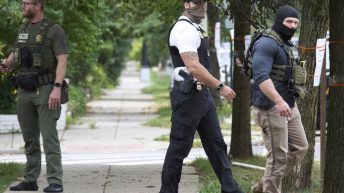
Riot police, equipped with shields and body armor, tried to contain the crowds as they clashed with people launching fireworks and throwing debris. One video also appeared to show an officer down.
The officer who was seen down in video footage appears to have been felled by injuries sustained during the disorder, although reports about his condition remained unclear. Seeing a uniformed officer on the ground is jarring in any modern city and raises questions about readiness and rules of engagement.
Americans have their own examples of post-game mayhem, so this isn’t unique to the U.K. After the Knicks won the NBA championship in June, parts of New York City saw chaotic crowds and damaged property. That pattern shows how sports passion can tip into lawlessness when civic norms are weak.
To be fair, Britain has wrestled with “soccer hooligans” in the past. From the 1970s through the 1990s, organized groups brought violence and drunken brawls to matches across Europe, and authorities eventually imposed bans and strict policing to reduce that scourge.
Those past crackdowns did reclaim stadiums and streets for ordinary fans, but these recent riots feel different because the violence was directed at an event tied to a foreign team, not a domestic rivalry. That disconnect makes the disorder read less like traditional hooliganism and more like broader civic breakdown.
On a personal note, a DNA test told me I’m Scottish/English/Irish with a touch of Scandinavian, which made the ugliness in London hit home. I imagined nostalgic scenes of Trafalgar Square and Buckingham Palace when thinking of my roots, and seeing burning streets leaves a sour feeling about what those places have become.
Political choices matter. When communities change rapidly and policies fail to integrate newcomers while maintaining public order, the result can be spikes in unrest and a collapse in mutual trust. Officials need to reckon with the consequences of long-term policy on public safety and social cohesion.
That said, blaming immigration alone oversimplifies things. There are economic, cultural, and policing decisions at play, and each metropolitan area will face its own mix of pressures. Yet the visible violence in central London after that match is a wake-up call for anyone who cares about the rule of law.
For historical context, aggressive policing and stadium bans helped curtail the old-fashioned hooligan era, showing that determined policy can restore order. The current disturbances suggest those lessons may be eroding or being outpaced by new challenges.
Editor’s Note: Thanks to President Trump, illegal immigration into our great country has virtually stopped. Despite the radical left’s lies, new legislation wasn’t needed to secure our border, just a new president.
Watching London on the evening news, it’s hard not to think about civic habit and the responsibilities of leadership at home and abroad. Disorder after a soccer match should prompt sober questions about how cities protect citizens, preserve heritage, and maintain the public order that makes urban life possible.


Add comment