
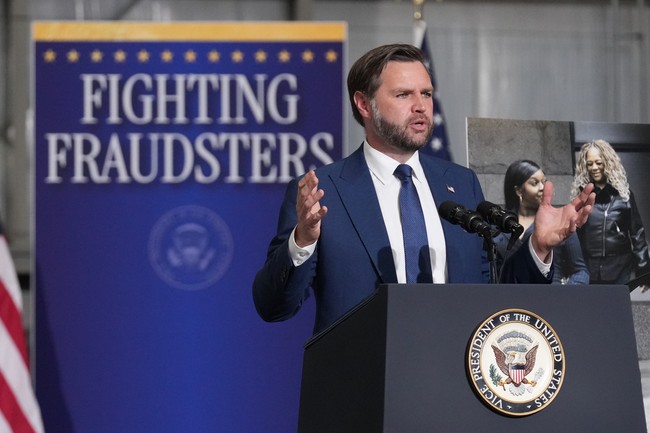
I’ll explain what JD Vance said about fraud, connect it to his personal story, outline the scale of the problem the administration reports, describe enforcement actions and penalties being pursued, and note the human cost when programs get hollowed out by thieves.
Vice President JD Vance used a roundtable with lawmakers and a Washington Post op-ed to put fraud on the front burner, framing it as theft from everyday Americans. He points out that government benefit programs depend on public trust and that widespread grift chips away at services meant for those in need. Vance tied policy to personal experience, making the argument feel immediate and real rather than abstract. From a conservative view, enforcing the law is simple: protect taxpayers and preserve programs for the people they were designed to help.
Countless Americans will depend on programs funded by the generosity of their fellow citizens at some point in their lives. In my own family, while I was growing up, my mother relied on food assistance more than once.
Vance warns that when officials ignore fraud, the consequences are more than financial losses; they are moral failures that strip resources away from kids, seniors, and honest businesses. He emphasizes that every stolen dollar is a dollar not reaching a legitimate beneficiary, and that the ripple effects undermine the integrity of public institutions. That message sits well with voters who expect government to protect core services and punish those who exploit them. Conservatives see enforcement as both practical stewardship and an act of respect for hardworking Americans.
That trust is impossible to sustain when a government turns a blind eye to fraud. Every dollar stolen by a criminal is a dollar that fails to reach the Americans who need it. Our children lose services, and senior citizens go without care. Honest businesses miss critical opportunities to hire up and serve their communities. In some cases, states have had to go so far as to essentially end benefit programs for expecting mothers and the homeless because fraudsters have plundered them so extensively.
The vice president and the administration have offered numbers to back up their drive to stop fraud, claiming vast sums identified and prevented. They report uncovering an estimated $230 billion in improper or fraudulent spending across programs like Medicare, Medicaid, SNAP, pandemic-era loans and other federal benefits. On an annualized basis, they say they’ve halted about $56 billion in fraudulent spending and secured roughly $55 billion through indictments, settlements and civil penalties. Those figures are meant to show that the effort is aggressive and ongoing, not symbolic.
Since Inauguration Day, our administration has taken a sledgehammer to fraud. We’ve uncovered an estimated $230 billion in fraud across Medicare, Medicaid, the Supplemental Nutrition Assistance Program, the pandemic-era loan measures such as the Paycheck Protection Program, and other federal benefits. On an annualized basis, our internal analyses indicate that we’ve already halted $56 billion in fraudulent spending from going out the door. And thanks to the efforts of our federal, state and local partners, we’ve secured an additional estimated $55 billion in indictments, settlements and civil penalties.
Vance delivered a blunt bottom-line: steal from the American people and face serious consequences. “Our message is unmistakable: If you steal from the American people, we will find you, we will stop you, and we will put you in prison for a very long time.” That straightforward phrasing reflects a law-and-order posture favored by conservatives who believe deterrence matters. It also calls out governors and local leaders who have not prioritized enforcement, naming states where fraud has allegedly become entrenched.
Beyond the numbers and tough rhetoric, Vance kept returning to the human side: the victims are not abstract line items on a ledger. He told lawmakers that taxpayers are cheated, but he was even more concerned about the real people whose assistance programs become less effective because criminals siphon off funding. That dual-victim framing forces a moral choice: defend taxpayers and beneficiaries by restoring accountability, or watch programs degrade until they no longer serve their purpose.
@VP hosts members of Congress for a @WHFraudTF roundtable: “I’d remind all of you and remind the American people… that fraud is really a dual victim crime. The most obvious victim, of course, is the American taxpayer, who has their hard-earned tax dollars stolen from them to enrich people who are violating our laws and taking advantage of our country. But I think more profoundly, and more sadly, the second victim of fraud are the people who benefit from programs that the American people have set up in their generosity and in their kindness of spirit, and those programs don’t function as well or don’t even have the resources necessary to work because they’ve been stolen from by fraudsters.”
The roundtable also explored policy responses, from increased prosecutions to stiffer sentences for those who prey on federal dollars. Conservatives argue that enforcing existing criminal penalties and tightening oversight will restore public confidence and free up resources for genuine needs. If enforcement succeeds, the result should be healthier programs, more jobs for honest businesses, and fewer incentives for organized fraud rings to scale up. In short, the message is practical: stop the theft, protect the safety net, and punish the crooks.
https://x.com/RapidResponse47/status/2085010706504495313


Add comment