
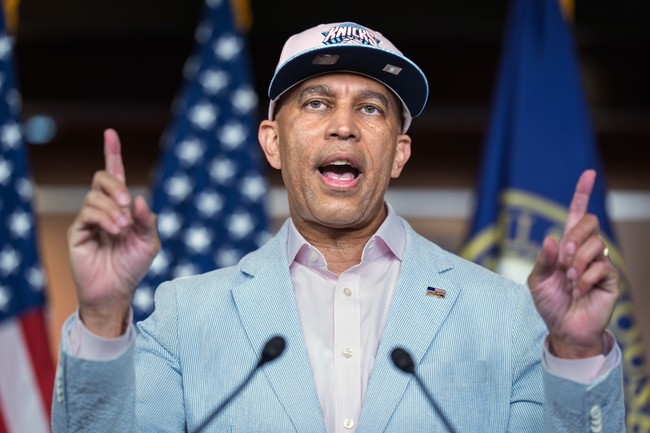
This piece examines the upset in Michigan’s Democratic primary that cost Rep. Shri Thanedar his seat to Donavan McKinney, highlights Hakeem Jeffries’s politically costly endorsement, and explains why the rise of DSA-backed candidates matters for House leadership and the party’s future.
Hakeem Jeffries Is the Big Loser As His Impeachment-Obsessed Candidate Goes Down in Flames
Rep. Shri Thanedar lost a Democratic primary in Michigan’s 10th district to State Rep. Donavan McKinney by a margin of 51.9 percent to 48.1 percent. Thanedar had gained attention inside his party for repeatedly pushing impeachment talk and for blunt public comments, once saying, “Good riddance.” The defeat is notable not just for the margin but for what it signals about the party’s shifting center of gravity.
McKinney is a lifelong Detroiter and an avowed socialist who has ties to the Metro Detroit Democratic Socialists of America. His win returns Black representation to Detroit in Congress after Thanedar’s 2022 victory, and it also represents another progressive-backed triumph. That combination of identity politics and leftward policy preference is increasingly visible in Democratic primaries nationwide.
Thanedar’s profile inside the caucus included a relentless focus on impeachments and a willingness to be a noisy, sometimes abrasive presence. That posture made him reliable to some national Democrats who want visible agitators in the House, but it also made him vulnerable to a more energized progressive base at home. Local voters decided they preferred McKinney’s approach in a close but decisive result.
House Minority Leader Hakeem Jeffries endorsed Thanedar, a move that now looks politically costly for the leader. Jeffries threw his weight behind an incumbent who has been a dependable party foot soldier, and the loss raises questions about his judgment and influence. For a leader trying to keep a fractious caucus together, every failed endorsement chips away at authority.
https://x.com/BillMelugin_/status/2085003702536933465
The DSA’s influence is a central part of this story; progressives and socialists are no longer content to be peripheral agitators. They are winning primaries and taking seats, which pressures the party establishment to accommodate more radical positions. That dynamic creates a problem for any leader who must balance moderate electability with the demands of a growing left flank.
If Democrats hope to retake the House and crown a speaker capable of managing this turmoil, they will need someone who can unify competing factions without capitulating every time the radicals push. Jeffries has not shown himself to be the kind of forceful, persuasive leader that calms infighting; instead, his endorsements suggest a willingness to play internal politics that may not align with broader electoral strategy. Voters and party operatives will watch how he responds as more socialists win within the caucus.
Beyond personalities, this primary highlights a broader strategic problem for mainstream Democrats: they have spent years embracing progressive rhetoric while hoping radicals remain a pamphlet-sized nuisance. That gamble is failing as socialists convert grassroots energy into concrete wins at the ballot box. The result is a party that must choose whether to lean into hard-left policies or try to reassert a more pragmatic path.
The Thandedar loss also signals practical risks for Democrats in swing districts. Candidates who energize a far-left base can win primaries, but their platforms may not be as competitive in general elections across many districts. That tension between primary dynamics and general election viability is a recurring headache for a party trying to hold a fragile coalition together.
For Republicans, the takeaway is straightforward: the Democrat civil war creates openings. When the left and the establishment slug it out, messaging fractures and national focus shifts away from the voters’ pocketbook concerns. Conservatives should watch where the Democratic Party’s energy is going and be ready to capitalize on the disarray in 2026 and beyond.
Thanedar’s defeat is more than a local upset; it’s an example of the pressure shaping the national Democratic agenda. The rise of DSA-backed candidates will force hard choices, and leaders who misread the moment risk looking weak. As those battles play out, the shape of the party’s future will become clearer, and the consequences will reach far beyond one primary.
Add comment