
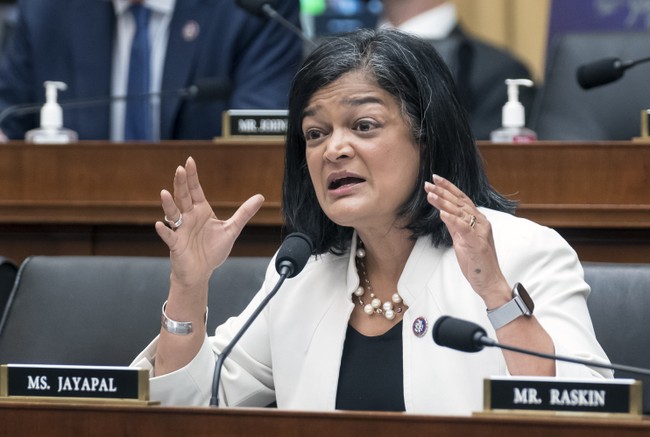
This piece explains Representative Pramila Jayapal’s H.R.2760, the Dignity for Detained Immigrants Act, outlines what the bill would change in immigration detention, notes who joined her at the announcement, and presents a critical Republican perspective on the policy’s implications for law, public safety, and taxpayers.
WA Democrat Rep Wants New Law to Tie ICE’s Hands, Force Americans to Pay Illegal Aliens’ Legal Bills
Representative Pramila Jayapal introduced H.R.2760, called the Dignity for Detained Immigrants Act, with 123 House co-sponsors. The bill promises broad changes to detention practice and oversight, aiming to reshape how DHS and ICE manage immigration custody. Supporters frame it as restoring dignity and oversight to a system they say lacks accountability.
The proposal would repeal mandatory detention and phase out private detention facilities over three years, among other measures. It builds in a presumption of release for many groups and raises the burden for detaining primary caregivers and vulnerable people. That list explicitly includes pregnant women, survivors of torture or gender-based violence, people with serious illness or disability, LGBTQ individuals, asylum seekers, and people over age 60.
“This bill brings dignity, justice, oversight, and accountability to the detention system by repealing mandatory detention, prohibiting the detention of families and children in family detention, phasing out the use of private detention facilities and jails, and requiring DHS to establish civil detention standards.”
“The bill creates a presumption of release and imposes a higher burden of proof to detain primary caregivers and vulnerable populations. The bill also mandates the DHS Inspector General to conduct unannounced inspections and requires DHS to admit Members of Congress to detention facilities for unannounced inspections.”
What a joke!
From a Republican perspective, this approach ties the hands of law enforcement and invites judges to question routine enforcement decisions. Scaling back detention and creating presumptions of release could increase the difficulty of ensuring people appear for hearings or are removed when ordered. Critics argue that the policy is out of step with concerns about border flows and public safety.
Jayapal explicitly described the bill as an overhaul that would “drastically scale back the use of detention” by DHS and ICE. She said the measure would ensure detained immigrants have their human and civil rights protected and would require DHS to admit members of Congress for unannounced inspections. Those inspection powers and new standards form a major part of the legislation’s oversight strategy.
The bill lists specific mandates like requiring DHS to establish civil detention standards comparable to American Bar Association guidance. It would also mandate the DHS Inspector General to conduct unannounced inspections and impose meaningful penalties for failing to meet standards. That combination aims to replace discretion with statutory rules and stronger external checks on detention facilities.
Among the more controversial elements is language that implies taxpayer-funded legal services and broader access to care for detainees. The bill’s backers argue this levels a playing field and prevents abuses. Opponents counter that people who entered the country unlawfully should not automatically receive parity with citizens when it comes to legal resources paid by American taxpayers.
Another high-profile aspect of the rollout was who Jayapal chose to share the stage with during the press conference. A prominent activist with polarizing views appeared alongside her and made forceful statements against detention. At the event the activist told the crowd, “No one should be detained for immigration enforcement. No one. There’s no need for detention for immigration enforcement.” Jayapal nodded in agreement.
Republicans see that moment as emblematic of a broader political choice: prioritize open-door or liberal detention policies over predictable enforcement and border security. They argue the bill’s presumptions and prohibitions would let serious risks slip through, from criminal offenders to those who fail to appear for immigration hearings. Lawmakers on the right also argue that detaining individuals is sometimes necessary to preserve the integrity of immigration law.
Practical questions remain about implementation and cost. Phasing out private facilities and imposing new civil detention standards will require funding, personnel, and infrastructure changes. For critics, the unanswered issue is who covers those costs and whether those dollars will be diverted from other priorities given the bill’s scope.
At its core, the debate is about priorities and consequences. The Dignity for Detained Immigrants Act signals a clear shift toward limiting detention and increasing oversight, but it also raises serious Republican concerns about border security, law enforcement discretion, and taxpayer obligations. That tension is likely to define the political fight over this bill as it moves through Congress.



Add comment