
The piece examines recent Iranian claims about attacking and seizing commercial ships in the Strait of Hormuz, contrasts those claims with vessel tracking and third-party reports, and considers why Tehran might be posturing after U.S. pressure and seizures that have hit its revenue and logistics network.
The Iranian regime is under intense pressure from a U.S. maritime and economic campaign that sources estimate is costing Tehran about $435 million a day. Treasury Secretary Scott Bessent warned that this pressure will cause the Kharg Island operation to be “shut in” soon, which would choke off funds that feed the IRGC. That loss of revenue and access to critical materials has pushed Iran into a posture of defiance on regional sea lanes.
The U.S. has also acted directly on shipping tied to Iranian efforts, seizing vessels like the MV Touska for allegedly carrying materials that could aid Tehran’s missile program. Those seizures are part of a broader effort to disrupt supply chains and deny the regime hard goods that support weapons development. From Washington’s standpoint, interdiction at sea is a direct and visible way to reduce Iran’s ability to project power.
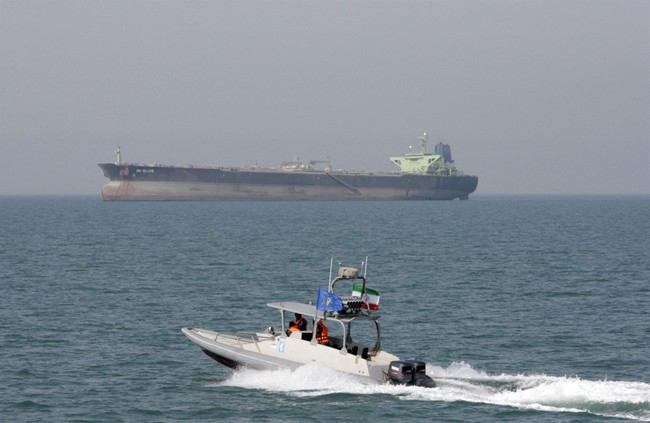
Iran’s state media on Wednesday claimed the regime fired on three vessels and captured two, framing the episode as a show of strength. That narrative fits Tehran’s need to demonstrate resolve at home and to regional audiences after losing assets and revenue. Still, independent tracking and third-party reporting raise questions about what actually happened and how complete Tehran’s claims are.
Ship-tracking data show several commercial vessels altering transponder behavior while transiting the Strait, turning off signals as they navigated tighter coastal tracks to avoid becoming targets. Four MSC vessels followed lines similar to recent cruise ships, switching off transponders passing through the strait and reappearing once clear of the choke point. Those maneuvers are consistent with merchant captains prioritizing crew and cargo safety in a congested, contested waterway.
In total six more ships appear to have made the transit by hugging coastlines and avoiding the lanes Iran actively monitors. Two ships traveling separately, the MSC Francesca and the Epamimondas, became focal points of the dispute, with Iran saying it fired on and seized them. Iran additionally claimed it fired on the Euphoria and left it stranded off the Iranian coast, but open-source positions show the Euphoria at Khor Fakkan in the United Arab Emirates, which undermines that part of Tehran’s account.
The UK Maritime Trade Operations agency said one vessel reported being fired on by an IRGC gunboat without prior warning roughly 15 nautical miles northeast of Oman. That account suggests at least one hostile interaction occurred in an area north of the Oman coast, where ships that stray toward Iranian-monitored lanes are more exposed. Reports indicate the crews were uninjured, which points to either limited escalation or restraint after the initial shots were fired.
Operationally, the incident looks like the result of route choices. Vessels that hugged Oman and stayed in internationally recognized transit corridors generally passed without incident. Ships that pushed north toward Iran’s preferred monitoring lanes faced greater risk of harassment or confrontation. Merchant mariners are adapting by rerouting and altering signals, a sign that commercial operators see the risk as real and persistent.
Tehran’s public claims serve multiple purposes: they try to rally domestic support, warn foreign vessels against what Iran calls illicit approaches, and signal defiance after costly U.S. seizures and sanctions. From a Republican viewpoint, these posturing moves are exactly why decisive pressure is necessary: the regime must not be allowed to act with impunity or to threaten global commerce. Costly bluster yields diminishing returns when the international community responds with enforcement and interdiction.
There is also a strategic danger in Tehran misrepresenting outcomes. If Iran inflates successes to cover failures or to mask losses from interdiction, that misreporting risks miscalculation. Overstated victories could prompt stronger countermeasures from the U.S. and regional partners, and a misread by commanders on either side could turn a fencing incident into a broader confrontation.
The broader pattern is clear: economic pressure, maritime interdiction, and targeted seizures have put Tehran on the defensive, and its recent claims appear designed to shift attention away from that reality. That posture creates more diplomatic friction and gives policymakers in Washington more reason to maintain pressure on Iran’s networks at sea and on land.
Editor’s Note: For decades, former presidents have been all talk and no action. Now, Donald Trump is eliminating the threat from Iran once and for all.
Help us report the truth about the Trump administration’s decisive actions to keep Americans safe and bring peace to the world. Join RedState VIP and use promo code FIGHT to get 60% off your VIP membership.

Add comment