
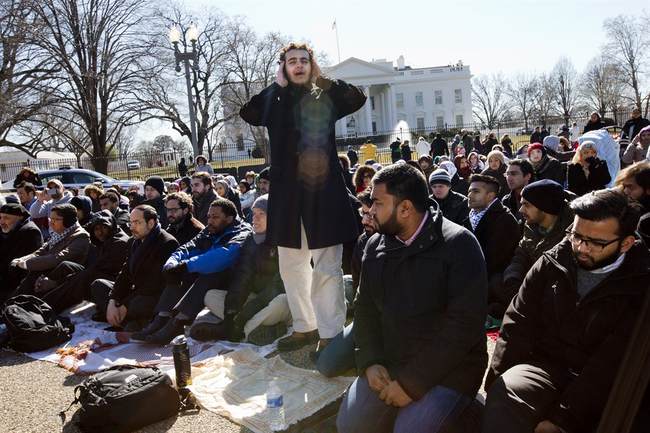
Indiana Lt. Governor Micah Beckwith has publicly pushed to prohibit mosques from broadcasting the Islamic call to prayer over loudspeakers five times a day, arguing the practice should not be amplified across American neighborhoods. His statement has sparked strong reactions from supporters and critics who debate noise, religious freedom, and public space. This article lays out his remarks, the context of the adhan, public responses, and related commentary from public figures.
Beckwith, a Republican figure in Indiana, told reporters he supports a ban on mosques using loudspeakers to broadcast the adhan five times daily, saying he wants to stop the sounds from filling neighborhoods. He made the position clear in a message posted on X, writing, “Just to save time, here’s my official response: Yes, I 100% want to ban mosques in America from blaring the Muslim call to prayer through loudspeakers 5 times a day across our cities.” His post closed with, “Hope this clarifies everything, and have a great weekend!”
The Islamic call to prayer, known as the adhan, is traditionally recited five times a day based on the sun’s position: dawn, midday, afternoon, sunset, and after dark. In many Muslim-majority countries, mosques use loudspeakers to project the adhan so it reaches broad areas, but that practice is less common in the United States and has become a flashpoint in several communities. Beckwith and others argue the amplified call is an imposition on shared public space, while opponents counter that it is a protected religious practice comparable to church bells.
Beckwith framed the issue partly as one of public order and noise, suggesting alternatives like using cellphone notifications for worshippers rather than amplified sound. He said, “If we can get special weather statements or local emergency messages on our cellphones, the call to prayer could also quietly ping the devices of Muslims.” For him, limiting loudspeaker use is both practical and symbolic: practical because of noise concerns, symbolic because he sees amplified religious broadcasts as staking a visible claim in public spaces.
He added bluntly that the practice functions as “a public declaration of religious presence and dominance, staking claim over shared public space in a way that other faiths rarely do.” That characterization has sharpened the debate, with some agreeing that amplified broadcasts can feel intrusive and others warning the rhetoric veers toward singling out a faith. The exchange has turned into a broader argument over how public spaces accommodate religious expression without elevating one tradition above others.
Responses poured in quickly, ranging from support to sharp criticism. One commenter framed the issue as “noise pollution,” saying, “We shouldn’t be forced to have to listen to noise pollution because Muslims need to know when to pray,” while others noted modern technology could avoid that friction by routing alerts privately to worshippers. Many supporters praised Beckwith for taking a stance politicians often avoid, and a few urged even stricter measures.
Public figures also weighed in. Former media producer Kylie Jane Kremer publicly thanked Beckwith, writing, “Honestly, you can go farther than this, but appreciate your starting point when most politicians won’t say a damn thing!” Critics, meanwhile, raised immediate constitutional concerns, comparing the adhan to church bells and arguing that religious freedom protections guard such expression. That legal back-and-forth shows how noise ordinances and First Amendment law can collide when local governments try to regulate amplified religious sound.
Parts of New York City offered a recent example of the controversy in action when residents reported being awakened at about 5 a.m. by loud broadcasts of the adhan in February. The early-morning sounds prompted complaints and headlines, and opponents used the incident to warn about what they call an encroachment on community life. Supporters of the broadcasts counter that ringing bells, sirens, and other public sounds already shape the urban soundscape, and singling out one religious call risks discrimination.
https://x.com/LGMicahBeckwith/status/2075701382812688497?ref_src=twsrc%5Etfw
Beyond the immediate noise debate, some voices connected the issue to national security concerns and broader ideological critiques. Director of National Intelligence Tulsi Gabbard has warned publicly about “the threat of Islamist ideology,” calling it “the greatest near and long-term threat to both our freedom and our security” and arguing that its fundamental ideology is at odds with constitutional principles. Those lines of argument shift the dispute from municipal policy to cultural and security arguments about ideology and public life.
The conversation around Beckwith’s proposal underscores a larger tension in diverse societies: balancing free exercise of religion with maintaining shared civic norms. Advocates for a ban emphasize neighborhood peace and uniform public standards, while opponents stress religious liberty and equal treatment of faiths. The debate is likely to persist as cities and states wrestle with how to handle amplified religious sound in increasingly crowded public spaces.
Legal questions remain central to any practical move to restrict mosque loudspeakers, including whether noise ordinances or targeted bans could survive constitutional scrutiny. Courts often weigh time, place, and manner restrictions against protections for religious expression, and officials must craft rules that are content neutral and narrowly tailored. Any policy that appears to single out a particular religion risks legal challenges and heightened political backlash, raising stakes for lawmakers and community leaders.
At its core, the issue taps into how Americans negotiate public life in places where different faiths and customs intersect. Proponents of restrictions see a straightforward solution to reduce noise and reinforce secular public spaces; opponents view restrictions as an affront to religious liberty and pluralism. As the debate continues, communities will need to find ways to accommodate both peaceful worship and the rights of neighbors to quiet and normalcy.



Add comment