
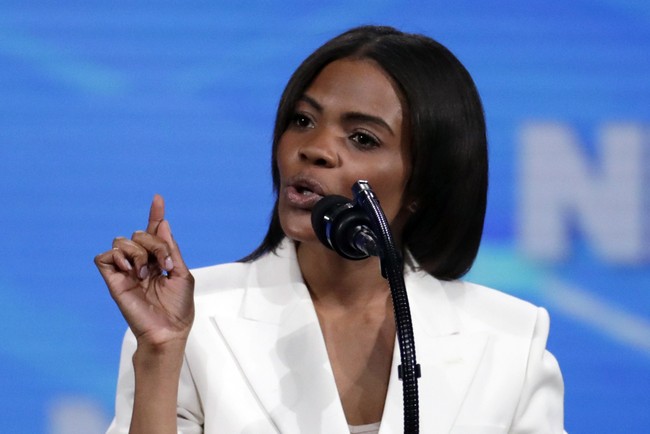
This piece examines Candace Owens’ recent attacks on courts and institutions, the legal entanglements tied to her public accusations, and a separate controversy involving her husband that raises questions about immigration disclosures and possible criminal charges. It focuses on public records, court filings, and Owens’ own statements to sketch how a media persona has responded as legal pressure mounts. The article stays grounded in reported facts and quotes while arguing that accountability in the courts—not conspiracy theories—should determine outcomes. Expect scrutiny of the tactics, motives, and legal stakes at play.
Candace Owens has used her platform to challenge institutions and officials, calling the Tyler Robinson case a “fedslop” and pushing broad conspiracies that blame everyone but the accused. That messaging has translated into a profitable media play, but also into a trail of lawsuits and furious reputational attacks on those she names. From a conservative perspective, skepticism of government is healthy, but wild accusations that smear private citizens and institutions cross a line. The courts exist to sort facts from fiction, and the legal system is responding to allegations that have real consequences.
Owens now faces defamation suits, including a high-profile Delaware action from President Emmanuel Macron and his wife for claims she refuses to retract. She has also been accused in filings by Charlie Kirk’s head of security: “Since Charlie Kirk’s assassination, Owens has intentionally proliferated a campaign intended to impugn the reputation of Harpole,” the suit states. Those are not casual complaints; they are formal legal claims that will require evidence, testimony, and judicial findings. In short, the issues Owens raised on podcasts and social feeds are being shifted into courtroom records where they must withstand scrutiny.
The list of people Owens has implicated is long and varied, from media figures to organizations, and several of those individuals appear likely to seek damages after the Robinson trial concludes. When a public voice repeatedly points fingers without clear proof, targeted parties often respond by using the only tool the law gives them: lawsuits. This is not about silencing debate; it is about ensuring that claims with serious reputational impact are backed by verifiable facts. Conservatives who value free speech should also value responsibility for what is said in public fora.
Separately, public records tie Owens to a very different legal headache: an August 2023 arrest report involving her husband, George Farmer. The report describes a single-vehicle crash near Interstate 65, a loaded pistol in the truck, and a driver described as “stumbling” and “swaying” with the “odor of alcohol.” Farmer allegedly provided a breathalyzer reading of .261, more than three times the legal limit. Those are straightforward law enforcement findings that carry criminal implications when matched against the charges listed in the records.
The charges captured in those records include leaving the scene of a self-induced collision, driving under the influence, and possession of a weapon while intoxicated. Owens publicly dismissed the episode, claiming the man in the report was a different George Farmer who just happened to share his name and travel on the same highway. But the documents include addresses and contact details that tie back to Farmer’s known connections, and the phone number in the report links to Owens’ assistant. Those overlaps are not trivial when the stakes include possible deportation or disqualification from naturalization procedures.
Naturalization rules require disclosure of arrests and related criminal-history documentation on USCIS forms, and policy flags good-moral-character issues during the citizenship process. The timing matters: the report places the incident before Farmer’s U.S. citizenship timeline, raising direct questions about what was disclosed and who reviewed the application. If a qualifying felony or serious misdemeanor was omitted from an immigration application, that is not merely an embarrassing detail; it is a potential federal problem that merits investigation.
Instead of answering those questions, Owens chose ridicule. “We are SOOO scared you’re going to report us to ICE… won’t you miss us if we get deported?” she tweeted, turning a legal question into a punchline. That response will not satisfy courts or immigration officials who evaluate documents and timelines, and it does little to reassure observers looking for transparency. In the courtroom, jokes do not substitute for documentary proof or credible testimony.
The broader point is this: public figures who relentlessly attack institutions and individuals must accept the consequences of introducing those claims into the public square. When allegations are repeated across podcasts and social feeds without corroboration, people seek legal remedies. Conservatives who champion rule of law should welcome that process, because accountability applies equally to everyone. Courts are where disputed facts belong, not Twitter campaigns or monetized conspiracies.
Owens’ tactics have produced predictable legal pushback, and the Farmer records add a separate layer of potential exposure that goes beyond political theater. Whether those matters end in settlements, verdicts, or dismissals, they will be resolved through legal procedures rather than online outrages. For now, the key actors—plaintiffs, defendants, and the courts—will do their work in public records, depositions, and filings, where claims can be tested under oath and evidence can be weighed fairly.
In this moment, the relevant conservative instinct is to trust institutions to enforce standards and to let litigation, not spectacle, determine outcomes. Accusations have consequences, and the legal system is the proper arena to sort them out. That is how accountability is supposed to work, regardless of the media profile of the person making the allegations.

Home-based job that pays more than 12,000 Dollar per month by doing simple tasks on a laptop or mobile device part-time. Last month, I earned 24,863 Dollar from this job by working 4 hours per day online. Very simple jobs to do, and the earnings are insane. Everyone can now make more money online by joining the website listed below…..
𝒋𝒖𝒔𝒕 𝒖𝒔𝒊𝒏𝒈 𝒕𝒉𝒊𝒔 𝒔𝒊𝒕𝒆.. Www.PayAtHome1.Com
Home-based job that pays more than 12,000 Dollar per month by doing simple tasks on a laptop or mobile deviced part-time. Last month, I earned 24,863 Dollar from this job by working 4 hours per day online. Very simple jobs to do, and the earnings are insane. Everyone can now make more money online by joining the website listed below…..
𝒋𝒖𝒔𝒕 𝒖𝒔𝒊𝒏𝒈 𝒕𝒉𝒊𝒔 𝒔𝒊𝒕𝒆.. Www.PayAtHome1.Com
Home-based job that pays more than 12,000 Dollar per month by doing simple tasks on a laptop or mobile device part-time. Last month, I earned 24,863 Dollar from this job by working 4 hours per day online. Very simple jobs to do, and the earnings are insane. Everyone can now make more money online by joining the website listed below…..
𝒋𝒖𝒔𝒕 𝒖𝒔𝒊𝒏𝒈 𝒕𝒉𝒊𝒔 𝒔𝒊𝒕𝒆.. Www.PayAtHome1.Com