
This piece argues that cutting off drug cartels at their political and geographic roots is the realistic way to protect American communities, highlighting Colombia’s long struggle with narcotrafficking, the role of regional governance and corruption, and the Trump administration’s strategy to pressure transit states and regimes that shield traffickers.
Colombia’s history with the drug trade is brutal and instructive, stretching from marijuana markets in the 1970s to the cocaine empires that turned cities into battlefields. Violent cartels like Medellín and Cali once dominated routes north and left a legacy of assassinations and chaos. When those organizations fragmented, guerrilla groups and foreign cartels stepped into the gap, and coca cultivation spread under various protections.
Efforts such as Plan Colombia brought U.S. support, aerial spraying, crop substitution, and military pressure, and they produced intermittent gains. But progress came in fits, and violence never entirely left the landscape. Weak governance and entrenched corruption kept trafficking corridors open, creating persistent challenges for both Colombia and its neighbors.
https://x.com/DOWResponse/status/2087634963739164894
The movement of drugs across borders has direct consequences for the United States, where overdoses and border crime climb as cartels refine their networks. Cartels route product through Panama and across shared frontiers before pushing it north through Mexico and into American communities. Securing the southern border therefore requires action upstream, cutting off the pipelines that feed criminal violence at home.
President Trump’s approach focuses on the political shields that enable trafficking as much as the transit routes themselves. Removing regimes that provide safe harbor to traffickers, most notably Nicolás Maduro’s government in Venezuela, is treated as part of a coherent strategy. Maduro’s rule has long faced credible accusations of sheltering traffickers and allowing Venezuelan territory to serve as transit and staging areas, and confronting that reality is central to reducing supply.
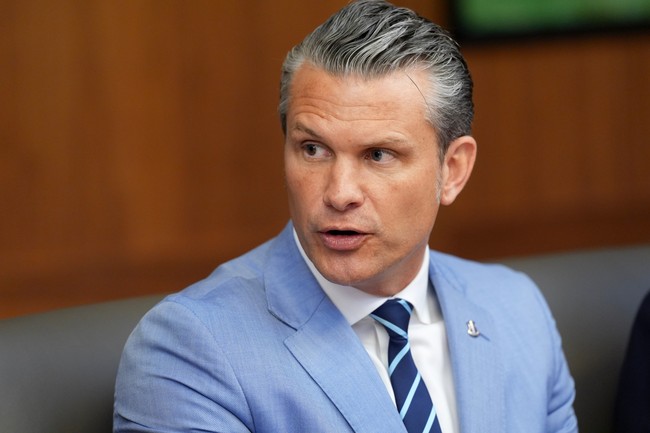
Defense Secretary Pete Hegseth’s outreach to regional partners emphasizes accountability: enforce domestic laws, share intelligence, and deny safe haven to criminal networks. Past administrations often offered aid without strict benchmarks, but the current posture demands measurable results rather than open-ended assistance. That insistence on outcomes aims to make cooperation tangible rather than symbolic.
Right-leaning leaders in the region, exemplified by Colombia’s new president, have signaled a willingness to confront drug networks more aggressively. Panama controls chokepoints critical to maritime traffic and therefore has leverage in stemming flows. When countries face the alternative of continued instability and growing cartel power, they have incentives to act, especially with U.S. pressure aligning with clear expectations.
Critics will call a tougher stance heavy-handed, and they said similar things about interdiction campaigns in the past. But the human cost of inaction is stark: rising American overdose deaths, unchecked border crime, and continued bloodshed across parts of Latin America. Treating cartels as national security threats rather than mere law-enforcement nuisances recognizes the scale and organization of criminal armies operating across sovereign lines.
Linking the Venezuela question to the broader drug fight is strategic. Removing political protection for traffickers undermines entire transit systems and signals that protected corridors to our border will not be tolerated. Coordinated pressure on countries like Colombia and Panama raises operational costs for cartels and narrows their options for safe movement and storage.
None of these steps will erase the drug trade overnight, because demand in the United States remains high and new smuggling routes will emerge. Still, ignoring political enablers and transit states has been tried and failed to produce lasting results. A policy that pairs clear expectations with consequences for regimes that shelter traffickers offers a coherent path forward and forces local actors to choose between confronting criminal armies or tolerating them.
Colombia’s decades-long conflict with cartels shows what’s at stake: the cycle of violence under protected coca cultivation, the erosion of state authority, and the northward flow that sustains addiction and crime here at home. Supporting regional partners willing to act, while withholding support from those who enable trafficking, is not radical; it’s a pragmatic stance for a country that values secure borders and the rule of law. The choice is simple: back governments that reclaim territory from organized crime or accept corridors that bring violence to our neighborhoods.

Home-based job that pays more than 12,000 Dollar per month by doing simple tasks on a laptop or mobile device part-time. Last month, I earned 24,863 Dollar from this job by working 4 hours per day online. Very simple jobs to do, and the earnings are insane. Everyone can now make more money online by joining the website listed below…..
𝒋𝒖𝒔𝒕 𝒖𝒔𝒊𝒏𝒈 𝒕𝒉𝒊𝒔 𝒔𝒊𝒕𝒆.. Www.PayAtHome1.Com