
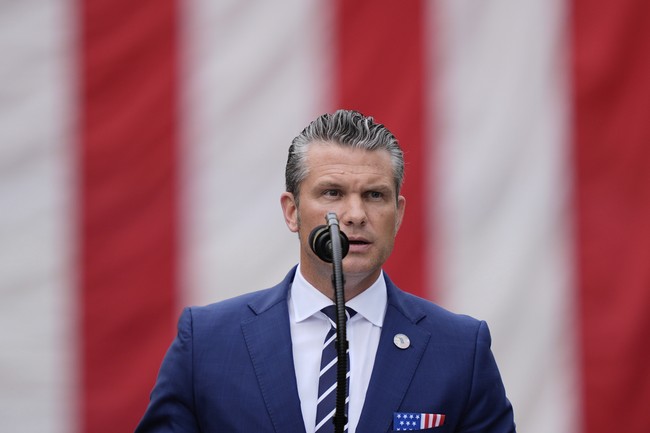
Pete Hegseth traveled to Normandy with his family to honor D-Day’s 82nd anniversary, meet World War II veterans, and deliver remarks stressing allied strength and America’s willingness to lead. He faced predictable criticism for bringing his children, but the trip focused on remembrance, teaching, and reaffirming a hard-headed view of national defense. The events included solemn moments at gravesites, sharing Gen. Dwight Eisenhower’s letter to the troops, and public remarks aimed at reminding Americans that freedom has a cost. Hegseth also spent time with current U.S. service members and injected a bit of levity with a familiar imitation of President Donald Trump.
Pete Hegseth took his children to Normandy, and that simple fact drew attention from some outlets. Critics turned a family trip into a controversy, even though Hegseth paid his own way and the children were present for a powerful civic lesson. Bringing kids to a battlefield memorial is a practical way to pass history along, not a stunt, and it honors the veterans who sacrificed so much. For conservatives, that choice underscored the value of personal responsibility and teaching the next generation about duty.
At Normandy, Hegseth met with World War II veterans who returned to be honored on the beaches where so many paid the ultimate price. He spent time speaking with those who survived and with their families, listening to firsthand accounts that still carry weight eight decades on. Veterans were recognized in a variety of ceremonies, and Hegseth made sure the focus stayed on remembrance rather than partisan noise. These moments are about the veterans and their legacy, not media spin.
https://x.com/EricLDaugh/status/2063224598410190989
Some in the press tried to make a story out of the presence of children, asking if similar scrutiny is applied when first families travel with presidents. That line of questioning misses the point: this was about education and honoring sacrifice. Hegseth’s actions reflected a conservative instinct to model patriotism for younger Americans and to teach them that freedom is defended by real people, often at great cost. The backlash felt like performative outrage rather than genuine concern.
Hegseth also paused at gravesites and memorials, taking time for quiet recognition of the fallen. He posted Gen. Dwight Eisenhower’s letter to the troops from that day, sharing a piece of primary history with a broader audience. Those moments of reflection reinforce the claim that freedom isn’t free and that honoring the dead requires seriousness and respect. For conservatives, recalling the gritty reality of war helps sharpen national resolve.
His public remarks at Normandy highlighted the alliance that made D-Day possible and insisted that allies must carry their share of the burden. Hegseth argued that capable partners who actually contribute are preferable to empty slogans and theatrical diplomacy. The speech was unapologetically hawkish about maintaining strength and insisting on realistic commitments from allies. That message resonates with a Republican emphasis on muscle, leadership, and clear-eyed strategy.
Embedded in the event were examples of direct engagement with today’s service members, where Hegseth told troops that he and the administration have their backs. Being seen with service members in operational settings reinforces a leadership style that prizes solidarity and the warrior ethos. Conservatives see this as correcting years where institutional priorities drifted from combat readiness back toward slogans. The return to a focus on mission and morale matters to a military facing complex threats.
The core of Hegseth’s speech at Normandy is preserved intact in his quoted remarks, and they capture the tone he set for the commemoration:
“Eighty-two years ago today, the survival of Western civilization hung in the balance. Dark forces had swept across Europe. Hitler boasted that his [coastal defensive] Atlantic Wall was impenetrable. But our enemy made a fatal miscalculation: they underestimated the unbreakable will of the American fighting man,” Hegseth said early in his remarks.
As we face an increasingly complex threat environment, we apply the lessons from 82 years ago learned on these beaches: strong allies, each fully committed to doing their part, win wars,” he said.
Hegseth further explained that the men who fought and died at Normandy were part of a war fighting alliance where every partner brought its “full measure of industry, courage and sacrifice,” as opposed to “empty slogans” and “lavish summits.”
“Each nation pulled its weight; each nation bled. America will lead — and we must — but capable allies must be right there with us, shoulder to shoulder, in the breach, when it matters,” Hegseth said. [….[
“We forgot that freedom is not free. We forgot that peace is not wished into being. It is bought with purpose, with honor and with strength. The men who landed on these beaches knew this; the question we ask ourselves is, do we?” Hegseth said.
Those words framed the commemoration as a call to policy as much as memory, urging a posture that pairs leadership with capable partners. Hegseth’s remarks aimed to connect the historical moment to contemporary strategic choices, insisting that deterrence requires more than speeches. Conservatives welcome a message that prizes strength and accountability among allies. It was a clear reminder that leadership demands action, not just sentiment.
Outside of the formal ceremonies, Hegseth kept things grounded, meeting troops and listening to their concerns about readiness and resources. He struck a tone that blended respect for history with a push for practical support for those serving today. And yes, he entertained some crowds with an imitation of President Donald Trump, a touch of levity that humanized the day without undercutting its seriousness. The overall takeaway for conservatives is a reaffirmation of duty, strength, and the importance of teaching the next generation what was paid for their freedom.
Editor’s Note: Thanks to President Trump and War Secretary Pete Hegseth’s leadership, the warrior ethos is coming back to America’s military.

Add comment