
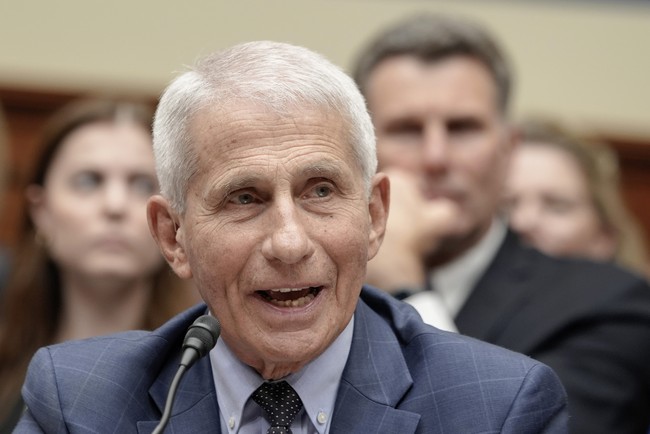
The last hours of the previous administration produced a flurry of controversial pardons, and one stands out: Dr. Anthony Fauci reportedly secured a pardon accepted just before January 20, raising questions about how and why it happened and about the use of autopen signatures on documents of that magnitude.
Nearly everyone with a stake in public accountability should be alarmed when powerful figures seem rushed to legal shelter. The former head of NIAID, Dr. Anthony Fauci, has been at the center of repeated controversies since the pandemic, and new reporting suggests his legal team moved fast in the final hours of the presidency to ensure a pardon would be in place. That timing and the mechanics used to process those documents deserve scrutiny from anyone who believes in transparency and the rule of law.
A detailed account relayed by independent journalist Nick Shirley and the Department of Justice’s Pardon Attorney, Edward R. Martin Jr., describes lawyers for Dr. Fauci asking whether pardons would be available and acting quickly to accept one. The Pardon Attorney explained how the pardon process unfolded at the end of the administration and emphasized the constitutional breadth of the presidential pardon power. Those constitutional realities do not eliminate the need for clear, accountable procedures when extraordinary powers are exercised at the last minute.
Thursday was Tulsi Gabbard’s last day as the Director of National Intelligence, as she departs the Trump administration to address her husband’s battle with bone cancer. While the tussle over her replacement proceeds, Gabbard made a point on her way out the door to continue the push for transparency, exposing something most people who were paying attention during the COVID-19 pandemic (and not sporting partisan blinders) have long believed true: Dr. Anthony Fauci, former head of the National Institute of Allergy and Infectious Diseases (NIAID), sits at the heart of an insidious cover-up regarding the origins of the virus and the dangerous research that led to it, which he helped fund and direct.
According to the Pardon Attorney, the signatures on most late-term pardons were applied with an autopen, not a pen. That detail matters because autopen use for routine recognition is one thing, but using it to execute pardons with legal force is another. The testimony suggested Hunter Biden’s pardon was one of the rare exceptions signed with a wet pen, while many others carried the autopen mark, which raises questions about oversight and who authorized each action.
Here is the exchange as reported between Nick Shirley and the Pardon Attorney, which lays out the sequence and the tone around those final acts:
Nick Shirley (NS): You’re the United States Pardon Attorney.
https://x.com/nickshirleyy/status/2068000632754352541
Pardon Attorney Edward R. Martin, Jr. (PA): Yes.
NS: Just before Biden left office, maybe a few hours before, he starts signing a lot of pardons.
PA: Correct. Well, sort of. The autopen started signing a lot of pardons. Go ahead.
NS: And one of those people was Anthony Fauci.
PA: Yes.
NS: What’s the truth about Anthony Fauci’s pardon?
PA: Well, one thing you started out, let me just explain to folks, the pardon power is in the Constitution, and it basically says, I’m summarizing, the president can pardon anybody he wants for any reason he wants. There’s not a procedure set up, there’s not a system, it’s really a very… the Founders knew that there were times you needed to right something that was wrong, or that you wanted, and that’s what they gave. So, is there anything that you… Any president can pardon anybody with regard to the end of a term, Biden was in a rush down the stretch, or his staff was, and they were pardoning all kinds of people. They did all kinds of commutations at the last minute, all with the autopen.
The Pardon Attorney went on to say Fauci’s team knew they needed a prompt acceptance and acted accordingly, filing the acceptance as soon as the pardon arrived. Under Supreme Court precedent, a pardon accepted cannot be rejected by the courts, which makes that acceptance a critical legal hinge. That legal finality is why the use of autopen and the timing of the acceptance matter for anyone concerned about accountability.
What this leaves us with is an uncomfortable sequence: lawyers pressing for a pardon, an autopen handling the bulk of late pardons, and a rapid acceptance filed to lock in protection. Even defenders of broad pardon power should ask for clear records and a better way to ensure that such sweeping uses of executive clemency are transparent and defensible to the public. Americans deserve to know who benefits from last-minute decisions that carry the weight of the presidency.
There may be little legal recourse—the pardon power is indeed broad and near absolute—but the political and reputational consequences continue to play out. For those who want a government that answers to the people, these events underscore the urgency of demanding clearer procedures and accountability when the highest office exercises extraordinary authority.

Add comment