
The recent Court of International Trade decision blocking President Trump’s Section 122 tariffs is more than a technical legal spat — it’s a fight over who gets to wield major economic power, Congress or the president, and it highlights how courts are increasingly unwilling to let decades-old statutes be read expansively. This article breaks down what happened, why the distinction between statutes matters, how the court reached its decision, and what to expect next as the administration appeals and the debate over delegated authority continues.
Last week’s ruling from the Court of International Trade halted tariffs imposed under Section 122 of the Trade Act of 1974, a move that left supporters of aggressive trade remedies frustrated and critics nodding at judicial restraint. The key wrinkle is that these tariffs came under a different legal hook than the emergency tariffs the Supreme Court struck down earlier in the year. That distinction matters because it shapes the legal tests courts use and the remedies available to challengers.
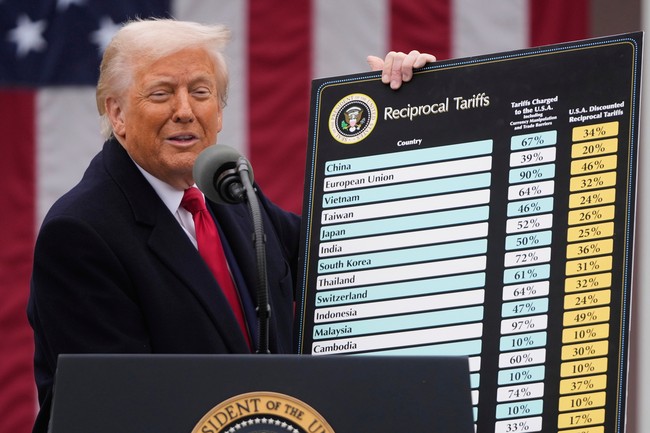
The Trump administration used Proclamation 11012 to impose temporary surcharges aimed at addressing what it described as “fundamental international payment problems” and significant balance-of-payments deficits. Those tariffs were capped under statute at 15 percent ad valorem and were presented as a targeted response to trade imbalances rather than a broad national emergency measure. Supporters argued the move was well within presidential authority to correct severe international payment issues.
But several states and importer plaintiffs challenged the proclamation in the Court of International Trade, and the court sided with the importers and the state of Washington in a 2-1 decision. The majority permanently enjoined Proclamation 11012, declaring it invalid as contrary to law, while dismissing other state claims for lack of standing. To the court, the administration had exceeded the authority Congress actually granted under Section 122.
Titled “Balance-of-Payments Authority,” Section 122 empowers the President of the United States to impose temporary surcharges up to 15 percent ad valorem when fundamental international payment problems exist.
The court’s analysis did not amount to a blanket rejection of presidential tariff power, but it did underline a broader trend: judges are reading statutory delegations narrowly when big economic levers are at stake. From the majority’s view, handing the president sweeping unilateral authority to reshape trade policy requires clearer language from Congress than what courts are willing to infer from older statutes.
There was a split on the bench, and the dissent highlighted procedural concerns rather than a full-throated endorsement of the tariffs. Judge Timothy Stanceu argued the majority reached legal conclusions on grounds the parties had not fully briefed, implying the case may have been resolved prematurely. That procedural critique signals the dispute is as much about how courts manage complex statutory questions as it is about who wins on the merits.
The administration quickly filed a notice of appeal, pushing the case toward the Federal Circuit and possibly back to the Supreme Court. Expect the White House to seek stays and other temporary measures to keep the tariffs in force while appeals proceed, and anticipate an aggressive defense focused on the statute’s plain text and the president’s tools for responding to acute international payment crises.
Politically, the ruling highlights a tension Republicans have long flagged: policy crafted by Congress being effectively constrained by judicial interpretations that curb executive flexibility. Conservatives who back strong trade responses see this line of cases as judges stepping into policy fights better handled by elected branches, and they argue Congress should either clarify its intent or cede the authority it means to delegate.
On the legal side, the decision continues a pattern where courts refuse to treat decades-old authorities as blank checks for major economic interventions. Judges are signaling they want either explicit congressional authorization for sweeping measures or a clear statutory framework that limits executive discretion in specific, measurable ways.
The practical fallout will ripple through industry and commerce. Importers who faced these surcharges won the immediate relief of the injunction, but uncertainty remains for producers and trading partners who had begun adjusting supply chains and pricing. That uncertainty is a real cost, and it amplifies calls for Congress to act decisively if broader tariff tools are intended to be part of long-term trade policy.
In short, this dispute isn’t merely about whether tariffs are wise or unwise. It’s about whether presidents can, on their own, use old statutes to deploy significant economic levers. For Republicans who favor a robust executive hand in trade, the clear takeaway is that Congress needs to be explicit if it wants to empower future presidents to act without legal firefights.



What does this article have to do with Biden? Get your headline straight.
These asshole judges need to be removed from the bench immediately for incompetence and obstructing a sitting president who the American people voted for not some dumbass judge. All these judges need their immunity revoked immediately because no one is above the law and their pajama wearing suits can’t protect schmucks. They need to stay in their little lane bubble.