
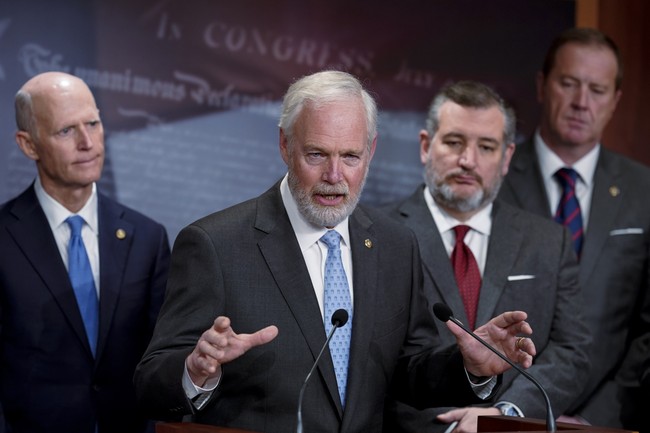
The Senate GOP revealed details of what they call Operation Arctic Frost, saying the Justice Department under Special Counsel Jack Smith issued hundreds of subpoenas that swept in senators, staffers, activists, and media. Republican senators describe the effort as widescale surveillance and weaponized law enforcement targeting conservative organizations and individuals. The disclosures name specific numbers, affected carriers, and the judge who approved at least one secrecy order. This article lays out the claims, quotes from senators, and the scope they say was involved.
Republican senators say their probe began after whistleblowers raised alarms in July 2022 about Operation Arctic Frost and what they claim was an intentional focus on conservative targets. They say the inquiry captured communications tied to multiple GOP senators and organizations. The senators describe this as more than routine legal process and instead view it as targeted political surveillance.
Sen. Chuck Grassley (R-IA) outlined the investigation’s origin and said it followed whistleblower disclosures about the operation. He told colleagues that the effort involved major demands for records under Special Counsel Jack Smith. Grassley emphasized that the sweep reached beyond former President Trump to many Republican groups and individuals.
“Based on whistleblower disclosures, we know that weaponized taxpayer-funded agents and prosecutors advanced the investigation, as Artic Frost advanced that 92 Republican organizations or individuals were targeted,” Grassley said. “Not just [President Donald] Trump.”
Grassley added details about subpoenas and phone records, saying Smith obtained phone data tied to elected officials. “We’ve learned that [Special Counsel] Jack Smith secretly obtained phone record data from at least eight senators and one congressman,” he said. He also noted Verizon and AT&T interactions, saying Verizon informed him at least seven members with Verizon accounts were affected and that AT&T contested the legal basis for the orders.
Senators provided specific counts for the subpoenas, saying a total of 197 subpoenas were issued and that they reached 34 individuals and 163 businesses, including financial institutions. Grassley said those actions extended to more than 400 Republican organizations, naming groups like Turning Point USA and others as examples. He asserted the subpoenas sought not only direct communications but also related information involving media companies.
Sen. Ted Cruz (R-TX) described the court-approved secrecy that accompanied at least one subpoena against him, saying the order prevented AT&T from notifying him. He read the court’s language aloud to explain why he could not be told, making the judicial order a focal point of outrage among his colleagues. Cruz argued the reasoning offered by the court was unsupported by evidence.
“The court finds reasonable grounds that such disclosure will result in destruction of or tampering with evidence,'” Cruz read, speaking about the order. “‘Intimidation of witnesses and serious jeopardy to the investigation.'”
Cruz pushed back hard on the rationale, asserting there was no factual basis to suspect him of obstructing evidence or intimidating witnesses. He called the order an “abuse of power” and characterized it as part of what he called a weaponized legal system. Cruz urged the House to consider action against the judge who approved the secrecy order, arguing the judicial decision lacked evidentiary support.
Sen. Ron Johnson (R-WI) framed Arctic Frost as an enemies list, saying the inclusion of 38 Wisconsinites showed political targeting. He described many of the people named as ordinary, patriotic citizens who support law enforcement and want the country to succeed. Johnson’s remarks cast the operation as a betrayal of civil liberties and political fairness.
Sen. Marsha Blackburn (R-TN) framed the Special Counsel’s approach as a model for fishing expeditions and urged congressional hearings and an internal referral. She characterized the scale and depth of the actions as worse than Watergate, saying it was “deep” and “wide” and that investigators were only starting to uncover the full picture. The senators called for further oversight and accountability.
The senators testified that the subpoenas reached communications involving major media outlets and extended into financial records connected to conservative organizations. They said the evidence trail includes carrier responses and internal DOJ decisions alongside whistleblower accounts. According to their account, the pattern shows expansive use of subpoenas and secrecy in ways they believe violated norms and privacy.
Republican investigation leaders say this remains a developing matter and that additional hearings and document reviews will continue. They argue the actions demand scrutiny and accountability, pointing to the number of subpoenas, affected organizations, and the role of a special counsel in authorizing expansive record collection. The senators vow to keep investigating to determine how and why those orders were issued and who approved them.
Add comment