
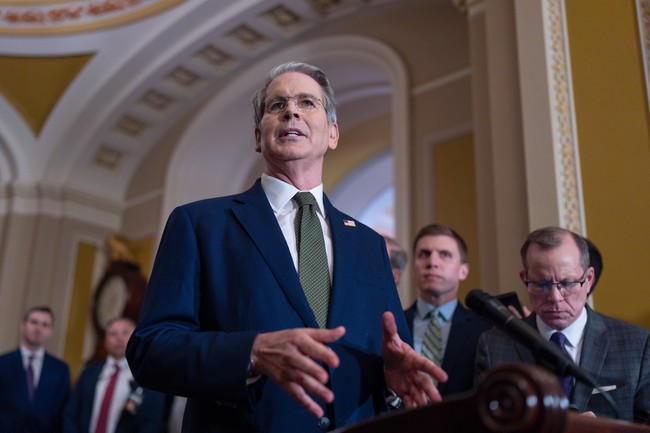
Scott Bessent and the Treasury are taking an aggressive stance against health care fraud, pushing financial institutions to report suspicious activity to FinCEN and backing new whistleblower incentives, while signaling a broad, coordinated crackdown that could recover enormous sums diverted from Medicare, Medicaid, and other programs.
Scott Bessent Deploys the Power of the Treasury to Stop Health Care Fraud: ‘We Are All Hands on Deck’
Secretary of the Treasury Scott Bessent is being described as more than a traditional cabinet figure—according to coverage, he’s actively reshaping how the department fights fraud. Rather than preserve the status quo, Treasury under Bessent is pushing systems and institutions to disrupt fraud networks and reclaim stolen funds. The tone from Treasury is clear: this is an all-hands, operational approach, not a passive oversight function.
In the most recent effort, Treasury is empowering banks and other financial institutions to flag suspicious transactions to the Financial Crimes Enforcement Network. That push is aimed squarely at schemes that siphon money from government health care benefit programs. Officials say the focus includes foreign actors and transnational criminal organizations that have increasingly targeted Medicare and Medicaid.
Today, in support of @POTUS’ pledge to combat fraud and in line with the anti-fraud task force being led by @VP, @FinCENnews issued an Advisory urging financial institutions to be vigilant about fraud schemes targeting government health care benefit programs. Separately today, FinCEN issued a proposed rule paving the way to pay whistleblowers for actionable tips.
FinCEN’s advisory aims to give banks clear red flags and typologies to spot laundering tied to health care benefits theft. It also encourages voluntary reports of suspicious activity and immediate notification of law enforcement when warranted. Treasury officials hope clearer guidance and stronger reporting will translate into faster disruption of fraud rings and better protection for taxpayer dollars.
Part of the strategy is a proposed rule to create paid whistleblower pathways for bank employees and others with actionable tips. Officials note that many in finance fear retaliation or losing their jobs if they report suspicious behavior, so a financial incentive could change that risk calculation. That incentive is intended to encourage insiders to come forward with information that law enforcement can act on.
This follows Secretary of the Treasury Scott Bessent’s trip to Minnesota earlier this year, where he announced numerous steps that Treasury is implementing to detect and stop government benefits fraud across the country. Separately today, FinCEN issued a proposed rule paving the way to pay whistleblowers for actionable tips, further protecting the U.S. financial system from illicit activity.
Bessent has been highlighting metrics intended to show momentum: according to reporting, suspicious activity reports from banks rose by 20 percent in 2025 compared with 2024. That increase came after renewed emphasis from the administration on rooting out fraud. Treasury officials say the rise is encouraging but also emphasize it likely represents only a fraction of the total fraud across all states and programs.
On television, Bessent framed the theft as more than an accounting problem, saying the money “is being stolen from the American taxpayer.” That language ties the fraud narrative to the broader political argument that government benefits should reach intended recipients. Treasury leaders argue that recovering even portions of diverted funds would free up resources for the genuinely needy and restore public trust.
“President Trump has been clear that Americans have a right to know that their tax dollars are not being used to commit fraud,” said Secretary of the Treasury Scott Bessent. “Under President Trump’s leadership, Treasury will continue to find and disrupt fraud schemes wherever they exist, and we will work with our law enforcement partners to hold perpetrators to account.”
FinCEN’s Advisory provides financial institutions with an overview of how fraudsters, organized crime groups, and increasingly, transnational criminal organizations (TCOs), are targeting government health care benefit programs. It also highlights money laundering typologies and red flag indicators to help financial institutions identify and report suspicious activity. Today’s Advisory strongly encourages financial institutions to voluntarily report suspicious activity to FinCEN and immediately notify law enforcement of such activity.
Officials are also pointing to a new FinCEN whistleblower website created to receive confidential tips about fraud, money laundering, and sanctions violations. Treasury messaging emphasizes confidentiality and a streamlined path for anyone who wants to report wrongdoing. The combination of advisory guidance, reporting incentives, and public pressure is designed to create persistent scrutiny across the financial system.
Bessent projects that if reporting increases significantly—he suggested that closer to 50 percent reporting could unleash very large recoveries—”This could be hundreds of billions of dollars of recouped money.” Treasury’s argument is pragmatic: stronger financial oversight can directly translate into funds returned to intended programs and better outcomes for beneficiaries. The department says it will continue coordinating with law enforcement to pursue perpetrators and protect taxpayer resources.


Add comment