
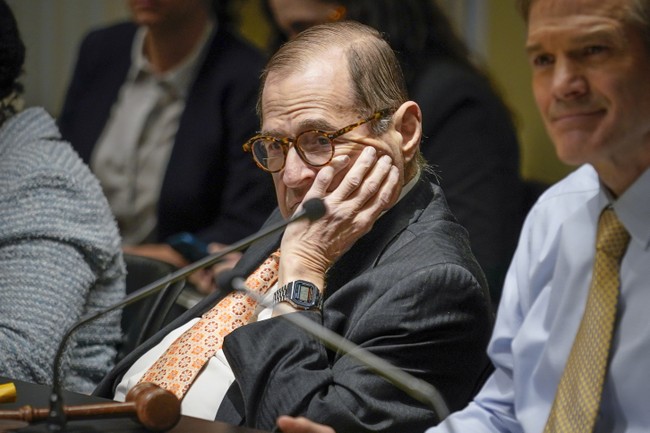
The piece examines recent comments by Rep. Jerry Nadler that appeared to justify shooting masked law enforcement officers, the GOP response led by figures like JD Vance and Donald Trump Jr., and the broader debate over anti-ICE rhetoric, violent incidents linked to protests, and the political stakes surrounding immigration enforcement.
<pThe Left’s rhetoric about ICE has grown extreme and sometimes violent, and those words matter because they shape behavior on the street. Incidents have spiraled into real harm, whether through confrontations with federal agents or chaotic protests where lines between protest and criminal acts blur. Public safety should not be a partisan talking point; it’s a basic government responsibility.
Rep. Jerry Nadler made remarks at a House Judiciary Committee meeting that alarmed many when he suggested someone might be justified in shooting a masked person who appears to be abducting them. He said, “What is really the major problem in this country today is the fascism in our streets,” followed by, “If you were attacked by a masked person, you might think you were being kidnapped. You’d be justified in shooting the person — to protect yourself.”
Those comments don’t exist in a vacuum; they echo a broader trend among some progressives who equate federal immigration enforcement with authoritarianism. That rhetoric strips nuance from complex law enforcement operations and risks encouraging confrontations that turn deadly. When politicians casually endorse lethal responses in public, they are remaking civic norms around violence instead of de-escalation.
Conservatives like Vice President JD Vance publicly condemned Nadler’s remarks as “despicable” and called out the media’s selective outrage. Donald Trump Jr. grabbed attention on social platforms, writing, “This is demented,” and adding, “Democrats once again openly calling for violence!!!” Those reactions capture a Republican view that such statements are reckless and politicized.
It’s important to be precise about specific incidents that have fueled the debate. One example often cited involves a driver who interfered with a federal operation and allegedly used a vehicle in a threatening way. That context matters because describing the episode as merely “driving a car” omits alleged actions that put officers at risk. Accuracy in reporting and commentary should be non-negotiable in situations that could justify self-defense claims.
Arizona Attorney General Kris Mayes offered remarks earlier that raised similar concerns when she discussed masked federal officers and the implications of Stand Your Ground laws. Her comments highlighted confusion citizens face when officers lack clear identification, and that confusion can lead to dangerous, split-second decisions. Yet public leaders should be pushing for clarity and lawful solutions, not stoking fear that lethal force is acceptable against identifiable agents.
The Department of Homeland Security has reported an increase in attacks on ICE agents, which Republican critics use as evidence that inflammatory rhetoric has consequences. There have also been high-profile violent incidents and assassination attempts that feed the narrative of rising lawlessness. For conservatives, the response is straightforward: protect law enforcement and ensure the rule of law is enforced without partisan double standards.
A core Republican argument is that local jurisdictions can reduce friction by cooperating with federal authorities, especially around detention and jail policy. When cities or states refuse to work with federal Immigration and Customs Enforcement, it creates gray zones that make enforcement harder and riskier. Cooperation would reduce confrontations, improve officer safety, and uphold federal law while preserving local priorities.
The political dimension cannot be ignored. Many on the left favor policies that effectively reduce interior immigration enforcement, and that stance motivates aggressive protests and rhetoric. Republicans point to election results as proof that voters rejected open-border approaches in 2024, and they argue those preferences should guide policy choices in upcoming elections. The aim, from a conservative perspective, is to restore order and ensure immigration laws are applied consistently.
Public officials who publicly justify lethal responses to law enforcement undermine civil society and risk turning political disagreements into fatal encounters. A safer approach is to demand accountability, factual clarity, and lawful channels for protest and dissent. Political leaders in both parties should avoid language that could be read as permission for violence and instead offer concrete ways to address community concerns while protecting officers and the public.


Add comment