
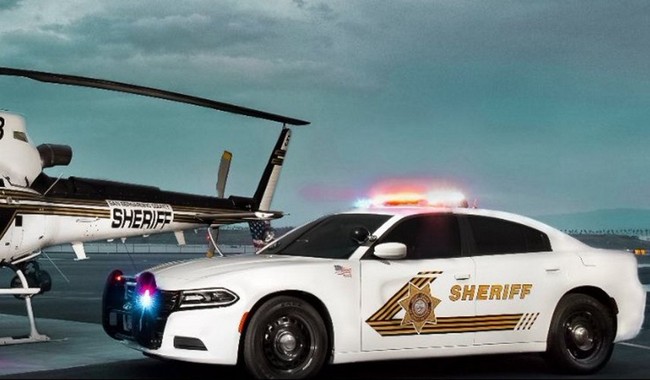
The desert outside Los Angeles became the scene of a violent encounter when a San Bernardino County Sheriff’s detective was shot while serving a search warrant in the Antelope Valley; the deputy survived after being hit in the lower rib area, and the suspected gunman was later found dead as investigators from the LA County Sheriff’s Department took over the case.
The story began in the high desert near East Avenue R and 130th Street in Littlerock, just east of Palmdale, where investigators executed a narcotics search warrant in the afternoon. According to law enforcement statements, gunfire erupted around 3:15 p.m., and the detective was struck in the lower ribcage. Responding units swarmed the rural area and cordoned the scene while the wounded officer was airlifted to Antelope Valley Hospital for treatment.
Authorities have not released the detective’s identity or provided a full medical update, but officials said he was in stable condition at the hospital. Because the shooting occurred within Los Angeles County boundaries, the LA County Sheriff’s Department took charge of the investigation, with LASD homicide assisting. At this point, investigators have not publicly described the sequence that led to the shooting or the motive behind it.
“A San Bernardino County sheriff’s detective was shot in the California desert Wednesday afternoon, sparking a massive law enforcement response that left the suspected gunman dead.”
The person accused of opening fire was pronounced dead at the scene, though authorities did not immediately say how that death occurred or release the suspect’s identity. Television helicopter footage and on-scene video showed deputies working the scene in a remote, open landscape typical of the Antelope Valley. Additional officers were observed gathering outside Antelope Valley Hospital as the injured detective received treatment.
“The detective was struck by gunfire at about 3:15 p.m. near East Avenue R and 130th Street in Littlerock, just east of Palmdale.”
Local reporting and law enforcement briefings described a significant tactical response, with multiple agencies involved in securing the area and assisting with post-shooting procedures. The defensible, sparsely populated stretches of the high desert often leave first responders and investigators contending with limited infrastructure and long travel distances when major incidents occur. That isolation can complicate immediate situational awareness, but it also draws a substantial multi-agency presence once word spreads.
“The wounded detective was airlifted to Antelope Valley Hospital for treatment. Officials have not released the detective’s identity or disclosed the extent of the injuries — but did reveal in an evening news conference that he was shot in the lower ribcage.”
https://x.com/sbcountysheriff/status/2085145613268910562
Video taken from the scene and circulating on social feeds highlighted how desolate the location is, showing wide-open land and a small cluster of residences rather than dense suburban streets. Investigators used yellow tape to mark the crime scene while collecting evidence, and news helicopters captured the activity from above. The situation remains under active investigation as authorities work to reconstruct the events and interview witnesses.
Law enforcement officials emphasized that no other injuries were reported related to the incident. LASD homicide’s involvement underscores the protocol when a shooting crosses county lines or involves personnel from different jurisdictions. Those interagency steps are meant to preserve a clear chain of custody for evidence and an impartial review of what occurred during the warrant execution.
Anyone watching the coverage saw how quickly a routine law enforcement operation can become dangerous, even in a place that feels remote. The incident serves as a reminder of the risks officers face when executing search warrants and the need for careful tactical planning and real-time coordination among agencies responding in rural environments. Investigators will be piecing together the timeline, forensic findings, and any communications that preceded the shooting as they work toward a full report.
“The person accused of opening fire died at the scene, though authorities have not said how the suspect died or released their identity.”
As inquiries continue, officials have asked the public to avoid speculating and to allow investigators to collect facts without interference. Community members and neighboring residents remain shaken by the event, and law enforcement sources noted outreach to the detective’s family and colleagues. The case will likely generate further updates as hospital information, forensic analysis, and interviews provide a clearer picture of what led to the exchange of gunfire in the high desert.

Add comment