
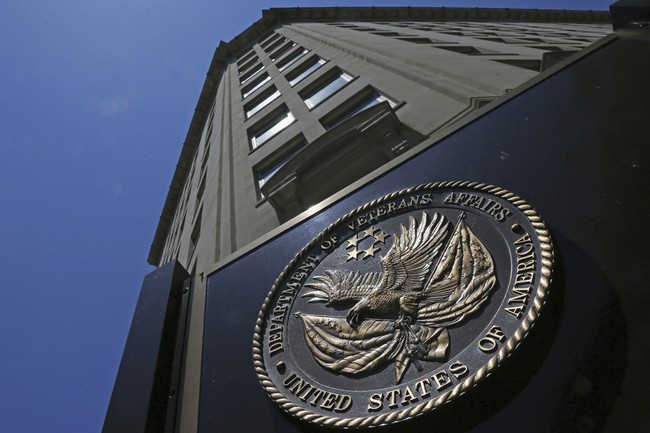
The federal Department of Veterans Affairs, backed by a $441.3 billion budget and hundreds of thousands of employees, is still failing to solve basic problems for veterans while small local efforts are moving people off the streets and into stable housing. This article contrasts national statistics on veteran homelessness and suicide with a simple, effective local housing project in Sarasota, Florida, and highlights how execution and coordination—not resources—are the core failures holding veterans back.
Recent federal data show more than 35,000 veterans are homeless nationwide and over 15,500 are living unsheltered in vehicles, tents, or places not meant for habitation. Unsheltered veteran homelessness jumped 14 percent in a single year, while overall veteran homelessness rose 7 percent, signaling a systemic trend the federal system has not reversed. These numbers are stark because they are measurable and recent, not abstract warnings from years past.
The VA reports 6,392 veteran suicides in its most recent national suicide report, a rate of 33.9 per 100,000 compared with 16.7 among non-veterans. After adjusting for age and sex, the veteran rate was nearly 72 percent higher, and the suicide rate among women veterans rose more than 24 percent in a single year. Those outcomes are the hard evidence that scale and spending alone are not producing better results for those who served.
The Department of Veterans Affairs employs roughly 412,000 people and submitted a fiscal year 2026 budget request of $441.3 billion. Despite that scale, the Government Accountability Office told Congress in March 2026 that core problems in how the department delivers care remain unresolved. GAO found persistent issues with staffing, referral coordination, and the implementation of long-standing recommendations, showing execution shortfalls at the center of VA problems.
GAO specifically reported that many VA facilities still lack the staffing needed to manage community care referrals, and the department has not established a time frame for when veterans should receive care after being referred outside the system. Referral coordination is uneven and communication between central offices and local facilities often breaks down, leaving veterans stuck in limbo. Those are not policy mysteries; they are management failures that have remained open even after repeated warnings.
“VHA facilities did not always have the staffing needed to manage community care referrals… and VA has not established a time frame for when veterans should receive care.”
Execution failures show up where it hurts: more veterans without homes, higher suicide rates, and gaps in services like dental care that affect employability and recovery. The notion that a giant federal bureaucracy automatically produces better outcomes is contradicted by these data points. Local, practical interventions are demonstrating alternative approaches that actually stabilize lives.
In Sarasota, Florida, a 10-unit housing development called Heroes’ Village took a different path by partnering local government, philanthropy, and nonprofit operators to house veterans directly. That project moved veterans from homelessness into stable housing without waiting for a massive federal program to be designed, approved, and implemented. Its success comes from focusing on simple, immediate needs and removing barriers to stability.
“I lived under a palm tree in a tent for 3 weeks. I needed a solid home base… [Heroes’ Village] gave me a solid platform to build off of.”
Residents describe the difference as basic but profound: the time and security to look for work, address health needs, and reconnect with family. One resident said that not worrying about rent and bills enabled them to pursue a career and their health, showing how housing stability unlocks broader progress. These are outcomes you can see and measure, not promises pushed down a bureaucracy.
“Having the time to not have to worry so much about rent and bills… has enabled me to concentrate on finally finding something that’s a career… and taking care of my health.”
Local groups are also filling gaps the VA does not consistently cover, providing services such as dental care that many veterans cannot access under strict federal eligibility rules. Those services matter because they affect a veteran’s ability to work and maintain stability, and local providers are nimble enough to respond quickly. When the federal system stumbles on coordination and timeliness, community organizations step into the breach.
The central issue is not complexity; it is execution. A massive federal apparatus can spend more without producing proportionate results when it fails to set clear timelines, staff appropriately, and coordinate across levels. The comparison between Sarasota’s straightforward housing approach and the sprawling federal system shows that practical solutions, local partnerships, and focused execution produce measurable gains for veterans more reliably than large, slow-moving programs.



Add comment