
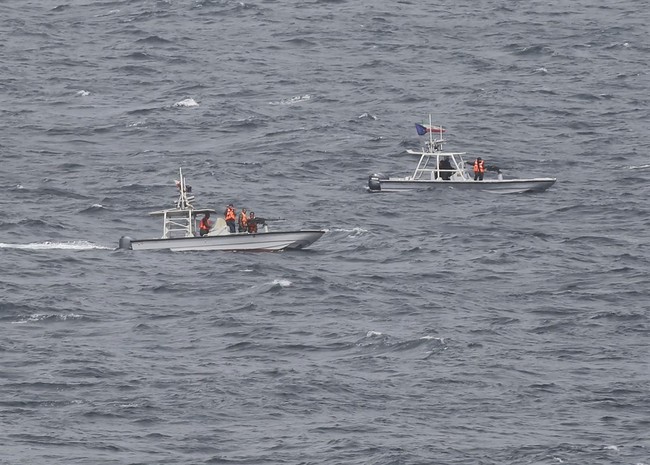
The United States has launched an air campaign to prevent Iran from effectively closing the Strait of Hormuz with mines, responding to reported minelaying, striking maritime targets, and deploying mine-countermeasure assets to keep global oil supplies and freedom of navigation secure.
Multiple reports indicate Iran has begun placing a limited number of naval mines in the Strait of Hormuz using small vessels that can each deploy two to three mines at a time, and intelligence estimates put Iran’s mine stockpile at 2,000 to 6,000, which, in the intelligence business, is known as a WAG, that is, a wild-assed guess. So far the best reporting suggests roughly a dozen mines have been laid, but even a handful can shut down shipping because no responsible captain will risk a route that might contain a mine. The strategic leverage of a few mines is enormous, since one mine can have the same disruptive effect as many dozens in practical terms for commerce and insurance rates.
President Trump made a blunt public warning tied to the situation, and his exact words were: “If Iran has put out any mines in the Hormuz Strait, and we have no reports of them doing so, we want them removed, IMMEDIATELY! If for any reason mines were placed, and they are not removed forthwith, the Military consequences to Iran will be at a level never seen before.” That kind of clear red line changed the calculus on the other side of the Persian Gulf and signaled an administration ready to use decisive force to protect vital sea lanes. Those words matter because ambiguity invites escalation; direct statements backed by action reduce the chance that Tehran can slowly ratchet up pressure without consequence.
At roughly the same time as the presidential warning, U.S. Central Command conducted strikes aimed at degrading Iran’s ability to place and conceal mines, reportedly targeting a Ghadir-class mini-submarine among other assets. Imagery and video emerging from the strikes show a hit that analysts point to at the 12-second mark of one clip, underscoring that the U.S. sought to remove platforms that could covertly raid shipping lanes or position explosive devices. Removing those capabilities is a priority so that mine-clearing forces can operate without facing asymmetric attacks from small subs or fast boats.
Markets reacted immediately to the threat that Iran’s mining would choke oil flows, with prices spiking from roughly $60 to about $115 a barrel on the day the threats became public, reflecting the premium traders place on uninterrupted passage through Hormuz. About 20 percent of the world’s seaborne oil transits the strait, so any sustained disruption has ripple effects across global supply chains and consumer prices. Time is of the essence because delays in tanker movements translate quickly into higher pump prices and strain for allied economies.
Shipping traffic through the strait has collapsed as private operators avoid the risk, with transits reportedly dropping by around 97 percent after Tehran’s threats; some captains chose to travel with Automatic Identification Systems turned off to reduce the chance of being targeted. That kind of behavior complicates maritime domain awareness and makes the work of protecting neutral shipping harder, since invisible vessels are harder to track and distinguish from hostile actors. The U.S. and partner navies must therefore rely on layered surveillance and persistent presence to deter and, if necessary, interdict mine-laying activity.
This is not the first time Iran has used mining threats as leverage; in 1987 Tehran employed mines and fast boats, prompting U.S. operations such as Prime Chance and the follow-up Operation Praying Mantis after the USS Samuel B. Roberts was damaged. The tactical environment now is different: modern sensors, persistent ISR, and broader rules of engagement give U.S. commanders more options to detect and act against threats before they choke a chokepoint. Unlike past eras, U.S. forces can respond not just at sea but with maritime and air striking power against shore-based nodes supporting minelaying.
The Navy’s mine-countermeasure effort now includes assets tied to the Littoral Combat Ship, which will field countermine packages made up of MH-60 Seahawk helicopters, unmanned surface vessels, advanced sensors, and remotely operated submersibles. These LCS platforms—identified as USS Canberra, USS Tulsa, and USS Santa Barbara—will be central to the current operation, even as critics note earlier decisions to retire older, purpose-built minesweepers left the fleet less robust on paper. Still, modern unmanned systems and airborne mine-hunting change the operational math and should blunt Tehran’s ability to close the strait effectively.
Operational constraints that once limited U.S. responses, such as strict rules against engaging vessels in port or shore targets, have been relaxed in the face of an actor deliberately trying to weaponize a choke point affecting the world economy. Continuous surveillance and the willingness to act against confirmed threats mean Iran’s attempts to replicate past successes will face a very different risk-reward calculation. If Tehran tries anything beyond symbolic posturing, the consequences will be swift and aimed at removing the tools that make a blockade possible.
Domestic political stakes are high because protecting energy flows and allied commerce lines up with core national interests, and the administration framed its actions as necessary defense, not adventurism. Republican messaging emphasizes that deterrence must be backed by credible force and rapid action, especially when hostile states try to weaponize international waterways. The goal now is simple: keep Hormuz open, clear any mines, and make sure bad actors understand that threats to global trade will be met with decisive American power.
Delays in clearing mines or stopping minelaying will show up fast at the pump and in strategic leverage for adversaries, so the U.S. effort must remain relentless until normal traffic resumes and Tehran’s mining capability is demonstrably reduced. Persistent patrols, targeted strikes on enabling platforms, and modern mine-countermeasure tools are all in play to prevent Iran from turning a handful of devices into a global crisis. The world is watching to see whether deterrence backed by action can stop a dangerous escalation in a critical maritime corridor.


Add comment