
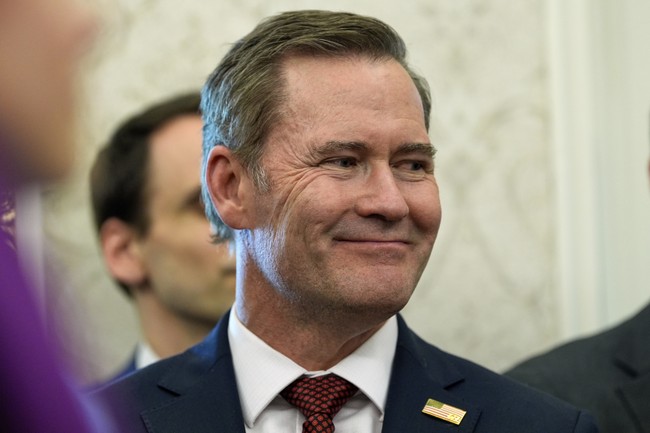
Watch: UN Amb. Mike Waltz Is Heading Into Monday’s Security Council Meeting on Venezuela Loaded for Bear
U.S. forces apprehended Venezuelan leader Nicolás Maduro and his wife, Cilia Flores, and flew them to New York on narco-terrorism charges, prompting Venezuela to demand an emergency U.N. Security Council session for Monday at 9:00 AM. The move has escalated diplomatic tensions and set the stage for a heated debate over sovereignty, self-defense, and the threat posed by state-backed criminal networks. U.S. Ambassador to the U.N., Mike Waltz, has publicly defended the operation and framed it as necessary to protect American security and regional stability. The coming council meeting will test international resolve against narcoterrorism and influence operations tied to hostile states.
The Venezuelan government immediately called for the Security Council to convene after the arrests, accusing the United States of violating international law and launching a “colonial war.” That language signals Caracas will press a familiar narrative of outside aggression and threatened sovereignty. For Washington, the challenge is to demonstrate that law enforcement and national defense intersect when foreign regimes sponsor mass criminality. The dispute will hinge on competing claims about Article 2 and Article 51 of the U.N. Charter.
Samuel Moncada, Venezuela’s U.N. Ambassador, wrote to the Security Council describing the operation as “a colonial war aimed at destroying our republican form of government.” He accused the U.S. of violating the U.N. Charter, which forbids “the threat or use of force against the territorial integrity or political independence of any state.” Those are serious allegations and predictable political lines, but they do not change the facts set forth in U.S. indictments or the national security calculus informing the action.
Mike Waltz made his case on Sunday, reaffirming that the United States does not recognize Nicolás Maduro as Venezuela’s legitimate leader and insisting that Maduro is a fugitive from American justice. Waltz characterized Maduro as the head of the Foreign Terrorist Organization Cartel de Los Soles and reiterated intelligence-based concerns about cartel-style state behavior. From a Republican viewpoint, bringing a wanted drug kingpin to U.S. courts advances accountability and defends American citizens from cross-border threats.
Let me begin by stating and reiterating the United States does not recognize Nicolas Maduro or his cronies as the legitimate government of Venezuela. Nicolas Maduro is a fugitive from American justice and the head of the Foreign Terrorist Organization Cartel de Los Soles. In fact, Maduro and his regime stole the election, and the international community has the receipts.
President Trump has been very clear that he is going to use the full power of the United States of America, the full might of the United States, to take on and eradicate these drug cartels, which have operated with impunity in our hemisphere for far too long – and everyone knows it.
The single most serious threat to this hemisphere, our very own neighborhood and the United States, is from transnational terrorist and criminal groups.
These cartels are not like the mafia. These cartels are sophisticated, very technically capable, well-financed, and are wreaking havoc in our region.
On air, Waltz praised the president, the military, special operations, and law enforcement for a “bold, decisive, and successful action.” He warned the Security Council will hear objections about sovereignty, but he pointed to Article 51 as a clear legal basis for self-defense when transnational criminal groups threaten the homeland. This framing insists the operation was not a random use of force but a targeted effort against a narco-terror network. For those prioritizing American security, that distinction matters.
“I want to salute President Trump as commander-in-chief, and our amazing military, special operations operatives and law enforcement for the bold, decisive, and successful action that they’ve taken.
“In terms of the United Nations and the Security Council, Jason, you’re going to hear a lot of handwringing on Article 2 of the U.N. Charter, which deals with sovereignty — and I will remind everyone of Article 51 of the United Nations Charter, as we have in the past, which is a nation’s inherent right to self-defense.
“So, in this case, you have a drug kingpin, an illegitimate leader, indicted in the United States coordinating with the likes of China Russia, Iran, terrorist groups like Hezbollah, pumping drugs, thugs, and weapons into the United States of America, threatening to invade its neighbors — its neighbor Guyana with one of the largest oil discoveries in the world is under threat from the Maduro regime — one of the largest refugee crises in the world, larger than even Syria, Jason. And at the end of the day, was the United States, was President Trump just going to let that status quo continue? Absolutely not. He gave diplomacy a chance. He gave Maduro a chance. But he took decisive action in the interests of the United States, and he will now, Maduro will now, be prosecuted in federal court”
Waltz stressed that Venezuela’s ties to Iran, Russia, China, and terror proxies turn a criminal problem into a geopolitical one. From his perspective, that alliance transformed Maduro into more than a corrupt ruler — it became a state sponsor of narco-terrorism. Republicans favor asserting American power against such blended threats, arguing that failing to act only emboldens hostile actors. That argument will be central to U.S. statements at the Security Council.
Pressed about the scale of the drug and criminal networks, Waltz compared groups like Tren de Aragua and Cartel de los Soles to extremist organizations, calling them “more like ISIS and Al-Qaeda with state backing.” He accused Venezuela’s military and intelligence services of partnering with external powers and regional criminals to flood American streets with drugs and violence. That rhetoric is built to sway both allies and fence-sitters on the council who weigh legal concerns against clear threats to the U.S. homeland.
“These groups — Tren de Aragua, Cartel de los Soles — these aren’t, like, you know, our grandfather‘s mafia. These are more like ISIS and Al-Qaeda with state backing. Maduro was a state-backer of narco-terrorism. These operatives are some of the most vicious in the world. They’re right here in the United States, killing Americans. But they had the backing of Venezuela‘s military and intelligence service, partnered with the Iranians, the Chinese and Russians, and also the Cubans.
“So, enough was enough — enough with our homeland security being threatened — and the president took that decisive action. And you’re hearing, Jason, a lot of analogies to Iraq, and those mistakes of the past — this is much more like Noriega, a convicted narco-terrorist, who is now being brought to justice. Panama, which, by the way, is sitting on the U.N. Security Council right now as a rotating member, is far better for it. Our region, our safety, and security for every American will be far better after this action.”
Monday’s Security Council session promises to be contentious, with Venezuela and its allies raising legal objections and the U.S. doubling down on its security rationale. Ambassador Waltz appears prepared to defend the operation as lawful, necessary, and in the interest of the American people. Expect a battle over norms, precedent, and the proper international response to states that enable narcotics and terror networks.
Waltz closed his prior remarks to the council by linking the operation to the broader duty to protect the nation from physical and hybrid attacks. He emphasized that the United States will use its considerable power to shield its hemisphere and population. That resolve will shape how Washington presents evidence and legal arguments in the days ahead, keeping the focus on actionable threats rather than rhetorical condemnations.

Add comment