
The U.S. military reasserted control in the Gulf this week by enforcing a naval blockade and striking a vessel that tried to breach it, while President Donald Trump made clear he sees the IRGC as an unacceptable negotiating partner. CENTCOM reported a Curacao-flagged tanker was disabled for ignoring warnings, U.S. forces redirected compliant traffic, and a second wave of strikes targeted Iranian military capabilities threatening commercial shipping. The action shows a firm, unapologetic stance toward Tehran and the militias it backs. This piece lays out what happened, how the U.S. describes its response, and the stark message coming from the commander in chief.
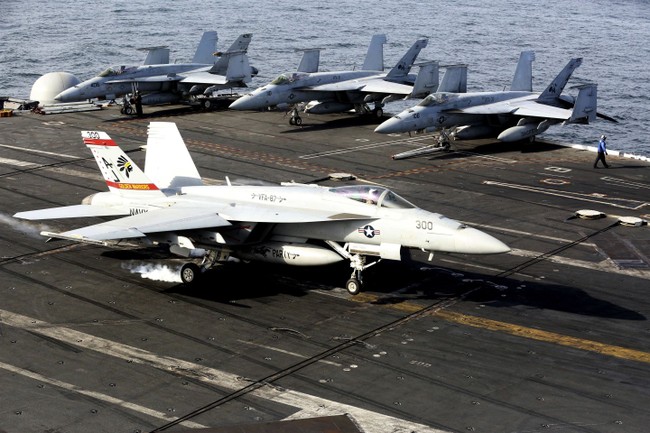
The Iranian regime tested the U.S. blockade again when a tanker tried to reach Kharg Island, and U.S. forces responded precisely. CENTCOM observed the Curacao-flagged M/T Belma transiting toward Iranian waters and issued multiple warnings the commercial ship ignored. When the vessel persisted, a U.S. aircraft struck the ship’s smokestack with hellfire missiles, rendering it unable to continue to Iran. That decisive move made clear the blockade is not a paper policy but an enforced reality.
CENTCOM emphasized the blockade was resumed at 4 p.m. ET on July 14 and that enforcement actions began immediately. In the first 24 hours of enforcement they redirected two compliant commercial vessels and disabled one non-compliant vessel. U.S. forces are conducting these operations to ensure shipping lanes remain open to legitimate traffic while denying Iran access to its ports under blockade rules. The message to anyone tempted to test that resolve should be unambiguous: fail to comply and you will face consequences.
Beyond disabling the tanker, CENTCOM said the military launched further operations to degrade Iranian capabilities that threaten international transit. As of 3 p.m. ET, a second wave of strikes targeted military assets used to menace vessels moving through the Strait of Hormuz. Those strikes are framed as protecting an international waterway critical to global commerce, and the U.S. stated it is holding Iran accountable at the Commander in Chief’s direction. This is consistent with a strategy that pairs visible deterrence with targeted kinetic actions when necessary.
https://x.com/nicksortor/status/2077499392773513324
The outcome was not an accident of escalation but a planned enforcement of declared policy, carried out with surgical precision. U.S. forces say they observed, warned, and then acted when warnings were ignored, and the sequence underscores a disciplined chain of command. Disabling smokestacks with missile strikes is a limited, targeted way to stop a ship without turning it into collateral battlefield chaos. That proportionality is part of how the operation was presented: clear, targeted, and avoidant of unnecessary destruction beyond the object of the blockade violation.
Officials framed the strikes as both defensive and preventive, aimed at denying Iran the ability to use sea lanes as a lever of coercion. The Strait of Hormuz is an international waterway, and the U.S. sees maintaining freedom of navigation there as vital to allies and global markets. By naming specific timing and targets, CENTCOM sought to show measured, accountable action rather than arbitrary aggression. From a Republican viewpoint focused on national security, actions like this reflect the long-overdue firmness many argued was necessary to deter Iranian adventurism.
The president was asked about broader policy toward Iran’s Revolutionary Guard and whether the U.S. might take the same kind of decisive action seen against ISIS. The question posed by Fox News was, “You came to the conclusion that you couldn’t negotiate with the IRGC. Does that mean that you might wipe them out like you did ISIS?” The president’s reply was, “Yeah, it does. We will see what’s happening. We received a call, just as I was coming here, that they want to meet. They always want to meet.” That exchange signals a posture that combines readiness to act with openness to talks on terms set by strength.
The optics of disabling a commercial vessel and following with strikes convey a policy preference for decisive, enforceable deterrence rather than endless warnings. For years, critics of softer approaches warned that talk without credible follow-through encourages further provocations. This operation demonstrates a preference for immediate consequences tied to specific violations, a message aimed at Tehran and those who would test international norms at sea.
Operational messages aside, the situation will remain fluid, and the U.S. declared it remains vigilant and prepared to ensure full compliance. That posture means continued surveillance, warnings to commercial traffic, and readiness to act when necessary to protect navigation and regional stability. For Republicans who prioritize clear lines and muscular defense, the episode reinforces the argument that deterrence backed by action prevents larger conflicts. The immediate result was a disabled tanker and a reinforced blockade, with the broader aim of forcing Iran to rethink aggressive maritime tactics.


Add comment