
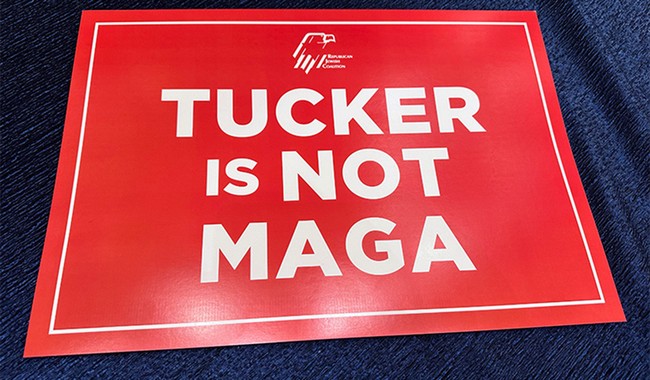
Tucker Carlson tried to equate the deadly shooting of Renee Nicole Good during an ICE confrontation with the assassination of Charlie Kirk, and that comparison is flat wrong; this piece argues from a conservative viewpoint that the two incidents are fundamentally different in motive, context, and culpability while preserving the exact quoted material cited in public discussion. The article lays out why intent and actions matter, why public safety and law enforcement context change how we judge outcomes, and why equating a violent, obstructive act with a political assassination is a dangerous moral shortcut.
I remember Tucker from his Fox days—sharp, theatrical, and capable of stirring debate. Lately, though, he’s been leaning into provocative moral equivalences that strike many conservatives as tone-deaf and misleading. This latest one, trying to put the death of Renee Nicole Good on the same plane as Charlie Kirk’s assassination, deserves a clear, direct rebuttal from the right.
The facts, plain and simple, diverge at the point of behavior. Renee Good allegedly impeded law enforcement by refusing orders and by placing herself and her vehicle in the path of ICE operations. The presence of a law enforcement officer in front of that vehicle makes the tactical context different from someone sitting in a pavilion listening to a speech or speaking into a microphone.
Ryan Saavedra summarized Tucker’s move and included the key passage that many conservatives found baffling, and it’s worth quoting verbatim to avoid misrepresentation:
Tucker Carlson compares the death of Renee Nicole Good to the assassination of Charlie Kirk.
Good hit a federal law enforcement officer with her car after disobeying orders from authorities to get out of her car because she was impeding law enforcement.
Kirk was assassinated by a militant leftist because he used words to spread his ideas.
That summary sets up the comparison, but it doesn’t justify it. The reason is simple: one event involves alleged hostile, obstructive behavior toward law enforcement; the other involves a premeditated political murder of a private citizen. Context shapes culpability, and conservatives should be the first to insist on precise moral language when people’s reputations and institutions are on the line.
Tucker’s own words, reproduced by Saavedra, were also clear and striking, and again must be preserved exactly as shown:
The 37-year-old was an American citizen and reportedly the mother of a kindergarten-aged child. Did we disagree with her views on immigration? Probably. But that shouldn’t matter. Her death is a tragedy, regardless of her partisan affiliations, ideological beliefs, or who pulled the trigger. A woman got shot in the face.
No one disputes that a death is tragic. Conservatives understand the human cost, and we grieve lives lost. But grief does not erase context. A person who chooses to block an enforcement action, who disobeys direct orders and then allegedly drives into an officer, places themselves in a vastly different moral situation than someone targeted for assassination simply because of their politics.
That distinction is not callousness; it’s clarity. Saying an act of violence is tragic does not require erasing facts about how it unfolded. If we abandon distinctions like intent, threat, and provocation, we blur every line that separates lawful enforcement from political violence. Conservatives who value law and order should insist on those lines being kept sharp.
Tucker went further, asking rhetorically why conservatives sometimes fail to view incidents through a human lens and why parts of the left celebrated Charlie Kirk’s death. His passage on that subject was reproduced exactly and raises questions that deserve an answer, but again the moral equivalence he draws is the problem:
How come so few conservatives are viewing this story through a human lens? And why, when something similar, like the killing of Charlie Kirk, happens on the other side, did many on the left celebrate because they thought his political opinions were wrong? We have a guess.
Charlie Kirk was killed while seated in a pavilion, speaking and associating, not obstructing or threatening. The assailant planned the attack and executed it for political reasons, which is the definition of political violence and assassination. Equating that with a confrontational act during a law enforcement operation invents moral parity where none exists.
Conservatives should be consistent: condemn political violence and defend lawful policing. That means recognizing the tragic nature of deaths while also acknowledging when behavior crosses into dangerous territory. That’s not hypocrisy; it’s holding both human life and civic order in proper balance.
.

Too bad Carlson has turned into an A**HOLE after leaving Fox, it was enjoyable, enlightening and entertaining watching his show back then!!