
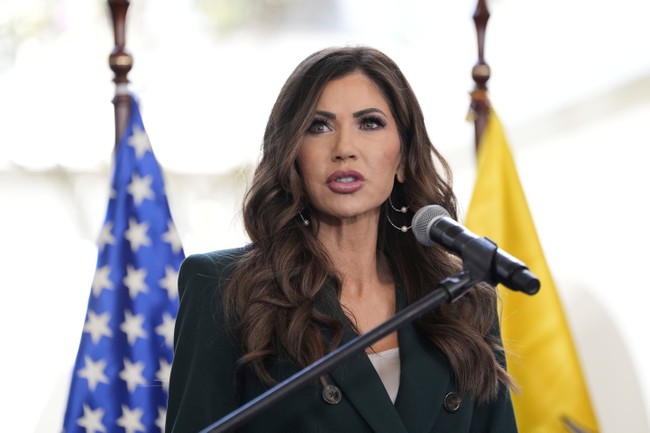
Kristi Noem went on CNN’s State of the Union and called out local leaders over violent unrest in Minneapolis, arguing officials there politicized events, encouraged chaos, and that an attack on officers amounted to domestic terrorism. She pressed that law enforcement acted on threats and cautioned protesters against confronting officers or weaponizing vehicles, framing the incident as a clear breakdown of public order and responsibility.
Noem walked into a predictable setting on CNN’s State of the Union with Jake Tapper and did not pull punches. She directly blamed Minnesota Governor Tim Walz and Minneapolis Mayor Jacob Frey for language that, she said, inflamed the situation and encouraged destructive behavior. Her tone was blunt: elected leaders who stoke anger instead of calming it share responsibility for what follows. That message landed as both a rebuke and a warning to officials who mix politics with crisis management.
First, Noem referenced public statements from local leaders she believes made the situation worse, and she used sharp language to describe their conduct. Her argument centers on the idea that words from authority figures carry weight, and when those words delegitimize law enforcement, they undermine officers’ ability to keep the public safe. She framed that deterioration of trust as directly linked to the disorder playing out on the streets of Minneapolis.
First, on the put out by Minnesota’s Governor Tim Walz and Minneapolis Mayor Jacob Frey:
Secretary Noem said:
I would say that these locals, if you look at what Governor Walz has said, if you look at what Mayor Frey has said, they have extremely politicized and inappropriately talked about the situation on the ground in their city. They have inflamed the public. They have encouraged the kind of destruction and violence that we have seen in Minneapolis these last several days, and I would encourage them to grow up, get some maturity, act like people who are responsible, who want people to be safe and the right thing to be done.
When you use the kind of language that you use against law enforcement officers, they lose their credibility.
Noem did not stop at criticism; she suggested those officials deserved consequences for crossing the line into incitement. She urged a return to responsible leadership, insisting that credibility matters when public safety is at stake. Her remarks aimed to reframe responsibility away from rank-and-file officers and back toward the leaders who set the tone.
Next, Noem shifted from blaming officials to defining the act that triggered the confrontation. She labeled the incident a weaponized attack and described the officer’s response in terms of self-defense and protection of those nearby. Her words framed the event not as a tragic accident but as an attack on law enforcement and the public, which carries legal and moral implications.
Next, Secretary Noem described what’s happening in Minneapolis as .
Secretary Noem said:
The facts of the situation are that the vehicle was weaponized and it attacked the law enforcement officer. He defended himself and he defended those individuals around him. That is the definition. When there is something that is weaponized to use against the public and law enforcement, that is an act of domestic terrorism. Happened in our shores. It happened here in our country. You don’t get to change the facts just because you don’t like them.
We will continue to look at this individual and what her motivations were. We know that there was — throughout that morning, she had harassed and impeded law enforcement operations. That raises the suspicion level with all of these law enforcement officers as far as paying attention to what her capacity is. And as you see on the videos, and they have proven out, that this law enforcement officer took the action that his training prepared him for and he worked to make sure that he could save his own life and those around him.
Noem emphasized motive and pattern, noting that the individual in question had repeatedly impeded officers before the collision. She argued that such behavior changes how officers on the scene must evaluate threats and act to protect lives. Presented that way, the officer’s response was not only foreseeable but consistent with training meant to preserve life under duress.
The appearance also contained a clear message to anyone considering violent confrontation with police: do not weaponize a vehicle, do not interfere with law enforcement, and do not escalate a protest into an attack. Noem suggested ordinary protest actions—signs, chanting from sidewalks—remain legitimate, but direct interference with officers crosses a line with potentially deadly consequences. Her stance was unapologetic: security and order cannot bend to violent tactics used to push political agendas.
The broader point she made was political as well as practical: leaders who undermine law enforcement credibility create conditions where violence becomes more likely. That critique ties local policy and rhetoric to tangible outcomes on the streets. Whether viewers accept her framing, Noem left little doubt where she stands: politicizing safety compromises it, and violent acts aimed at officers amount to domestic terrorism that must be addressed seriously.


Add comment