
The president faced a media firestorm after a clip on his Truth Social account sparked accusations of racism, and he responded directly from Air Force One, refusing to apologize while condemning the offensive parts; this piece lays out what happened, why the backlash grew, how the platform mechanics played a role, and why the White House reaction matters in the broader partisan theater.
The weekend blowup began when a short clip circulated that many called racist because it included animated depictions of public figures. Reporters and social platforms amplified the outrage quickly, turning a single post into a full-blown political crisis within hours. That fast escalation is familiar: controversy feeds coverage, and coverage fuels more outrage, whether the facts fully support it or not.
Digging into the mechanics shows a different picture than the headlines suggested. The clip actually posted to Truth Social was a minute-long segment focused on allegations of voter fraud, and the more inflammatory images came from an autoplayed video hosted elsewhere. Poor editing at the tail end of the supplied clip allowed the offensive visuals to appear as if they belonged to the original post.
That detail matters because context changes culpability. The disturbing images were part of a satirical AI cartoon that parodied a wide range of political figures, not a focused, deliberate attack scripted by the White House. Intent is central in these debates, and in this instance there is no public evidence that the president or his team created those specific frames or meant them as a direct slur.
Still, responsibility for what appears on an official account can’t be shrugged off entirely. This was a communications mistake that should not have happened, and opponents pounced as if waiting for any excuse to mount an attack. The media response treated the post as an intentional provocation, which is the pattern when partisan tensions are already high.
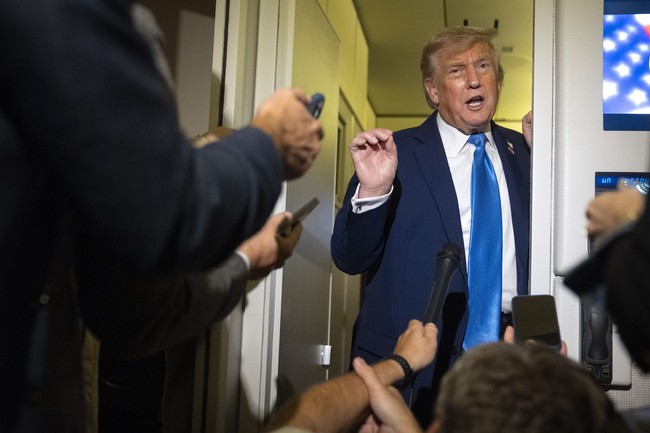
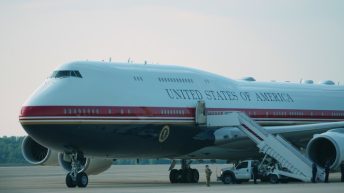
The president’s reaction was the next flashpoint, and he did not follow the usual script of rapid contrition. He faced reporters aboard Air Force One and insisted he condemned the offensive portions without offering a full apology. That posture—acknowledging the problem but refusing to bow to immediate demands for contrition—keeps the administration from conceding ground on principle while still removing the offending material.
Observers who wanted a spectacle were left puzzled when the president didn’t break and beg forgiveness. Some reporters and commentators expected a ritual apology and were bewildered when that didn’t happen, revealing how predictable the media’s playbook has become. The president’s steady refusal to yield put a spotlight on the asymmetric standards applied to political figures depending on party.
Criticism from within the GOP followed, and not all of it was helpful. A handful of Republican voices rushed to condemn the visuals in strong terms, apparently eager to be seen taking the high road. That reflex to over-apologize plays into the media narrative, rewarding those who concede quickly while punishing those who mount even measured defenses.
Certain prominent Republicans weighed in with emotion rather than measured context, saying the imagery was “offensive, heartbreaking” and “the most racist thing I’ve seen out of this White House.” Those reactions fed the cycle of coverage and gave the press fresh angles to press their case. But political theater often elevates the loudest emotional reaction over a careful accounting of facts.
Media outlets framed the story as a straightforward moral scandal, and that framing drove the weekend’s coverage. Reporters highlighted individual condemnations and amplified internal White House frustration as if it were definitive proof of wrongdoing. Political operatives then used that stream to advance narratives that serve their side, not to clarify messy reality.
Behind the scenes, some aides acknowledged mistakes in how the clip was handled, and critics inside and outside the administration flagged lapses in judgment. Yet the broader push to turn a technical error into eternal proof of malice overlooks how digital platforms and autoplay features can distort intent. Cleaning up the post and removing the clip was the right tactical move to limit the controversy’s spread.
The episode demonstrates how easily a misstep becomes a media feeding frenzy in a hyperpartisan environment. Conservatives see a double standard: Democrats tend to receive quicker forgiveness, while Republicans are forced into prolonged apologies. That sense of uneven treatment shapes how political teams respond and whether they decide to apologize or push back.
In this case, the president chose pushback paired with limited disapproval, a strategy meant to avoid conceding the narrative while addressing public concern. That stance annoyed many reporters and some critics, who expected immediate contrition. For the administration, the calculation was simple: acknowledge the harm, remove the content, and move the conversation back to policy and politics rather than apology theater.
The controversy will fade if it is not kept alive by new revelations, and the longer it remains news, the more damage it does to trust in fair coverage. Inflated outrage serves political ends on both sides, and the smart move for any team is to prevent mistakes before they create headlines. For now, the incident stands as another example of how digital media and partisan instincts can escalate errors into national controversies.
Speaking to reporters Friday night, Trump said “of course” he condemns the racist parts of the video, while noting he has no plans to apologize.
“No, I didn’t make a mistake,” he said on Air Force One, adding that he didn’t see the full video. “I looked at the beginning of it. It was fine.”
Add comment