
The piece argues that claims of an American retreat from the Indo-Pacific are exaggerated, outlines how the National Security Strategy prioritizes the Western Hemisphere while still reinforcing commitments in East Asia, and highlights recent U.S. diplomatic and military moves showing continued engagement with allies amid Chinese coercion.
Mainstream outlets and think tanks have loudly argued that the U.S. is stepping back from the Indo-Pacific after the National Security Strategy was released. Those critiques paint a picture of abandonment, especially toward partners like Japan, but they rest on selective readings and anonymous leaks rather than the full picture. Critics seized on a few lines and turned them into a supposed strategic pivot away from the region.
The NSS does reorient attention to the Western Hemisphere, emphasizing homeland defense and countering adversary influence closer to our shores. That focus responds to clear trends: China and other actors are exerting pressure through migration flows and transnational crime, which directly affect American security. Prioritizing the Western Hemisphere does not mean walking away from Asia; it reflects a broader, layered strategy.
On substantive Indo-Pacific issues the document remains engaged, addressing economic coercion, Taiwan, the South China Sea, and the First Island Chain. The paper stresses bolstering alliances and partnerships, including with Japan and India, as a way to distribute burden and raise deterrence. Beltway narratives that label the strategy isolationist miss these sustained commitments.
The administration has publicly supported Japan following recent tense encounters between Japanese and Chinese aircraft, condemning aggressive behavior and reaffirming alliance ties. High-level communications underline that Washington and Tokyo are coordinating closely on defense and deterrence. Such diplomatic readouts show active engagement rather than strategic neglect.
Senior U.S. officials have held direct talks with Japanese counterparts to discuss recent Chinese military actions and to reaffirm commitments to regional security. Those conversations focused on practical measures to boost deterrence and interoperability, with an eye toward rapid, coordinated responses. Keeping communication channels open is a basic, but essential, part of alliance management.
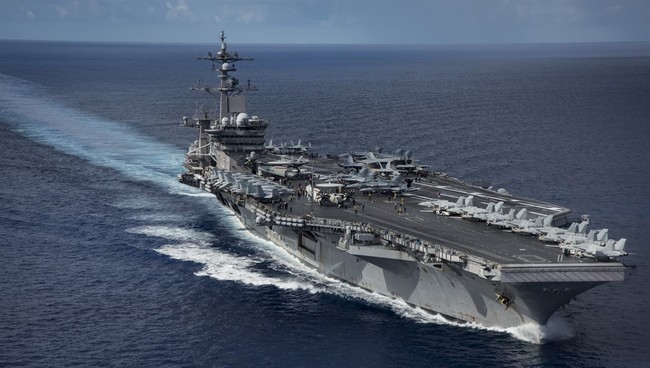
On the operational front, the U.S. is increasing naval and air presence across the Western Pacific, deploying carrier strike groups and amphibious ships capable of supporting F-35 variants. Bomber and fighter flights with allied forces have been used to signal readiness and to improve combined response procedures. Regular maritime cooperation with the Philippines and other partners continues as part of a broader deterrence posture in contested waters.
Recent actions include interdiction at sea of a vessel transporting military-related cargo headed from China to Iran, marking a notable enforcement step in the maritime domain. Bilateral and multilateral exercises, plus the establishment of joint task forces with regional allies, illustrate a pattern of active security cooperation aimed at countering coercion. These are tangible steps, not symbolic gestures.
The NSS could have been more explicit in naming the Chinese Communist Party and detailing the doctrine that underpins much of Beijing’s coercive strategy. It also skirts some of the finer points of the CCP’s unrestricted approach to warfare and influence. Still, gaps in rhetorical clarity do not equate to strategic retreat when policy actions and alliance strengthening continue on the ground.
Practical suggestions frequently raised in policy circles include keeping forward-deployable missile defenses available to key partners and maintaining carrier capacity for power projection until newer platforms arrive. Reviving shipbuilding and sustaining naval readiness are recurring themes among military planners aiming to preserve long-term deterrence. Investment in these areas supports persistent presence and operational flexibility.
Editor’s Note: Thanks to President Trump and his administration’s bold leadership, we are respected on the world stage, and our enemies are being put on notice.
What matters for allies and adversaries alike is the combination of words and deeds: strong diplomatic ties, clear communication with partners, and credible military presence. The recent pattern of deployments, joint exercises, and high-level consultations shows the U.S. is far from abandoning the Indo-Pacific, even as it sharpens attention on threats closer to home.



Add comment