
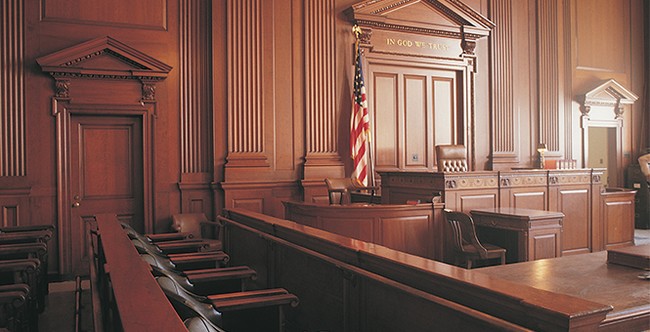
I’ll explain a new push by a far-left Washington group to train jurors, outline the funding links tied to national left-leaning networks, quote the group’s own language about jury power, show why critics see this as political resistance aimed at President Trump, and note how those ties raise questions about influence and intent.
Ever since 2015, opposition to Donald Trump has taken an unusually intense form among left-wing activists and organizations, and a recent program in Washington, D.C., shows how that energy is evolving into courtroom strategy. Organizers are pitching jury service not just as civic duty but as a way to shape verdicts in cases involving defendants they describe as marginalized. That framing turns a routine civic obligation into what critics call an organized political effort to alter legal outcomes.
On January 12, a D.C.-based group called Free DC announced an event described as teaching local residents how to approach jury duty with the goal of defending people they say face systemic bias. The session is presented jointly with another group using the name Harriet’s Wildest Dreams, and the stated purpose is to encourage jurors to consider identity and alleged injustice when deliberating. The organizers make clear they see jury rooms as places to intervene in what they view as an unfair criminal legal system.
Free DC’s messaging is blunt about the role they want jurors to play. The event description says jurors can “protect our people, especially those with marginalized identities who are disproportionately targeted by the criminal legal system.” That language frames jury service as an act of organized defense rather than impartial adjudication, and it raises obvious questions about how juror guidance interacts with existing duties to follow law and evidence in a trial.
“Jury duty is not just a civic responsibility; it’s a powerful tool for ensuring fairness and justice. As community members, our participation in juries is vital to safeguarding the rights of those who are most vulnerable to systemic biases. By serving on a jury, we can influence outcomes and help create a more equitable legal process.”
Outside observers note that Free DC is not an isolated neighborhood collective but part of a broader activist landscape with connections to large philanthropic networks. Between 2020 and 2023, the umbrella groups tied to this ecosystem reported millions in funding from national foundations known for backing progressive causes: Community Change Action received $12.6 million from Open Society, $5.6 million from the Arabella network, and $1.9 million from the Tides Foundation. Critics point to those numbers as evidence that what looks local is often financed from national sources with political agendas.
Those same critics emphasize the optics: a group that opposes Trump’s policies and actions pushing jurors to consider identity and systemic bias could be seen as extending political resistance into the courtroom. Free DC has previously been a vocal opponent of Trump-era security steps, and outlets covering the group have described it as central to anti-Trump activity in the capital. That record makes the group’s jury work seem less like neutral civic education and more like a continuation of political organizing.
Free DC also offers a historical narrative that ties current D.C. politics to long-standing grievances. They assert the denial of full statehood to the District is rooted in racism and place their activism within a lineage of civil rights struggles. Opponents respond that the question of D.C. status is a constitutional issue as well as a political one, and say that arguing solely on racial grounds ignores that constitutional framework.
Activists argue that training potential jurors increases participation and representation on juries, which can be a legitimate goal if the aim is to broaden perspectives in civic institutions. Skeptics counter that when that training explicitly tells jurors to prioritize identity or to see cases through a particular political lens, it risks compromising the impartiality the justice system depends on. The tension between better representation and impartial adjudication is at the heart of the debate around these programs.
For many conservatives, the involvement of high-profile funders and organizing groups turns what might otherwise be community outreach into an orchestrated campaign to influence outcomes in trials tied to politically charged issues. That concern is sharpened by the group’s clear adversarial posture toward Trump and his supporters, which critics say makes the training look like resistance by other means.
The new push in jury education raises concrete legal and ethical questions about where civic engagement ends and strategic political intervention begins. With national funding networks playing a role and organizers instructing jurors to consider systemic bias, the lines between citizen participation and coordinated influence are being tested in a way that will keep courts and communities watching closely.

Add comment