
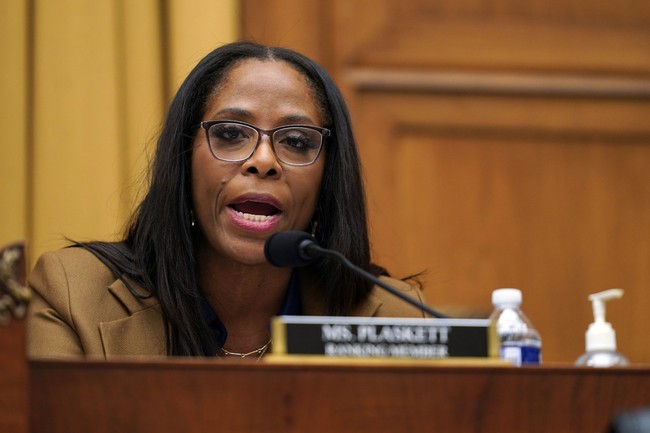
This article examines Rep. Stacey Plaskett’s explanation for texting Jeffrey Epstein during a congressional hearing, the defenses she offered in public interviews and on the House floor, and the broader political fallout from a lawmaker claiming Epstein was merely a constituent while insisting she sought information to “get at the truth.”
Stacey Plaskett has been on a media tour defending the decision to exchange texts with Jeffrey Epstein during a congressional proceeding, and Republicans are calling foul. What started as an eyebrow-raising report turned into a string of public explanations that many find implausible coming from a member of Congress. The key claim Plaskett repeated is that Epstein was “a constituent” and that the interactions were routine constituent communications.
On the House floor Plaskett said, “I got a text from Jeffrey Epstein, who at the time was my constituent,” and she insisted he “was not public knowledge at that time, that he was under federal investigation, and who was sharing information with me.” That line has not landed well with critics who note the unusual timing and the nature of Epstein’s notoriety. For Republicans, the exchange looks like a serious lapse in judgment, not a mundane constituent service.
Plaskett doubled down on the constituent defense in TV appearances, telling a major cable host that Epstein “was a resident of the Virgin Islands” and that “like many constituents, individuals get your phone number. They text you about issues. They speak with you.” That version strains credulity when you consider Epstein’s profile and prior convictions. The idea that this was a garden-variety constituent outreach is hard to accept given the context.
Republicans point to the optics: texting a known sexual offender during a hearing looks like cozy, inappropriate access rather than routine constituent outreach. Imagine if a Republican lawmaker had a similar texting relationship with Epstein — the defensive posture would be different and the coverage more unforgiving. The double standard is part of the outrage, but so is the basic fact that members of Congress generally do not conduct real-time text conversations with controversial figures while questioning witnesses.
Plaskett later offered another defense: “I believed that Jeffrey Epstein had information, and I was going to get information to get at the truth,” Plaskett explained. That claim raises two practical questions — what information did Epstein have that justified direct contact during a hearing, and why was she initiating texts at 7:55 a.m. before the proceeding? Critics argue those details undercut the narrative of a harmless constituent text.
Reports show Plaskett had financial interactions and communications with Epstein over the years, so the insistence that he was merely a constituent does not sit right with many voters. Plaskett’s explanations come off as evasive to Republican observers who view this as emblematic of a broader pattern: minimizing ties to controversial figures while deflecting accountability. The explanation that Epstein was simply a constituent feels like gaslighting to people paying attention.
During an interview Plaskett suggested the public should “move forward” from scrutiny of her connection to Epstein and downplayed the personal nature of the texts, even when he complimented her appearance. Her critics see that as tone-deaf; the presence of exchanges in which Epstein praised a lawmaker’s “great outfit” makes any professional distance harder to claim. Republicans argue the focus should be on transparency and whether appropriate boundaries were crossed.
At one point Plaskett said, “If individuals are not involved in illegal activity, extending his criminal enterprise or his financial enterprise, or all of those things, Plaskett said, “I think that you need to look at what people arguing moving forward (sic).” Those words have been seized on by opponents as an attempted reset designed to shift attention away from the substantive issues. The problem for Plaskett is that Epstein’s criminal record predated many of these interactions, which undercuts the notion of innocent, routine contact.
Republican commentators see the episode as more than a personal misstep; they view it as symptomatic of a political class comfortable with talking its way out of accountability. The questions left unanswered are simple: why the texts, what was exchanged, and why was a sitting member of Congress accepting direct messages from a known sex offender during official proceedings? Those questions are fueling continued scrutiny.
The exchanges have already reshaped the narrative around Plaskett and prompted demands for clearer explanations and records. For critics, the episode reinforces the idea that standards for some lawmakers are malleable when political allegiance or party standing is at stake, and that ordinary voters deserve straight answers when serious ethical lines appear blurred.



Add comment