
House Republicans are under fire after members of the conference allegedly struck a backroom deal that spared a GOP colleague while allowing a Democrat accused of ties to Jeffrey Epstein to escape censure, according to Reps. Tim Burchett and Anna Paulina Luna; the episode has raised fresh questions about leadership priorities, consistency in ethics enforcement, and whether backroom bargains are undermining the party’s stated commitment to rooting out corruption regardless of party affiliation.
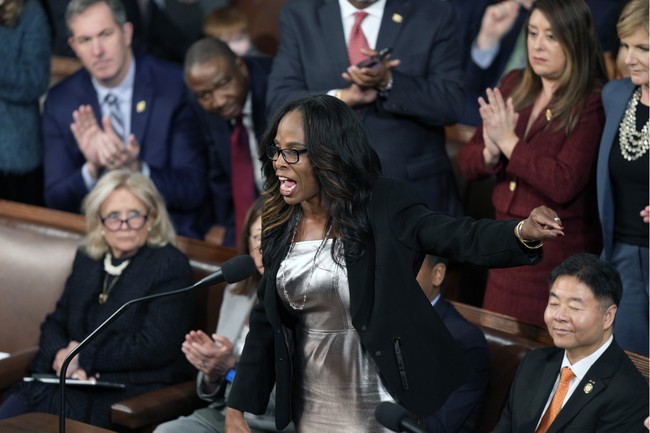
Many Americans already distrust Washington, and this episode reinforces why. Lawmakers say the censure resolution against Delegate Stacey Plaskett failed not because the facts were murky, but because a vote-trade took place to protect Representative Cory Mills. That claim comes from multiple Republican voices who say leadership prioritized shielding a member of their own over holding a Democrat accountable after troubling revelations tied to Epstein surfaced.
The controversy traces to documents that allegedly show Jeffrey Epstein feeding questions to Plaskett during a hearing, and to reporting that placed her in direct communication with him. Republicans moved to censure Plaskett, and the expectation was a straightforward party-line action. Instead, several Republicans either voted no or marked present, sinking the resolution and prompting accusations that leadership cut a deal to preserve Mills’ position.
Rep. Tim Burchett went on camera to call out the maneuvering and to explain why he believes the vote failed. He describes contributions and text exchanges tied to Plaskett and lambastes a culture where committee assignments remain in the hands of people he considers compromised. That kind of rhetoric is sharp and direct, and it reflects real anger on the right about what some members see as hypocrisy from the leadership team.
BURCHETT: Late vote series to censure Delegate Stacey Plaskett. She’s the one that received a sizable contribution from Epstein, which apparently is legal. I’m not sure. But she is also the one who was texting with him during a committee hearing, getting instructions on how to better attack Trump, from Epstein sending her the texts.
So she’s on some pretty powerful committees, and that just tells you how corrupt this place is. But the disgusting thing about it was, four Republicans chose not to vote. Three Republicans voted president — present, excuse me, and three Republicans voted no. So it failed. And what they did was, they cut a deal. They cut a deal on another ethics vote on a Republican, and that’s just wrong.
Everybody should just stand on their own. If it were truly, we don’t care whose party these sex offenders and all this other stuff are in, we’re going after them, then we start cutting deals. To me, it’s really disgusting. I get disgusted about some things, but this is one that’s really, really bad. You’ve got some people on there who are chairmen of committees and things like that, and that’s the kind of people we put in leadership. It’s bogus, and it stinks, and the first opportunity I get to speak to leadership I will give them a piece of my mind, and I doubt it will go anywhere, but they’re the most sewer-dwelling people, some of these folks, not all of them, but some of them are. It’s just disgusting. It really is.
The Mills connection is central to why the deal, if it occurred, looks so damaging to the GOP brand on ethics. Critics point out that Mills has been involved in prior votes and controversies that suggest he might be a lightning rod, yet leadership apparently intervened to keep him safe. From a Republican perspective this feels like a betrayal of the promise to apply standards evenly, especially when wrongdoing touches both sides of the aisle.
Mills has faced a string of allegations and eyebrow-raising associations. He voted against censuring Rep. Ilhan Omar in a prior ethics fight, and that vote preceded scrutiny about his personal relationships and the people connected to his life. Those issues have left rank-and-file conservatives asking why the conference would risk appearing to protect him at the expense of disciplining a Democrat implicated in the Epstein disclosures.
One contentious item in coverage claimed that a wedding officiated by a controversial figure raised questions about Mills’ judgment and alliances, and those suspicions were used by some critics to argue that he was the kind of member leadership would protect for political reasons. That assertion has become part of the narrative explaining why some Republicans thought a tradeoff was on the table during the censure vote.
Further allegations added fuel: reports surfaced about a restraining order and claims from an ex-girlfriend accusing Mills of coercion and threats. Those charges, combined with earlier votes and associations, make any leadership decision to shield him look especially tone-deaf to conservatives who campaigned on accountability and morality in public life. The optics are terrible and the questions are loud.
Republican critics want answers about the mechanics of the vote and the priorities driving the leadership team. If deals were struck to spare one member while allowing another to walk free after damning disclosures, the party risks eroding the trust of voters who expect consistency. For a party that often brands itself as the champion of accountability, these allegations about backroom bargaining are politically dangerous.
Now that accusations of a trade have been aired publicly by Representatives within the conference, the pressure will grow for a clear explanation. GOP voters and activists will watch how leadership responds, and whether any corrective action is taken, because the story is not just about two members — it’s about whether the party will actually enforce its principles when the cameras are off and power is on the line.


Add comment