
The piece looks at merchandise tied to the Obama Presidential Center, noting pricey items, promotional appearances by high-profile figures, and how the center frames its mission and product sales to support the Obama Foundation.
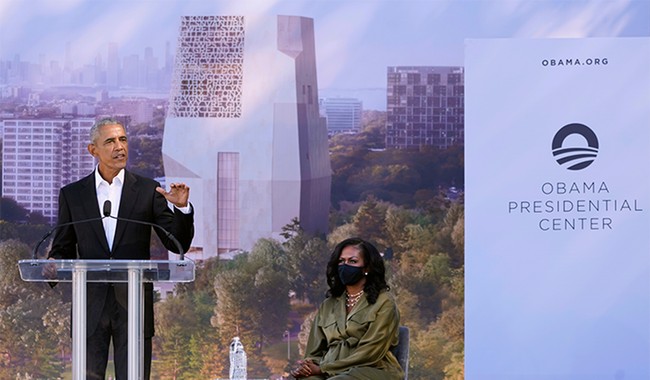
The presidential center is set to open in June, and its team has been pushing the launch with celebrity appearances and late-night interviews. A recent promotion featured Mark Hamill and an interview with Stephen Colbert that highlights the center as a place for community engagement and civic activity. The center’s marketing leans heavily into themes like hope, change, and inspiration as reasons to visit and support its mission.
It was great talking to Stephen and the inspiring young people we’ve worked with at the @ObamaFoundation on the @ColbertLateShow
.When the Obama Presidential Center opens this June 19, my hope is that this will be a place where people can come together to meet, learn, and work with each other to create change in their communities. Learn more at http://tickets.obama.org.
Beyond the speeches and interviews, the center’s online store offers a range of branded merchandise that seems aimed at collectors and supporters more than everyday tourists. Some items are modestly priced, but others carry what many would consider steep price tags for novelty or commemorative goods. The product selection mixes apparel, accessories, children’s items, books, and even pet gear, often with messaging that ties back to the foundation’s broader goals.
One example that drew attention is a pin modeled on the center’s architecture. Critics say it fails on aesthetics, calling it a gray blob rather than an appealing keepsake. The pin’s reported price is $30, which some observers argue is high for a simple, stylized representation of a building. That combination of design and price has fueled commentary about whether the merchandise reflects value for average visitors.
Another notable item in the collection is a pearl-style necklace presented as an homage to Michelle Obama’s fashion sensibility. The store’s description frames it as a handcrafted, timeless accessory tied to her influence on style, yet the listed price is $390. Commentators have reacted with disbelief at the idea of paying such a premium for a fashion nod, questioning whether the cost matches the item’s practical or sentimental worth.
It’s a timeless, hand-crafted accessory and a graceful nod to Mrs. Obama’s celebrated eye for fashion and her belief that our style is a powerful part of our story.
There are also educational and novelty items for kids that emphasize renewable energy and civic engagement, but the total cost for several of those kits can approach $460. For families shopping for meaningful, hands-on educational toys, the price variance across similar products elsewhere has prompted skeptics to compare value and accessibility. Including such price points in a museum or foundation shop raises predictable questions about inclusivity and audience.
Alongside children’s kits and fashion items, the shop stocks pet accessories marketed with playful language about collective progress. One description suggests dogs can “represent the mission of shared progress in their own wagging way,” which underlines the themed branding extending even to pet products. That breadth of offerings suggests a deliberate strategy to monetize a wide range of fandom.
Books make up another significant category in the store, mixing titles by the Obamas with other political and historical works. Among the selections is a classic organizing manual that comes with a description equating its author’s contributions to earlier American pamphleteers. The listing frames the work as a staple for activists seeking practical advice on community organizing, while placing it in the same context as influential historical writers.
“This country’s leading hell-raiser” (The Nation) shares his impassioned counsel to young radicals on how to effect constructive social change and know “the difference between being a realistic radical and being a rhetorical one.”
“A superlative organizer, strategist, and tactician who is also a social philosopher.” —Charles E. Silberman
First published in 1971 and written in the midst of radical political developments whose direction Alinsky was one of the first to question, this volume exhibits his style at its best. Like Thomas Paine before him, Alinsky was able to combine, both in his person and his writing, the intensity of political engagement with an absolute insistence on rational political discourse and adherence to the American democratic tradition.
Observers noted the markup on several items compared to third-party retailers, and some pointed out that buying from the center often costs more than shopping around. The store does state that proceeds support the Obama Foundation’s mission to inspire and connect people to take action in their communities. For supporters, that message makes the premium feel more like a donation, but for others the prices remain a sticking point.
Ultimately the center’s retail approach blends fundraising, branding, and storytelling, with merchandise that stretches from the purely decorative to the overtly ideological. Whether that strategy will draw sustained foot traffic after opening week or simply create headlines for expensive souvenirs remains to be seen.



Add comment