
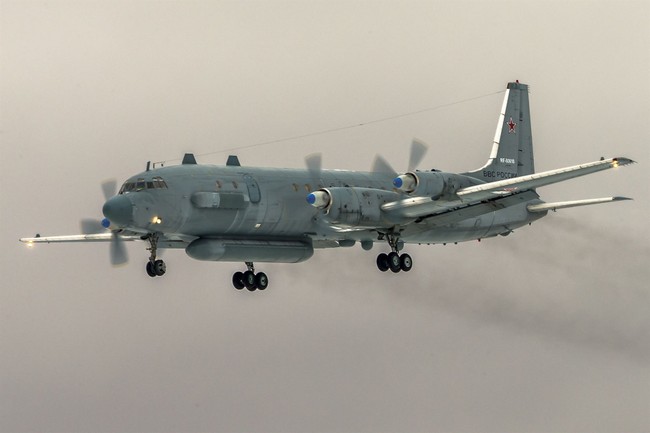
The piece examines recent media coverage accusing U.S. forces of committing a war crime by using an aircraft disguised as a civilian plane in strikes off Venezuela, arguing the reporting rests on anonymous sources and lacks basic identifying details about the plane or the alleged deception.
The press has pursued a narrative that ties criticism of the president to an effort to remove Secretary of War Pete Hegseth, and stories about Venezuelan operations have become a proving ground for those attacks. Coverage has focused on interdictions, regime change, and drug interdiction, with reporters quick to frame these actions as improper. The resulting tone is often accusatory before a clear factual basis is established.
Accusations range from seizing tankers to targeting drug traffickers, and the loudest claims have alleged war crimes for how strikes were conducted. The most serious claim centers on an airplane reportedly painted to resemble a civilian aircraft, which the press describes as an example of perfidy under the laws of armed conflict. That claim elevates the story from operational dispute to a legal and moral crisis.
The Pentagon used a secret aircraft painted to look like a civilian plane in its first attack on a boat that the Trump administration said was smuggling drugs, killing 11 people last September. The laws of armed conflict prohibit combatants from feigning civilian status to fool adversaries into dropping their guard, then attacking and killing them. That is a war crime called “perfidy.”
The reporting leans heavily on anonymous officials, a familiar journalistic shortcut when sensitive military details are involved. One named source, retired Maj. Gen. Steven J. Lepper, is quoted offering a legal view of the situation, but his cautionary phrasing underlines the uncertainty. The story depends on conditional language and expert interpretation rather than on concrete, independently verifiable facts.
Retired Maj. Gen. Steven J. Lepper, a former deputy judge advocate general for the United States Air Force, said that if the aircraft had been painted in a way that disguised its military nature and got close enough for the people on the boat to see it… that was a war crime under armed-conflict standards. “If the aircraft flying above is not identifiable as a combatant aircraft, it should not be engaged in combatant activity.”
The use of “if” in that passage is telling: the charge is presented as conditional, not as established fact. After a long explanation of what constitutes perfidy, the coverage fails to deliver a clear description of the plane at the center of the allegation. Readers are told the aircraft was “not painted in a classic military style,” yet no precise appearance, marking, or identifying detail is provided.
Deep in the report comes an admission that undercuts the entire premise: officials declined to specify what the aircraft looked like. That omission is more than an editorial caveat; it leaves the central allegation unsupported and makes it impossible to judge whether any rules were actually broken. Accusations of war crimes demand clear evidence, not innuendo or anonymous tips.
It is not clear what the aircraft was. While multiple officials confirmed that it was not painted in a classic military style, they declined to specify exactly what it looked like.
Six journalists collaborated on the story, yet none produced the identifying details that would make the accusation meaningful. Without a single concrete description, photograph, or corroborated eyewitness account, the narrative reads as conjecture dressed up with legal commentary. That approach risks turning journalism into rumor amplification.
The article’s method echoes earlier episodes where major outlets ran serious allegations based largely on unnamed sources and conflicting secondhand claims. Past instances show how quickly a narrative can ossify into perceived fact when multiple reporters echo the same anonymous assertions. The consequence is a media environment where definitive charges are sometimes aired well before evidence is pinned down.
The reporting here demands a higher standard: if an airplane was intentionally disguised to lure and then attack civilians that would be a grave violation of the laws of war and merit full investigation. But public condemnation and legal labels should follow evidence, not precede it. As presented, the story feels like a serious accusation built on conditional language and secrecy rather than on confirmed specifics.
Readers deserve clear, verifiable facts when an outlet levels the most extreme charges it can find, especially when those charges could be used to delegitimize or criminalize military decisions. This episode underscores how critical it is for journalists to prioritize documentation and precise description before charging actors with war crimes. Until such evidence appears, the allegation remains an unproven contention.
https://x.com/charlie_savage/status/2011122660084764910?s=20


Add comment