
NATO faces a changing battlefield where cheap, mass-produced weapons like drone swarms challenge expensive, high-end interceptors and the alliance’s industrial base, forcing a rethink of defense strategy and logistics to favor layered, scalable responses.
Every conflict teaches lessons about the next fight, and recent encounters in the Middle East and Ukraine are no exception. Stealth, precision, and high-tech platforms proved decisive in past wars, but those advantages face a new kind of test. Low-cost, easily mass-produced weapons can be overwhelmed by numbers, not just quality.
Modern combat is showing that the production model matters as much as technological sophistication. The M1A2 and other advanced systems remain lethal against comparable threats, yet they are expensive and slow to build. When an adversary can flood a theater with cheap, expendable systems, cost and throughput become strategic factors.
“Days after NATO allies committed tens of billions of dollars to new air and missile defenses, the alliance’s top transformation commander warned that the West must fundamentally redesign its weapons and industrial base to withstand attacks at the scale now being demonstrated in Ukraine and the Middle East.
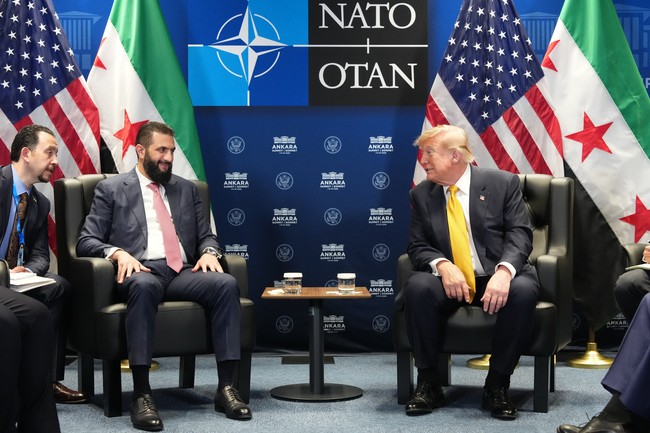
“Today, the math is not in favor of the West,” Adm. Pierre Vandier, NATO’s Supreme Allied Commander Transformation (SACT), told Fox News Digital in an exclusive interview following the alliance’s summit in Ankara, Turkey, in early July.”
History offers a blunt lesson. In World War II Germany fielded technically impressive tanks, but the United States won in part by producing large numbers of adequate vehicles that kept supply and maintenance manageable. Quality has limits when quantity can swamp defenses, and logistics often decides outcomes more than headline technologies.
That wartime manufacturing contrast is useful: handcrafted masterpieces versus mass-produced, reliable systems. Today, a similar approach could mean designing interceptors and counter-drone weapons that are simpler, cheaper, and easier to manufacture at scale. The goal is not to discard high-end interceptors but to preserve them for the threats those systems are uniquely suited to defeat.
“Russia’s nightly barrages against Ukraine have exposed an air-defense model designed for smaller numbers of incoming threats. The U.S.-Iran conflict has simultaneously intensified demand for the high-end interceptors needed to defeat ballistic missiles, including Patriots and Terminal High Altitude Area Defense (THAAD) that cannot quickly be replaced.
“There is no way to produce 50,000 Patriots a year,” Vandier said. “We don’t have the supply chain, and it’s not worth doing that given the cost of the weapon.”
Vandier’s point drives the practical challenge: high-end interceptors are scarce and costly, so NATO needs a layered mix of defenses. That mix should include many low-cost interceptors optimized for swarms of small threats, backed by advanced systems for ballistic missiles and complex aerial attacks. This layered approach accepts that not every incoming target demands the most expensive response.
Drones change the math because they can be produced cheaply and deployed in large numbers by actors that prioritize attrition and saturation. A nation that masters consistent mass production and resilient logistics gains a decisive advantage. Defense planners must therefore factor industrial resilience and manufacturing agility into strategy, not only sensor and effect performance.
For NATO and the United States, the policy implication is clear: invest in production lines and modular weapon designs that can scale rapidly. That means redesigning supply chains, standardizing components, and fielding systems that are effective enough and inexpensive enough to be deployed in significant quantities. It is a practical, strategic pivot from merely buying the most capable single item toward ensuring sustained combat capacity.
The technical community will need to innovate on cost, automation, and manufacturability while preserving critical capabilities. Simpler guided interceptors, expendable kinetic solutions, electronic warfare tools, and cooperative unmanned systems all fit within a mass-producible toolkit. The alliance that can merge industry, logistics, and doctrine around this reality will be better prepared for the emerging battlespace.
Defense is catching up to a lesson that should be simple but is often resisted: wars are as much about supply and production as they are about tactics and platforms. NATO’s future readiness will depend on hard choices about what to build, how fast to build it, and how to structure forces so that high-end systems are not exhausted defending against low-cost mass attacks.



Add comment