
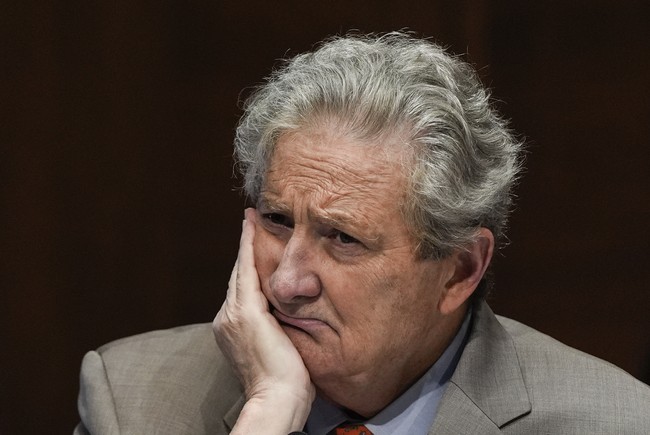
Sen. John Kennedy says Chuck Schumer pulled a last-minute reversal on a tentative DHS funding compromise, leaving Republicans to confront Democrats who, Kennedy argues, favor protecting illegal immigrants over empowering ICE and keeping Americans safe. The dispute centers on whether Democrats would agree to fund most Department of Homeland Security functions while excluding ICE Enforcement and Removal Operations, a plan Republicans hoped to advance without the policy changes Democrats demanded.
Sen. Kennedy Exposes Schumer’s New, Last-Minute Bad Move on Potential DHS Deal
Republicans expected a narrowly tailored deal that would fund most DHS operations while carving out ICE ERO so enforcement could continue uninterrupted. The idea was to separate routine DHS funding from enforcement actions that conservatives consider essential to border security and public safety. That approach was meant to prevent Democrats from attaching reforms on warrants and operational policies that would restrict ICE agents.
According to Sen. John Kennedy, that apparent agreement evaporated when Senate Minority Leader Chuck Schumer stepped back from the understanding. Kennedy told CNN, “Schumer has changed his mind…we’re back to square one,” and described the situation as a move that resets negotiations. For Republicans, that reversal looks like political theater aimed at appeasing left-leaning factions rather than achieving a workable outcome.
This isn’t just a procedural spat; it affects frontline law enforcement. ICE agents are charged with arresting and removing illegal aliens, a role the electorate emphasized in the last election cycle. Democrats have spent years criticizing and defunding parts of the agency, and critics argue that continuous attacks have encouraged hostility toward federal officers and hindered enforcement operations.
White House Press Secretary Karoline Leavitt framed the disagreement bluntly, saying Democrats “cared more about illegal aliens” than Americans. That line captures the tone of Republican frustration: lawmakers believe the priority should be protecting citizens and enforcing immigration laws enacted by Congress. When funding talks get tangled up in political posturing, the operational capacity of DHS components remains at risk.
Republicans planned to use reconciliation or focused appropriations tactics to keep ICE enforcement funded where Democrats would not agree to it. That plan aimed to bypass Democratic amendments that Republicans see as attempts to neuter enforcement, such as restrictive warrant rules or operational constraints. But reconciliation has limits and legal hurdles that make relying on it a risky strategy for ensuring uninterrupted enforcement.
When Senate leaders shift positions unexpectedly, negotiations stall and constituents lose confidence. Kennedy’s comments paint Schumer as someone shifting priorities to avoid intraparty challenges and to placate his left flank. That kind of flip-flop can be interpreted as prioritizing political survival over public safety, and it forces Republicans to take a firmer stance to prevent repeated shutdowns or funding compromises that weaken enforcement.
The larger picture is a battle over who controls immigration policy and how strictly laws are applied. Democrats, as described by critics in this piece, have pursued a narrative that undermines enforcement agencies and diverts attention away from border security. Republicans counter that enforcing existing law is a straightforward public safety measure and that partisan resistance to enforcement endangers communities and agents alike.
At stake is not only funding but the capacity of ICE officers to do their jobs without new operational shackles. If Democrats succeed in attaching sweeping reforms to must-pass bills, enforcement could be constrained by paperwork, additional legal barriers, or limits on detention and removal. Republicans argue that those changes would make it harder to remove dangerous or repeat offenders who entered the country illegally.
Lawmakers on the right are being urged to hold firm and avoid concessions that would undercut enforcement or enable repeated government gridlock. This moment highlights the strategic choices facing Republicans: either accept a compromised plan that weakens ICE or push back and risk another funding stalemate to preserve enforcement tools. For Kennedy and other conservatives, protecting ICE’s ability to act is nonnegotiable.
The dispute also reflects broader tensions in Washington about prioritization and messaging. Democrats who pull back on deals risk being seen as unreliable partners, while Republicans who appear too eager to compromise risk alienating their base. That dynamic makes any potential deal fragile and susceptible to last-minute changes, which is exactly what Kennedy says happened with Schumer’s reported reversal.
Resolving this conflict will require clarity about what funding covers and what operational rules will apply to enforcement. Without a stable agreement, both border security and the morale of federal agents remain in jeopardy. Republicans insist they will not accept terms that leave ICE hamstrung or public safety compromised, and they are preparing to push back if Democrats continue to shift the goal posts.
Senate negotiations often hinge on trust between leaders, and when that trust breaks, the legislative process grinds to a halt. Kennedy’s public criticism is intended to raise the stakes and force a clearer commitment from Democrats on whether ICE enforcement will be preserved. If Schumer’s stance is truly a reversal, Republicans will need to recalibrate their approach to ensure enforcement is prioritized.

This is the kind of chicanery that the DEMONcRATS are famous for.