
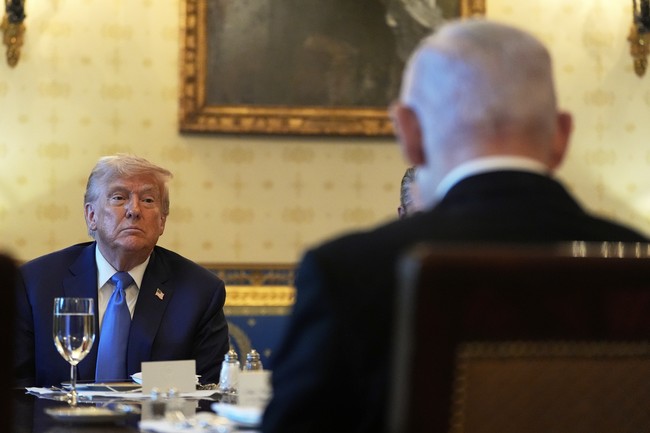
This article examines President Trump’s Truth Social post that appeared to bar Israeli strikes in Lebanon, how that surprised Israeli leaders, the diplomatic context involving Lebanon and Iran, and the strategic implications for U.S.-Israel coordination and the fight against Hezbollah and the IRGC.
Iran insisted on a regional ceasefire as a prerequisite for rejoining negotiations, a condition that effectively shielded Hezbollah in Lebanon from continued Israeli targeting. That pause would give Hezbollah a break precisely when Israeli operations were degrading the group’s capabilities, frustrating those who want a decisive blow. U.S. diplomacy, led publicly by Secretary of State Marco Rubio’s engagement, sought to turn negotiations into a moment for broader stability along Israel’s northern border.
The talks between Israel and Lebanon produced an agreement framed as a short ceasefire, with language saying Israel would refrain from striking targets in Lebanon while reserving self-defense rights. To many observers, that read like a tactical pause meant to de-escalate and open space for talks with Iran. But President Trump’s public pronouncement on Truth Social reframed the arrangement, declaring that the United States would prohibit Israel from bombing Lebanon.
The U.S.A. will get all Nuclear “Dust,” created by our great B2 Bombers – No money will exchange hands in any way, shape, or form. This deal is in no way subject to Lebanon, either, but the USA will, separately, work with Lebanon, and deal with the Hezboolah situation in an appropriate manner. Israel will not be bombing Lebanon any longer. They are PROHIBITED from doing so by the U.S.A. Enough is enough!!! Thank you! President DJT
That blunt public directive hit Tel Aviv like a thunderbolt. Israeli officials reportedly read the post as contradicting the text of the ceasefire the State Department had released, and they were startled by the implication that Washington would issue a binding order to Israel in this operational sphere. Under Republican administrations, the idea that the United States would unilaterally forbid a close ally from defending itself on its own soil would be unusual, but many conservatives see this as a bold move to force diplomatic pressure on Iran and its proxies.
President Trump later doubled down in interviews, saying, “Israel has to stop. They can’t continue to blow buildings up. I am not gonna allow it.” Those words underscored the administration’s willingness to place U.S. leverage at the center of efforts to limit escalation. Supporters argue this helps separate the political objective of ending Iran’s nuclear ambitions from unchecked kinetic escalation that can widen the war.
Israel has walked a dangerous tightrope during this conflict, balancing cooperation with the United States and relentless self-protection against existential threats from Iran and Hezbollah. From the Israeli perspective, the threat from the IRGC and its Lebanese proxy is ongoing and existential, not a negotiable quirk of diplomacy. Israelis rightly worry that any long pause with Hezbollah standing idle will let the militia recover, rearm, and prepare for future attacks.
The administration’s approach has purposely cast the U.S. as the force moderating escalation while letting Israel undertake more deniable, targeted operations. In practice that meant Israel carried much of the sharp-end work against Iranian figures and infrastructure, while the United States focused on constraints designed to prevent a regional conflagration. Republicans who back this posture say it preserves muscle while keeping diplomatic channels open to neutralize the greater threat posed by Iran’s nuclear program and its global proxies.
That posture also raises hard questions about command and alliance dynamics. If the president publicly prohibits certain allied actions, it changes the calculus of deterrence and the partner’s willingness to act. Critics worry it undermines Israel’s autonomy and could signal to adversaries that the U.S. will micromanage battlefield decisions. Proponents contend a strong, public presidential line reassures domestic audiences that U.S. power is being used responsibly to avoid uncontrolled escalation.
The White House statement that Israel retains the right to self-defense against imminent attacks attempts to thread a needle, allowing retaliatory measures while limiting broad offensive operations inside Lebanon. That compromise keeps pressure on Hezbollah’s kinetic actions without giving Tehran a free hand to exploit a broader war. Still, the ambiguity invites heat both in Jerusalem and in Washington as diplomats and military planners parse exactly what is allowed and what is forbidden.
For Republicans who back President Trump’s tougher posture toward Iran, the move reads as an effort to force a diplomatic endpoint while maintaining military options short of full-scale invasion. It is a high-stakes gamble: use American leverage to compel restraint, drive talks toward verifiable outcomes, and avoid a spiral into regional war. The risk is that allies misread the limits, adversaries test them, and the fog of public pronouncements creates dangerous operational confusion on the ground.

Home-based job that pays more than 12,000 Dollar per month by doing simple tasks on a laptop or mobile device part-time. Last month, I earned 24,863 Dollar from this job by working 4 hours per day online. Very simple jobs to do, and the earnings are insane. Everyone can now make more money online by joining the website listed below…..
𝒋𝒖𝒔𝒕 𝒖𝒔𝒊𝒏𝒈 𝒕𝒉𝒊𝒔 𝒔𝒊𝒕𝒆.. Www.FindJobs1.Site