
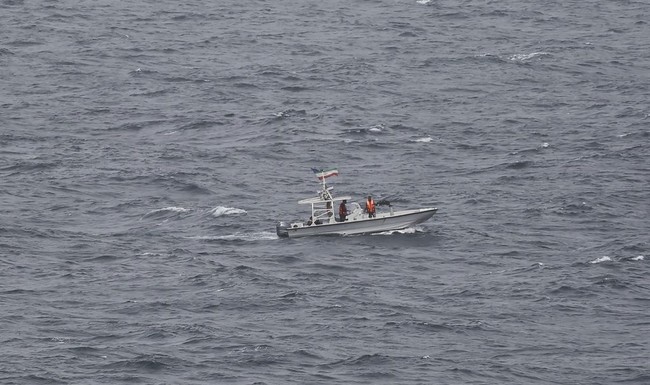
The Iranian regime posted a video claiming an audacious encounter with a U.S. warship, but community fact-checkers exposed the clip as something else entirely, leaving Tehran to posture while reality told a different story.
The recent post from an official Iranian account tried to spin a blunt, in-your-face moment into proof of naval bravado. Instead, the footage only highlighted how the regime resorts to grandstanding and overreach when it can’t back up its claims. Americans watching saw bluster, not capability, and independent notes pointed to an entirely different ship altogether.
The video caption offered up colorful, defiant taunts that were meant to intimidate and score propaganda points. The clip even included an officer shouting at what was presented as an American vessel. That kind of spectacle is meant for domestic consumption and to rile up supporters, not to reflect actual strategic success.
Here is the exact text that accompanied the video as posted by the account:
Interesting footage of an Iranian Navy officer taunting Americans while chasing their warship out of the Persian Gulf.
He’s calling them ‘liars’ and ‘old foxes,’ saying, ‘This is Iran, the land of lions and Islam—no place for you hyenas to flex your muscles. Run for your lives!’
Community Notes quickly intervened and dismantled the core claim, identifying the ship in the clip as not being American at all. That correction matters because the regime’s narrative depends on convincing its audience that it can stand up to the United States. When the main piece of evidence fails, the whole story collapses.
That Community Note reads exactly as reported by the fact-checkers:
This is a BAYNUNAH class Corvette operated by the UAE Navy. Not a US warship.
That identification undercuts Tehran’s boast and demonstrates a pattern: the regime often rebrands ordinary incidents as grand victories. Past episodes show similar misidentifications and recycled claims, which undermines any credibility they try to build on social platforms. When facts are applied, their version rarely holds up.
There’s a stubborn reality here for anyone who follows regional naval activity. U.S. forces have demonstrated resolve and the capacity to neutralize real threats at sea, and recent operations against hostile actions showed the United States will respond when necessary. A speedboat circling a vessel and shouting insults is not the same as a coordinated attack on a warship.
Beyond the immediate mislabeling, the footage also resurrects an old pattern of misinformation. The regime has historically misstated encounters, sometimes claiming interactions with British or other Western vessels in previous years when closer inspection showed otherwise. That repetition reveals a reliance on showmanship over substance.
In practical terms, Iran’s real naval assets have been degraded by sustained pressure and targeted actions, leaving them with small craft and asymmetric tactics. Those tactics create headlines and theater, but they do not equal a conventional navy that can challenge American or allied maritime power. Reality on the water is different from what propagandists want the public to believe.
The political context matters too. Washington and its partners have options and tools to deter aggression, and recent policy choices have signaled a low tolerance for unchecked provocations. The regime’s online boasts can be slapped down by swift action; they can also backfire by exposing Tehran’s weaknesses to its own people and to global audiences.
Propaganda plays well inside closed systems, but out in the open it invites scrutiny. Independent verification of military encounters is a check on false narratives, and in this case it exposed a deliberate misrepresentation. That matters because accurate information shapes policy choices and public support for strong, decisive responses.
When the best the regime can do is post a video and shout slogans, it highlights how much ground it has lost. Bravado doesn’t substitute for capability, and fact-checks pulled the curtain back on this stunt. The takeaway is plain: posture and online theater are no replacement for real deterrence and strength at sea.



Add comment